Zibo City, Shandong Province

Have Any Questions?

10 AM – 6 PM
Zibo City, Shandong Province
Have Any Questions?
10 AM – 6 PM

Have Any Questions?
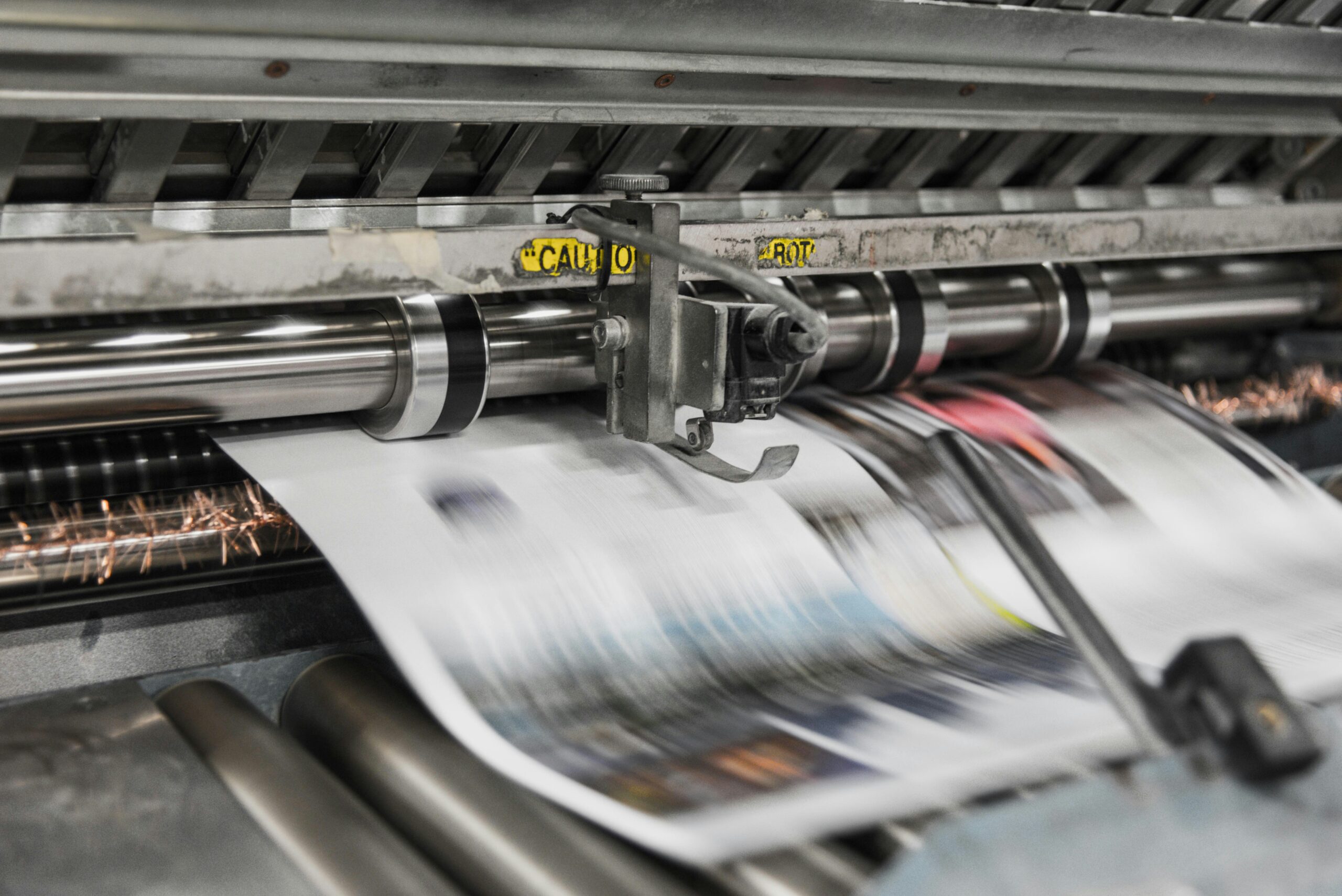

In manufacturing, quality is not an act; it is a habit. I have seen too many buyers treat quality control (QC) as a final step—something you check right before the goods ship. This is a dangerous misconception. If you wait until the end to find a problem, it is already too late. The boxes are made, the money is spent, and the delay is inevitable.
True quality management is a continuous loop that begins the moment the raw paper arrives at the factory dock. It involves a series of checkpoints, known as IQC, IPQC, and FQC, designed to catch errors when they are small and fixable. This guide is my protocol for total quality management. I will explain how the factory monitors your order daily, what reports you should demand, and how to enforce standards that ensure your custom packaging is flawless.
Everything starts here. The Golden Sample 1 is the signed, approved prototype that serves as the master standard. I insist that one copy stays with me and one stays in the factory’s QC room. Every worker on the line should have access to this sample to compare against the mass production units.
Quality problems often start with the ingredients. Incoming Quality Control (IQC) 2 is the process of inspecting raw materials before they enter the warehouse. For packaging, this means checking the paper thickness, the moisture content of the corrugated board, and the viscosity of the glue. If the raw material is bad, the final box will be bad.
Before the machines start, I require a pre-production meeting. This involves the sales rep, the production manager, and the QC leader. They review the "Critical to Quality" (CTQ) points—for example, "Ensure the magnetic closure snaps shut with a specific force." This alignment prevents misinterpretation of the specs.
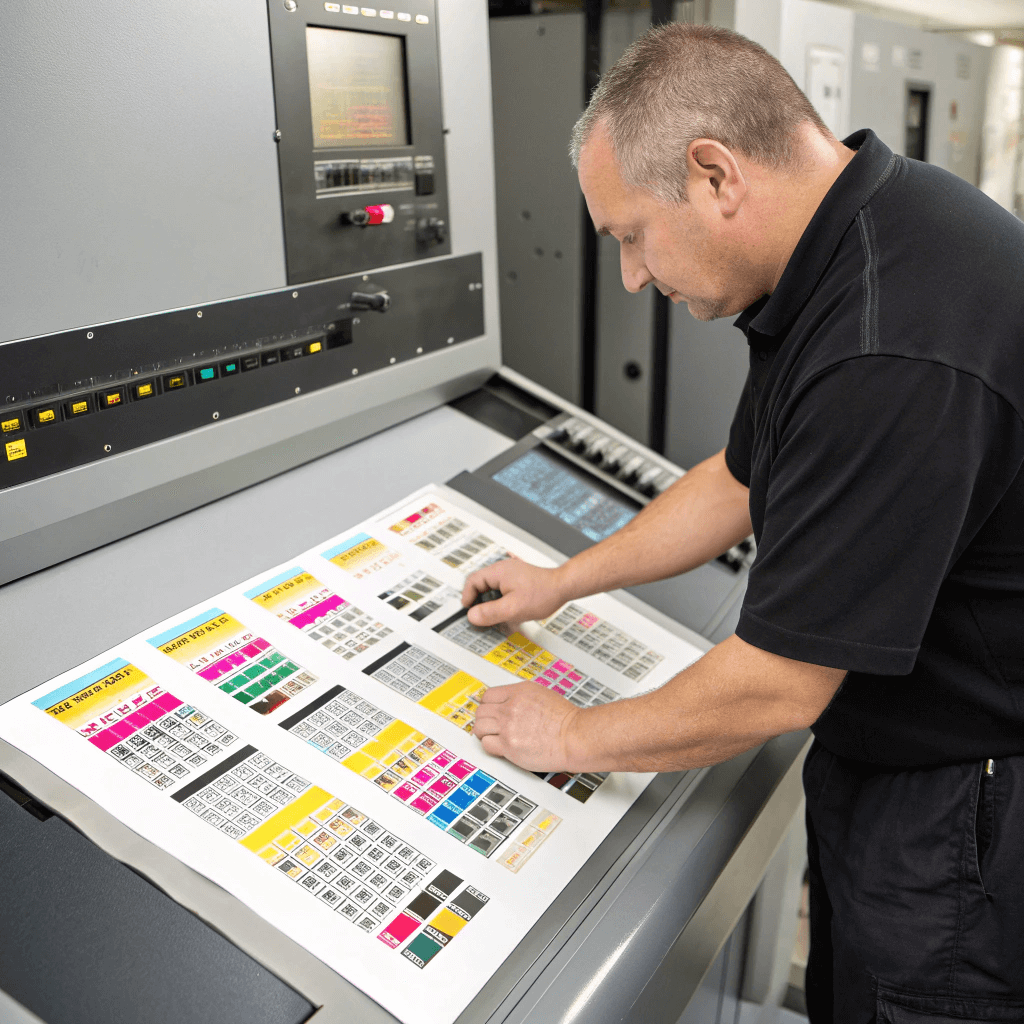
This is the heartbeat of the factory. In-Process Quality Control (IPQC) 3 involves roving inspectors checking the product while it is being made. They pull random sheets off the printing press every 30 minutes to check for color drift. They check the die-cut blanks for clean edges. This allows them to stop the machine and recalibrate immediately if a defect is found.
Visual consistency is paramount. Operators use color management 4 tools like spectrophotometers to ensure the ink density matches the approved standard. They also check "registration"—ensuring the red ink aligns perfectly with the blue ink so the image isn’t blurry.
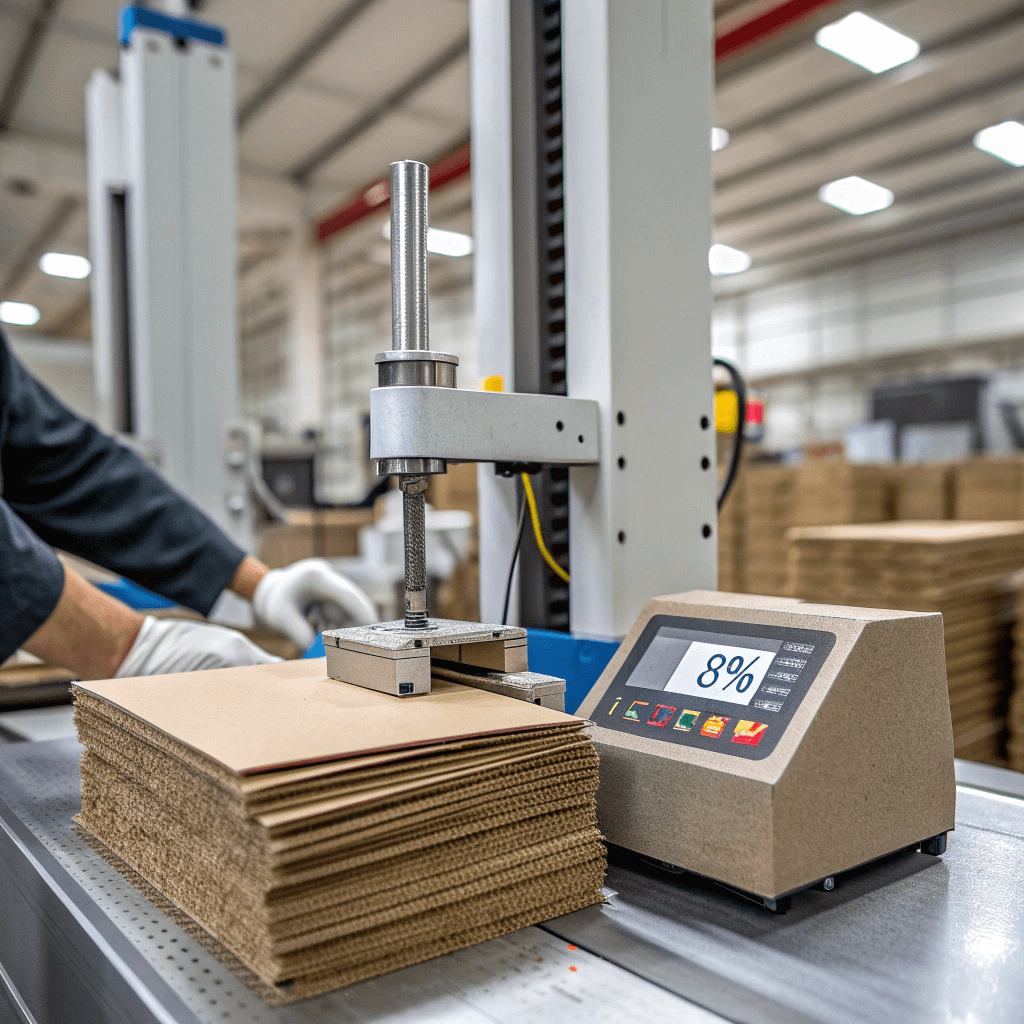
A box must function. During assembly, QC staff perform physical tests. They might do a Box Compression Test 5 to ensure stacking strength. For rigid boxes, they check adhesion testing 6 to ensure the paper wrapping doesn’t bubble or peel off the greyboard after the glue dries.
Once the goods are finished and packed, the factory performs a Final Quality Control (FQC) check. They open a percentage of the master cartons to verify the count, the labeling, and the overall condition of the goods. This is their last line of defense before the goods move to the shipping dock.
How many boxes do they check? They use the Acceptable Quality Limit (AQL) 7 standard (usually ISO 2859-1). This statistical method determines how many units to inspect based on the total order size. For example, in an order of 5,000 boxes, they might inspect 200. If they find more than a set number of defects, the entire batch is rejected and re-checked.
If defects are found during IPQC, a professional factory initiates a Corrective Action Plan 9. This documents the problem (e.g., "Glue drying too fast causing peeling"), the root cause, and the fix (e.g., "Adjusted machine speed and glue temperature"). You should ask to see these logs.
While the factory has its own QC team, they have a conflict of interest. I always recommend hiring a third-party inspection 8 agency to perform a final pre-shipment inspection. They work for you, not the factory, and provide an unbiased report on whether the goods meet your standards.
| QC Stage | Who Performs It? | When? | What is Checked? |
|---|---|---|---|
| IQC | Factory Warehouse Staff | Arrival of materials | Paper grade, ink, glue quality. |
| IPQC | Line Leaders / Roving QC | During production | Print color, cut accuracy, assembly. |
| FQC | Factory QC Team | After packing | Final count, packaging, aesthetics. |
| Pre-Shipment | Third-Party Agent | Before payment | Verification of all above against AQL. |
To ensure your standards are met, you must provide a Quality Control Plan (QCP) or inspection checklist. Do not leave it up to the factory to decide what "good" looks like.
Managing packaging quality is about visibility and standards. By understanding the factory’s internal processes—from IQC to FQC—and enforcing them with your own third-party audits, you create a system where defects are caught early. Quality is not something you hope for; it is something you engineer through rigorous process management and clear communication.
What are in-process quality control (IPQC) checks?
IPQC checks are inspections that happen during manufacturing. Instead of waiting until the end, inspectors check the first few units coming off the machine (e.g., the first printed sheets) and perform random spot checks throughout the day. This ensures that if a machine drifts out of alignment, it is caught immediately.
Who is responsible for monitoring the quality at the factory every day?
The factory’s Quality Assurance (QA) Manager and the Line Leaders are responsible. They follow the factory’s Quality Management System 10 (often ISO 9001). However, ultimately, you are responsible for verifying their work through third-party inspections.
How are issues like printing errors or incorrect gluing caught early?
They are caught through "First Article Inspections" (checking the first unit made) and automated sensors on modern machines that detect color shifts. For manual assembly (gluing), roving inspectors check a sample of boxes every hour to ensure the glue is holding and the alignment is correct.
Can I get a report from the in-process quality checks?
Yes, but you have to ask for it in advance. Ask the supplier to share their "Daily Production Report" or "QC Log." While they might not send it every day, knowing that you might ask for it keeps them honest.
1. Definition of the Golden Sample as the manufacturing benchmark. ↩︎
2. Overview of Incoming Quality Control (IQC) processes. ↩︎
3. Detailed explanation of In-Process Quality Control (IPQC). ↩︎
4. Tools and methods for precise color management in print. ↩︎
5. How to calculate box compression strength for durability. ↩︎
6. Standard test methods for measuring coating adhesion. ↩︎
7. Understanding Acceptable Quality Limit (AQL) tables. ↩︎
8. The role of third-party inspection services in trade. ↩︎
9. How to implement a Corrective Action Plan for defects. ↩︎
10. ISO 9001 standards for quality management systems. ↩︎
You can leave any questions. We will see and answer you.