Zibo City, Shandong Province

Have Any Questions?

10 AM – 6 PM
Zibo City, Shandong Province
Have Any Questions?
10 AM – 6 PM

Have Any Questions?

In international trade, the price on the invoice is never the final price. I have seen many profitable packaging projects turn into financial disasters because the buyer forgot to account for Uncle Sam. When importing from China to the US, you are navigating a minefield of base duties, punitive tariffs (Section 301), and hidden port fees.
Conversely, there is often confusion about Chinese taxes. Buyers ask me, "Do I pay the Chinese VAT?" The answer is usually no, but understanding how it works gives you leverage. This guide is my financial roadmap. I will explain how to classify your goods, calculate your true tax liability, and understand the tax incentives your supplier receives, ensuring you never get hit with a surprise bill at the border.
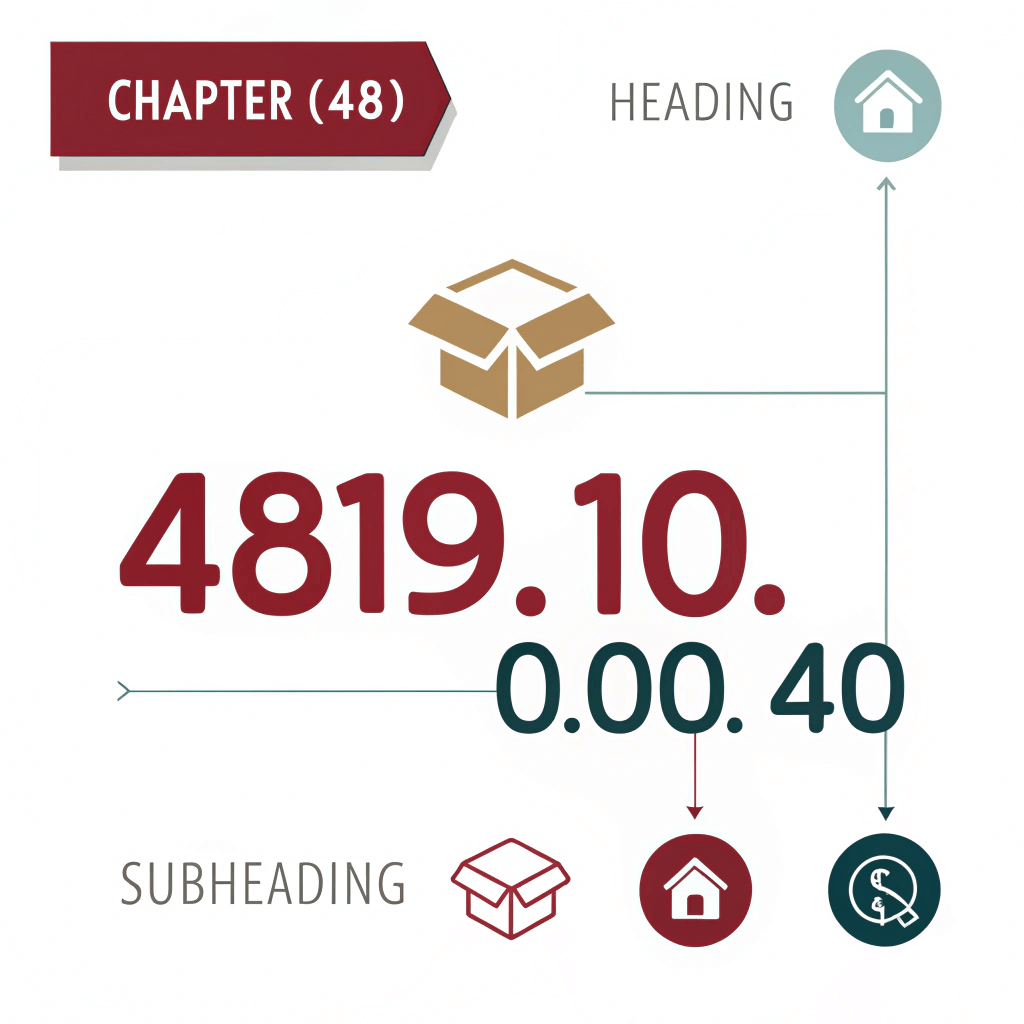
Everything starts with the Harmonized Tariff Schedule (HTS) code. This 10-digit number tells US Customs exactly what your product is. For paper packaging, you will likely be looking in Chapter 48.
For Chinese goods, there are two layers of tax. First is the "Base Duty" (often 0% for paper products). Second is the "Section 301" punitive tariff. Due to trade disputes, many Chinese packaging products carry an additional 25% tariff. You must check the USTR Section 301 2 lists to see if your HTS code is affected.
Unless you ship DDP, you are the Importer of Record 3. This means you are legally responsible for the accuracy of the paperwork and the payment of duties. Even if you hire a broker, if they make a mistake, you pay the fine.
China charges a Value Added Tax (VAT) domestically. However, to encourage exports, the government offers a VAT rebate 4 to the factory when goods leave the country.
This is a hidden fee charged by US Customs for processing your entry. For formal entries (value over $2,500), it is an ad valorem rate (currently 0.3464%) with a minimum and maximum cap. It is small but adds to your landed cost 5.
If your goods arrive via ocean freight at a US port, you pay the Harbor Maintenance Fee 6. This is 0.125% of the cargo value. It does not apply to air freight or goods arriving via land from Canada/Mexico.
To clear customs, you must post a Customs Bond 7. This is an insurance policy guaranteeing the US government will get paid. You can buy a "Single Entry Bond" for one shipment or a "Continuous Bond" (approx. $500/year) if you import regularly.
Your Incoterms 8 determine who physically pays the tax.
Do not try to clear customs yourself. Hire a licensed customs broker 9. They have the software to file your entry (CBP Form 7501), classify your goods correctly, and calculate the exact duties owed. Their fee (usually $100-$150 per entry) is worth every penny for compliance safety.
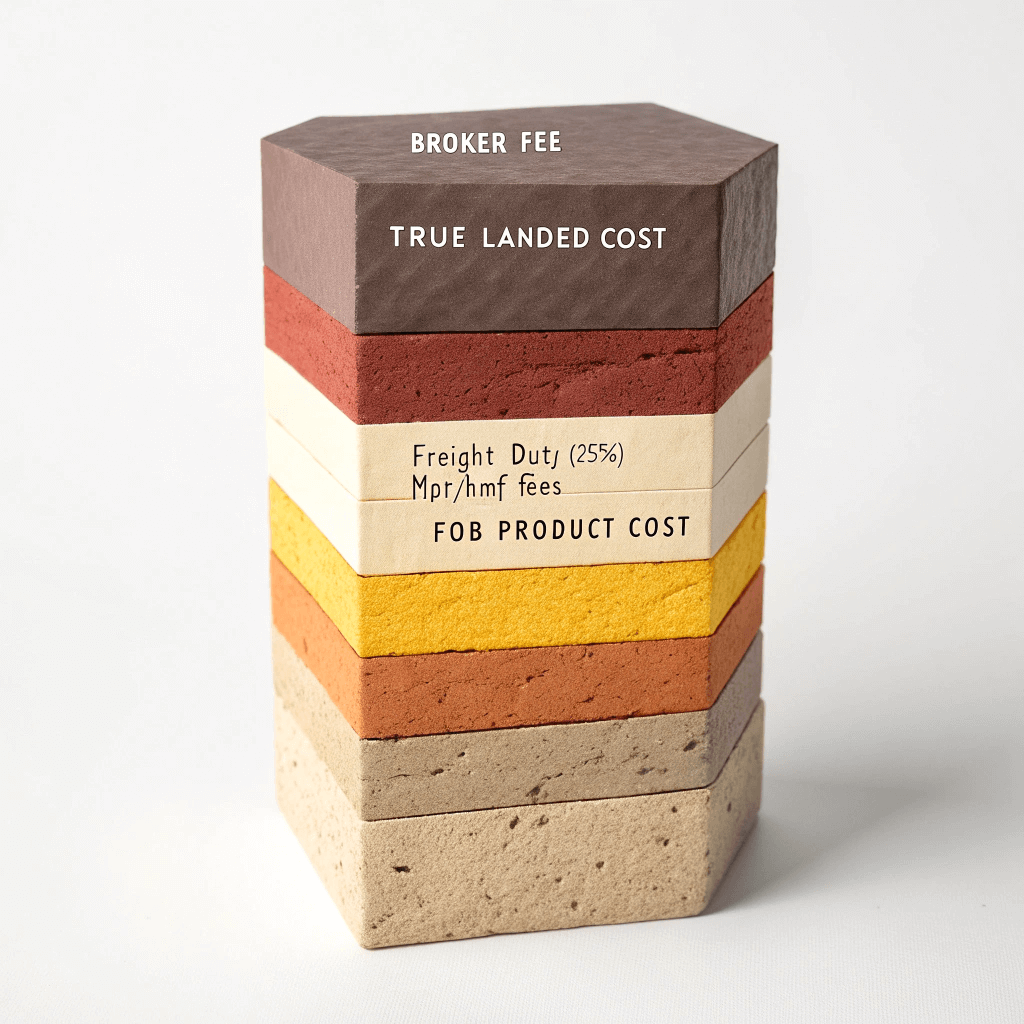
To know your true profit, you must sum it all up.
Formula: FOB Price + Freight + Duty (Base + 301) + MPF + HMF + Broker Fee + Bond Fee.
Only then do you know the real cost of that box.
| Cost Item | FOB (Free on Board) | DDP (Delivered Duty Paid) |
|---|---|---|
| Chinese Export Tax | Supplier (Rebated) | Supplier (Rebated) |
| US Base Duty | Buyer | Supplier |
| Section 301 Tariff | Buyer | Supplier |
| MPF / HMF Fees | Buyer | Supplier |
| Customs Broker Fee | Buyer | Supplier |
| Customs Bond | Buyer | Supplier |
The most common mistake is misclassification. If you classify a "rigid box" as a "fancy article of paper" instead of "packing container," the duty rate might jump. Work with your broker before you ship to determine the most favorable (legal) HTS code. Also, keep an eye on Section 321 de minimis 10 rules; shipments under $800 may enter duty-free, which is a massive advantage for sampling or very small orders.
Handling import duties and taxes is the difference between a gross margin and a net loss. It requires diligence. You must identify the right HTS code, calculate the punitive tariffs, and ensure your broker files the entry correctly. By understanding the interplay between Chinese VAT rebates and US import duties, you can negotiate better prices and forecast your costs with precision.
How can I find out the correct HS code for my specific paper packaging product?
You can search the USITC HTS Online Reference tool. Search for terms like "cartons," "boxes," or "paperboard." Common codes are in Chapter 48. However, the final classification is complex; I strongly recommend asking a licensed customs broker to classify it for you.
What is the current US tariff rate for custom boxes imported from China?
Most paper packaging has a Base Duty of 0%. However, almost all Chinese packaging is subject to Section 301 Tariffs, which currently add an extra 25% (List 3) or 7.5% (List 4A) depending on the specific code. You must verify the current status of these trade war tariffs.
Does my supplier handle the Chinese export tax rebates?
Yes. The supplier handles all Chinese tax filings. They receive a rebate from the Chinese government (often 13%) for exporting the goods. This rebate allows them to offer you a lower export price than they would charge a domestic Chinese customer.
Can my sourcing agent help me calculate all the taxes and duties for a final landed cost?
Yes, a good sourcing agent or freight forwarder should be able to provide a Landed Cost Estimate. They will take your product value, add the freight estimate, and apply the current duty rates to give you a projected total cost per unit delivered to your door.
1. Official tool to search for Harmonized Tariff Schedule codes. ↩︎
2. Information on Section 301 tariffs affecting Chinese imports. ↩︎
3. Legal responsibilities of the Importer of Record. ↩︎
4. Explanation of China’s export VAT rebate system. ↩︎
5. How to calculate total landed cost including fees. ↩︎
6. Details on the Harbor Maintenance Fee for ocean freight. ↩︎
7. Guide to Customs Bonds required for importing. ↩︎
8. International rules defining shipping and tax responsibilities. ↩︎
9. Association of professional customs brokers and forwarders. ↩︎
10. Rules for duty-free entry of low-value shipments. ↩︎
You can leave any questions. We will see and answer you.