Zibo City, Shandong Province

Have Any Questions?

10 AM – 6 PM
Zibo City, Shandong Province
Have Any Questions?
10 AM – 6 PM

Have Any Questions?

In my experience sourcing products from China, few things surprise new buyers more than the cost of a single empty box. You might be quoted $0.50 per unit for a bulk order, but when you ask for one sample, the factory demands $150. It feels like extortion. But I can tell you, it isn’t. It is a necessary filter.
Factories receive hundreds of inquiries a week from "tire kickers" who never buy. Charging a sample fee is their way of verifying that you are a serious buyer with a real project. However, just because you have to pay doesn’t mean you should overpay. This guide will walk you through the economics of sampling. I will show you how to distinguish between sample costs and tooling fees, how to control shipping expenses, and the specific negotiation tactics I use to get that money back when I place my final order.
First, adjust your mindset. You aren’t just paying for a box; you are paying for engineering time. A factory engineer has to stop mass production, program a CAD machine, cut the material, and hand-assemble your prototype. This disrupts their workflow. By paying the fee, you signal that you value their time and have the budget to proceed.
Not all samples are created equal. If you just want to check the quality of their board or print, ask for a "stock sample" (something they made for another client). These are often free; you just pay shipping. If you need your specific size and artwork, that is a custom prototype 1. Expect to pay $50 to $300 for this, depending on complexity.
This is the golden rule of sampling: Always ask for a refund. Before you pay for the sample, get the supplier to agree in writing that the sample fee will be credited against your first bulk order (provided the order meets a certain minimum, e.g., $5,000). Most reputable suppliers will agree to this, effectively making the sample free in the long run.
Do not confuse the sample fee with tooling costs 2.
Often, the shipping costs more than the sample itself. Factories will quote high shipping rates using their default carrier. I recommend setting up your own account with international couriers 4 like DHL or FedEx. This gives you control over the speed and cost. Alternatively, ask the supplier to consolidate multiple samples (e.g., different paper options) into one box to save on freight.
For small sample fees (under $500), avoid bank wires (T/T) as the transaction fees are too high. Push to use PayPal or a platform like Alibaba Trade Assurance. These payment methods 5 offer lower fees and, more importantly, buyer protection if the supplier ghosts you after taking the money.
Never pay for a sample based on a phone call. Provide a detailed technical specification 6 sheet (Tech Pack). List the exact dimensions, material grade, finish, and Pantone colors. If the sample arrives and doesn’t match these written specs, you have grounds to demand a free remake.
Don’t look at the fee as a "cost"; look at it as insurance. This is your chance to test quality control 7. Does the box close with a satisfying click? Is the logo centered? Does the paper crack when folded? Finding these issues now costs $100. Finding them during mass production costs $10,000.
Once you have placed a few orders with a factory, the dynamic changes. For established partners, supplier relationship management 8 dictates that they should provide development samples for free (or at cost) to help you launch new products. Remind them that your growth is their growth.
When you are sourcing, you might receive samples from five different factories. It is easy to mix them up. Implement a system of inventory management 9 for your samples. Label each one immediately with the factory name, date, and cost. This allows you to compare them objectively side-by-side.

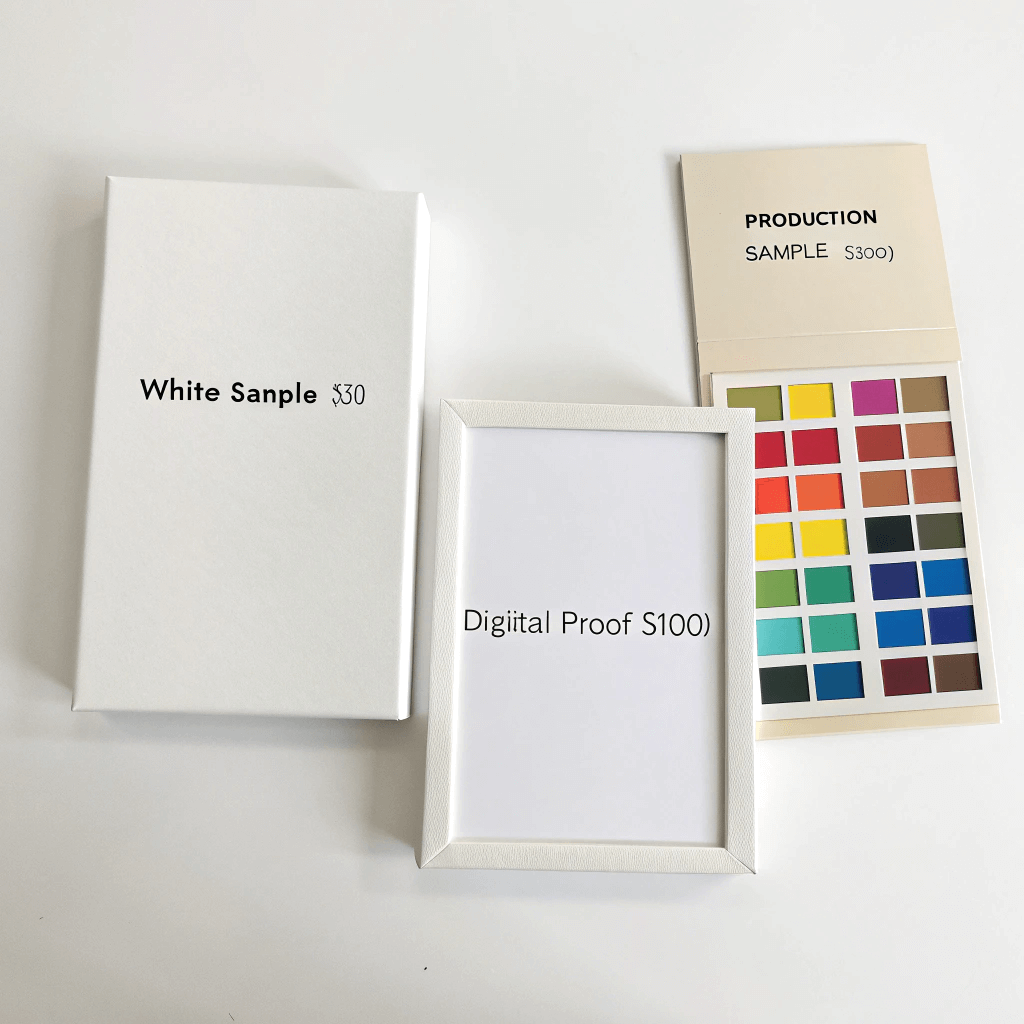
| Sample Type | Typical Cost | Production Method | Purpose |
|---|---|---|---|
| Stock Sample | Free – $20 | Leftover from other runs | Check material quality & construction. |
| White Sample | $30 – $80 | CAD Table (No Print) | Check size, fit, and structure. |
| Digital Proof | $50 – $150 | Digital Printing 10 | Check artwork placement & spelling. |
| Production Sample | $150 – $500+ | Actual Press & Finish | Final verification of color & finish. |
When a supplier quotes a high sample fee, use this script:
"I understand there is a cost to produce this custom sample. I am willing to pay the $150 fee to cover your engineering time. However, I require a written agreement that this $150 will be fully deducted from the total of our first Purchase Order of 1,000 units or more. This confirms my commitment to proceed if the quality meets my standards."
This approach is professional, fair, and protects your budget.
Handling sample fees is a standard part of the procurement dance. It is the toll you pay to enter the serious buyer’s club. By understanding what you are paying for, clarifying the terms, and negotiating a refund on the backend, you can minimize your risk. Remember, a cheap sample that hides flaws is expensive, while a costly sample that reveals the truth is a bargain.
Is it standard practice for me to pay for a custom sample?
Yes. Factories incur real costs in labor, material setup, and machine time to create a single custom item. Paying for a sample shows you are serious.
Why is the sample fee so much higher than the per-unit bulk price?
Mass production benefits from economies of scale. A single sample requires the same setup labor as a run of 1,000, but the cost is concentrated on just one unit.
Can I get my sample fee refunded?
Yes, most suppliers will agree to refund or credit the sample fee towards your first bulk order, provided the order meets a certain minimum quantity. Always negotiate this upfront.
How can I save money on sample shipping costs?
Use your own courier account (DHL/FedEx) if you have negotiated rates. Alternatively, ask multiple suppliers to send their samples to a consolidation service in China, which can combine them into one shipment to you.
1. Learn about the different types of prototypes and their uses in manufacturing. ↩︎
2. Definition of setup costs and their impact on pricing. ↩︎
3. Understanding the die-cutting process for custom packaging. ↩︎
4. Overview of international express shipping services. ↩︎
5. Guide to secure international payment methods for business. ↩︎
6. How to write effective technical specifications for manufacturing. ↩︎
7. The principles and importance of quality control systems. ↩︎
8. Best practices for managing long-term supplier relationships. ↩︎
9. Strategies for effective inventory management and tracking. ↩︎
10. Introduction to digital printing technology and its benefits. ↩︎
You can leave any questions. We will see and answer you.