Zibo City, Shandong Province

Have Any Questions?

10 AM – 6 PM
Zibo City, Shandong Province
Have Any Questions?
10 AM – 6 PM

Have Any Questions?

In my experience sourcing packaging, the acronym "MOQ" (Minimum Order Quantity) is the single biggest hurdle for growing brands. You find the perfect factory, love their samples, and then they drop the bomb: "MOQ is 5,000 units." If you only need 500, this feels like a dead end. But here is the truth I tell all my clients: MOQ is rarely an arbitrary number invented to annoy you. It is a calculation based on the factory’s economics.
Factories have high fixed costs—setting up the press, mixing inks, and calibrating die-cutters takes hours. If they run only 500 boxes, they lose money. However, MOQ is also a negotiation variable. By understanding the mechanics of why the MOQ exists, you can find creative ways to lower it or make the math work for your budget. This guide will walk you through 10 strategies to determine, manage, and negotiate an MOQ that aligns your cash flow with the factory’s production reality.
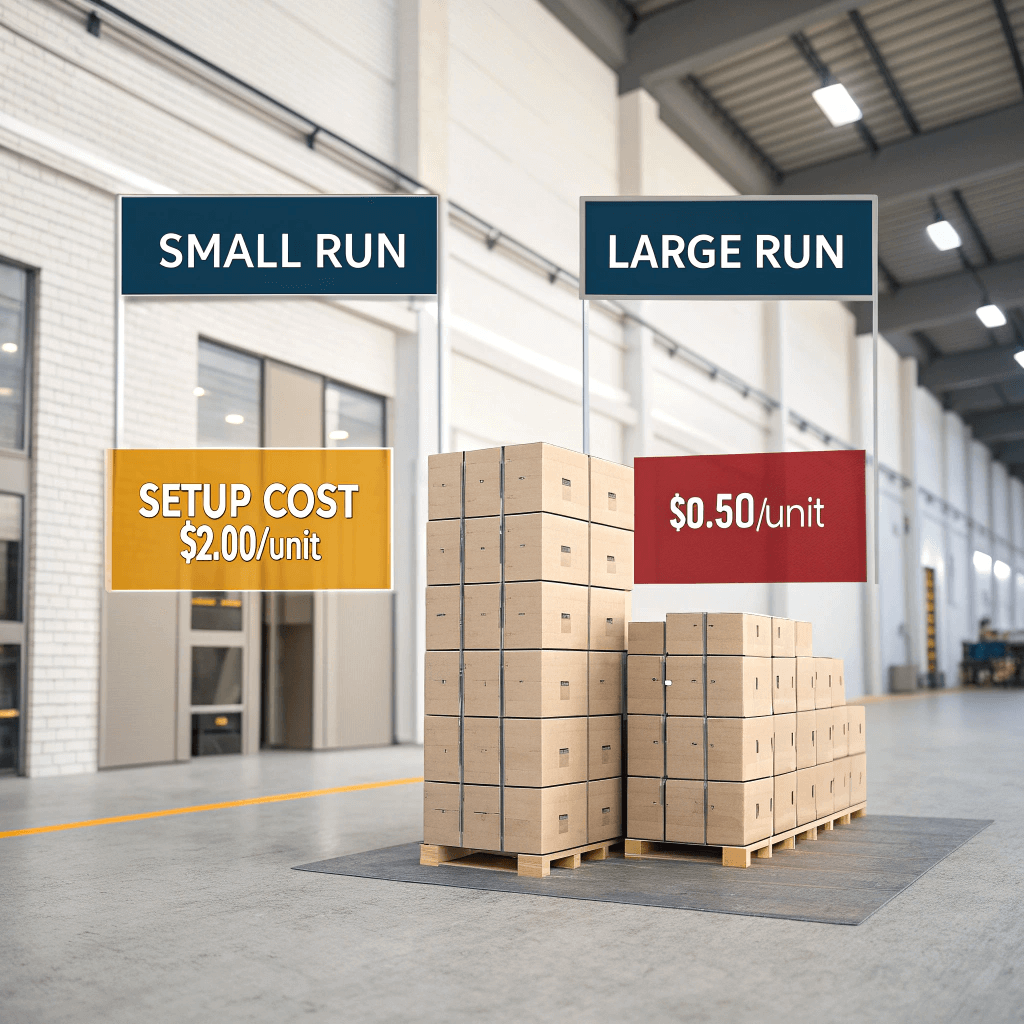
To negotiate effectively, you must empathize with the factory. Every custom job requires setup costs 1. The machine operator must mount printing plates, set up cutting dies, and run test sheets (waste) to get the color right. This "make-ready" time costs the same whether you print 100 boxes or 10,000. The MOQ is simply the point where the unit price becomes palatable for you and profitable for them.
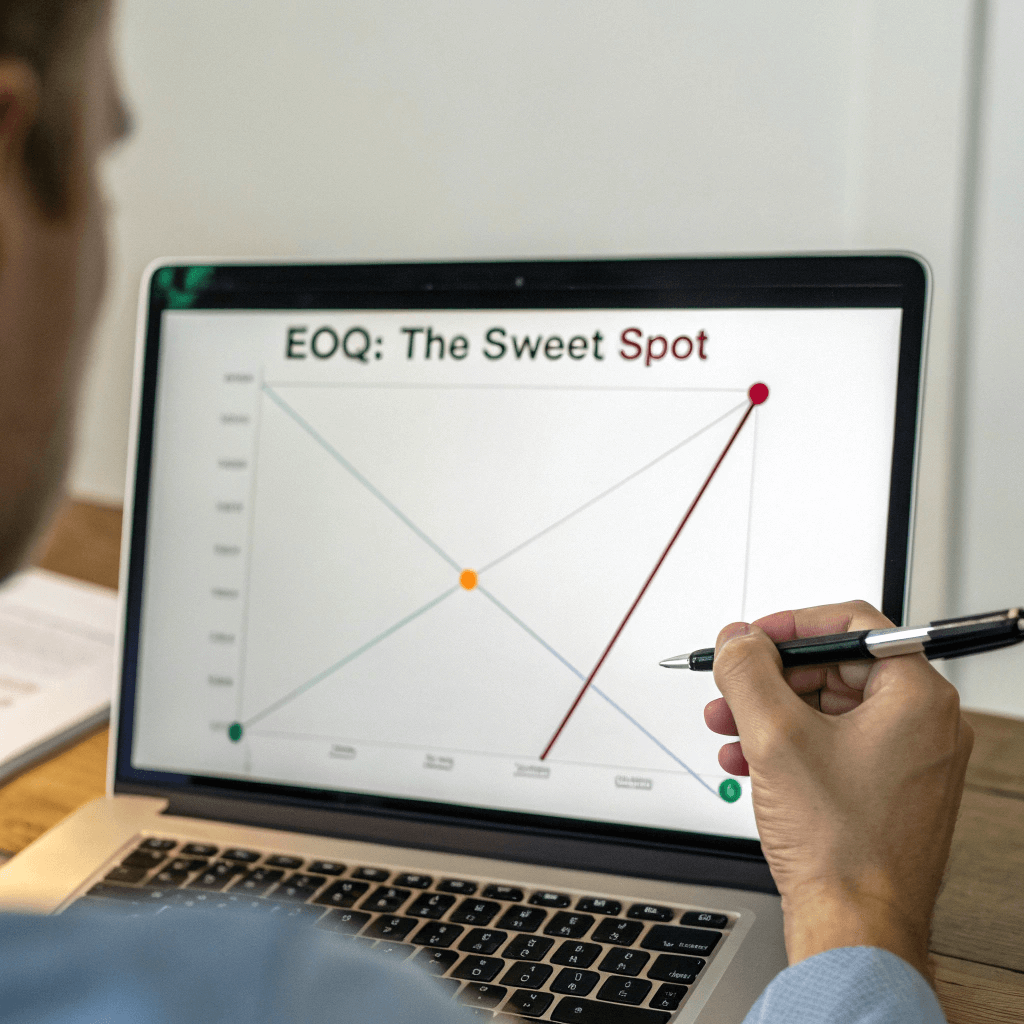
Don’t just ask the supplier for their number; calculate yours first. Use the Economic Order Quantity 2 formula. This balances the cost of ordering (setup fees, shipping) against the cost of holding inventory (storage, cash flow).
This is my favorite tactic for reducing MOQ per design. If you have 4 different candle scents, don’t order 1,000 of each. Ask the factory to combine them into a single production run. As long as the size and material are identical, they can often print all 4 designs on the same sheet. This allows you to meet a 2,000 unit total MOQ with just 500 units per SKU.
Paper mills sell material in massive rolls. If you demand a custom-dyed paper or a unique texture, the factory has to buy a huge minimum amount of that paper, passing that volume on to you. By switching to raw material inventory 3 that the factory already keeps in stock (standard white SBS or Kraft), you can often drastically lower the MOQ because they don’t need to buy a full roll just for you.
Sometimes, you just need 500 boxes to test a market. In this case, offer to pay a higher unit price 4. Tell the supplier: "I know your MOQ is 1,000 at $1.00. Can I order 500 at $1.80?" You are essentially subsidizing their setup time. While the unit cost is higher, your total cash outlay is lower ($900 vs $1,000), and you reduce the risk of unsold inventory.
Suppliers want long-term stability. If you can commit to 10,000 units over a year, sign a blanket purchase order 5. This contract tells the factory you are serious. In exchange, they will often allow you to "call off" or ship smaller batches (e.g., 2,000 units) every quarter, while giving you the pricing of the larger volume.
If you have the cash but lack the space, negotiate a "Make and Hold" agreement. The factory produces the full MOQ (e.g., 5,000 units) to get the efficiency, but they ship only 1,000 units to you now and hold the rest in their warehouse. You pay for the shipping as you need it. Be aware, they may charge a small inventory carrying cost 6.
If your volume is truly low (under 500), stop talking to offset printers. Look for factories that specialize in digital printing 7. Digital presses require zero plates and almost no setup. While the per-unit cost is higher, they can profitably produce 50 or 100 boxes. This is ideal for startups or limited editions.
Custom die-cutting 8 molds cost money and setup time. Ask your supplier if they have "existing dies" or standard sizes available. Using a box size they already make for another client eliminates the need for a new knife mold and reduces the setup effort, often making them more amenable to a lower MOQ.
Never order more packaging than you can use in 6-12 months. Packaging can warp, glue can dry out, and—most importantly—your marketing might change. Ordering 10,000 boxes to save $0.10 per unit is a bad deal if you end up throwing away 5,000 of them because you changed your logo. Factor the risk of SKU proliferation 9 and design changes into your MOQ decision.
| Feature | Offset Printing (High MOQ) | Digital Printing (Low MOQ) |
|---|---|---|
| Typical MOQ | 1,000 – 5,000+ units | 1 – 500 units |
| Setup Cost | High (Plates & Dies) | Low / None |
| Unit Price | Low (Economies of Scale) | High (Flat Rate) |
| Print Quality | Best (Pantone capable) | Good (CMYK only) |
| Best For | Established Brands, Retail | Startups, Prototypes |
When discussing MOQ, never just ask "What is your MOQ?" and accept the answer. Instead, ask for a Tiered Quotation.
Determining the right Minimum Order Quantity is a balancing act between your cash flow and the factory’s efficiency. It is not a fixed wall; it is a door that can be opened with the right key. By understanding the drivers of setup costs, leveraging digital technologies, or creatively structuring your orders, you can find an MOQ that allows you to launch with confidence without drowning in inventory.
How do I determine the Minimum Order Quantity (MOQ) for my custom packaging from China?
Start by estimating your sales for the next 6 months. Then, ask the supplier for pricing tiers (e.g., 500, 1000, 3000). The "right" MOQ is usually the quantity where the unit price drops significantly, but the total cost fits within your budget and storage limits.
Why do factories have an MOQ for custom orders?
Factories have high fixed setup costs (making plates, calibrating machines) and material purchase minimums. They need a minimum run size to amortize these costs over enough units to make a profit. Running the machine for 10 minutes to print 50 boxes costs them more in labor than the boxes are worth.
Can I negotiate a lower MOQ for my first trial order?
Yes. You can often negotiate a lower MOQ by: 1. Offering to pay a higher unit price (surcharge). 2. Using standard materials the factory has in stock. 3. Combining multiple designs into one order. 4. Promising a larger follow-up order (sometimes backed by a contract).
How does my order quantity affect my unit price?
Packaging manufacturing has massive economies of scale. As quantity increases, the unit price drops drastically because the fixed setup costs are spread over more units. A box that costs $2.00 at 500 units might cost $0.50 at 10,000 units.
What should I do if the MOQ is higher than what I currently need?
You have three options: 1. Switch to digital printing which allows for very low MOQs (but higher unit costs). 2. Ask the factory to "Make and Hold" (produce the MOQ but ship in batches). 3. Standardize your packaging to use a generic box size and customize it with a sticker or sleeve until your volume grows.
1. Definition of setup costs in manufacturing contexts. ↩︎
2. How to calculate Economic Order Quantity for inventory management. ↩︎
3. Strategies for managing raw material inventory efficiently. ↩︎
4. Explanation of how unit cost is calculated in accounting. ↩︎
5. Benefits and structure of Blanket Purchase Orders. ↩︎
6. Understanding the costs associated with holding inventory. ↩︎
7. Insights into digital printing technology and its benefits. ↩︎
8. The process and tools used in custom die-cutting. ↩︎
9. Risks and management of increasing product variety. ↩︎
10. Guide to calculating the Total Cost of Ownership. ↩︎
You can leave any questions. We will see and answer you.