Zibo City, Shandong Province

Have Any Questions?

10 AM – 6 PM
Zibo City, Shandong Province
Have Any Questions?
10 AM – 6 PM

Have Any Questions?

In the high-stakes game of international sourcing, your payment terms are your leverage. I have seen too many new buyers hand over 100% of the cash upfront, only to find themselves ghosted or receiving a container of crushed boxes with no recourse. Conversely, I’ve seen buyers demand "Net 60" terms on day one, only to be laughed out of the negotiation.
Finding the right balance is critical. You need to fund the factory’s raw materials without exposing your entire bankroll to risk. This guide is my blueprint for structuring payment terms that protect your cash flow and ensure quality. We will dissect the industry-standard "30/70" split, explore how to link payments to inspections, and discuss the roadmap to achieving credit terms with your Chinese partners.
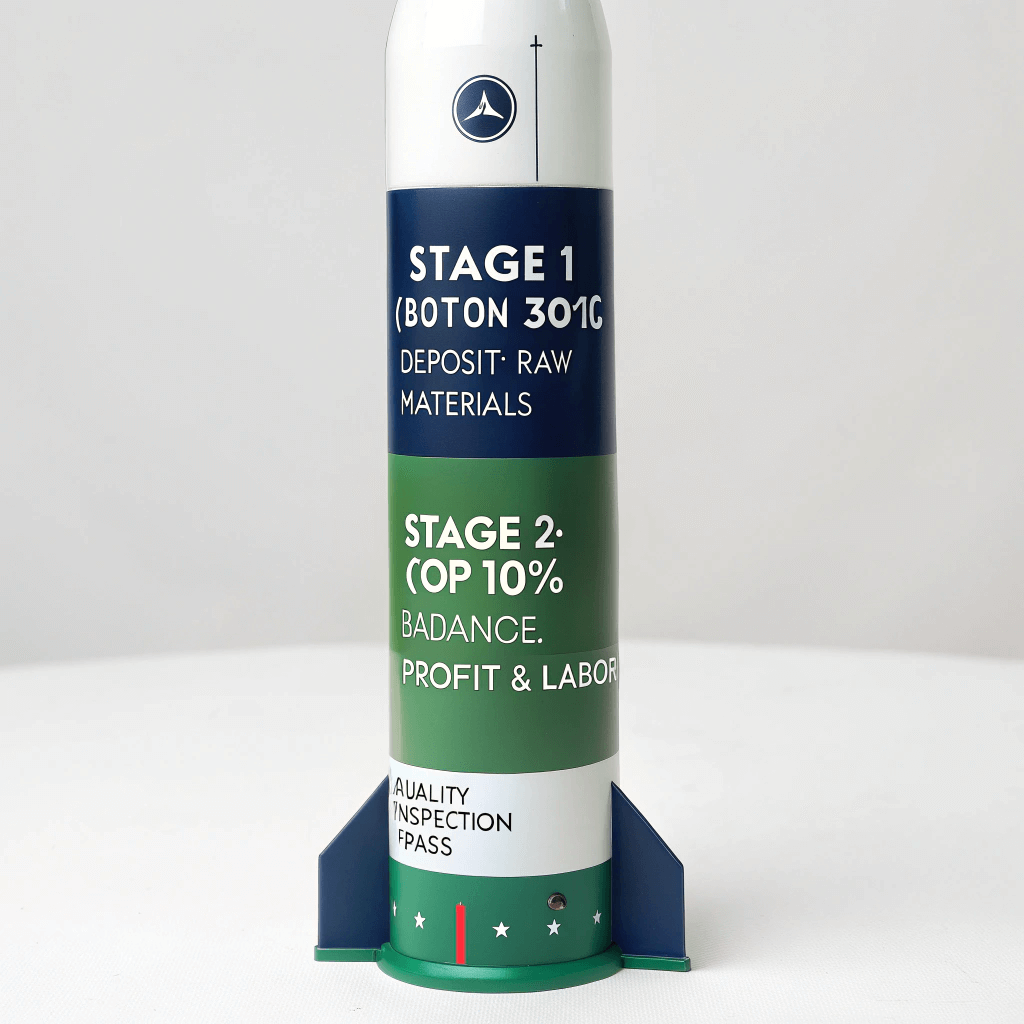
For custom manufacturing, the global standard is a 30% deposit upon order placement and a 70% balance payment before shipment. Why this split? The 30% covers the factory’s cost of purchasing raw materials 1 (paper, ink, glue). The remaining 70% covers their labor and profit. This structure ensures both parties have "skin in the game."
If a supplier demands 100% payment before production begins, treat it as a major warning sign. Unless the order is very small (under $2,000) or for samples, this exposes you to maximum risk. If things go wrong, you have zero leverage. I advise clients to walk away from any bulk manufacturer who insists on full payment upfront.
Here is the most critical piece of advice I can give: Never pay the 70% balance until the goods have passed inspection. Your contract should state that the balance is due "Subject to a passing Pre-Shipment Inspection report." This incentivizes the factory to fix defects before the goods leave their dock. Once the money is sent, their motivation to fix problems drops to zero.
As you build trust, try to move the balance trigger from "Before Shipment" to "Against Copy of B/L." The Bill of Lading (B/L) 2 proves the goods are actually on the boat. Paying against the B/L means the goods have shipped, reducing the risk of the factory holding your product hostage after payment.
"Net terms" mean you pay the supplier 30 or 60 days after you receive the goods. This is the holy grail for cash flow 3. While rare for new buyers, established brands with high volume can negotiate this. It effectively uses the supplier’s capital to fund your inventory cycle.
How do you get Net terms? Ask your supplier if they use Sinosure 4 (China Export & Credit Insurance Corporation). This state-owned entity insures Chinese exporters against non-payment by foreign buyers. If you have good credit, Sinosure covers the supplier’s risk, making them much more willing to offer you credit terms.
For complex projects, I negotiate a "Quality Retainage." We pay 30% deposit, 65% before shipment, and hold back the final 5% for 30 days after arrival. This ensures that if we find hidden defects (like glue drying out) after the goods arrive, we still have a small financial lever to demand a credit or replacement.
Your payment terms directly dictate your working capital 5 needs. With 30/70 terms and ocean freight, your cash is tied up for 60-90 days before you have product to sell. You must model this "cash conversion cycle" to ensure you don’t run out of liquidity while your boxes are floating on the ocean.
Tooling (molds and dies) is usually treated differently. It is standard to pay 100% of tooling costs upfront or 50% deposit/50% upon sample approval. Do not expect credit terms on tooling; it is a sunk cost for the factory that they cannot recover if you walk away.
Verbal agreements are useless. Your payment schedule must be explicitly written in the Proforma Invoice (PI) 6 and the Sales Contract. It should define the triggers (e.g., "Balance due within 5 days of passing inspection") and the penalties for late payment to show you are a professional partner.

| Term Structure | Buyer Risk | Supplier Risk | Cash Flow Impact | Best For |
|---|---|---|---|---|
| 100% Upfront | Extreme | None | Negative | Samples / Small Orders |
| 30% / 70% Pre-Ship | Medium | Low | Moderate | Standard Custom Orders |
| 30% / 70% vs B/L | Low | Medium | Good | Repeat Orders |
| Net 30 Days | None | High | Excellent | High Volume / Trusted Partners |
Start with the standard: "I accept the industry standard 30% deposit." Then, fight for the backend. "However, our company policy dictates that the 70% balance is released only after a successful third-party inspection." Most legitimate factories will agree to this. If you are a large company, offer to share your financial data to help them apply for trade credit insurance 7, paving the way for Net terms in the future.
Your packaging payment terms are a reflection of the trust in your supply chain. While you should aim for the cash flow benefits of Net terms, never sacrifice security for speed. By sticking to the 30/70 model and strictly tying the balance payment to a successful quality inspection, you maintain the upper hand. You ensure that the factory remains motivated to deliver perfection right up until the moment the container doors are sealed.
What are the standard payment terms I should expect for my custom packaging order?
The most common standard is 30% Deposit (upon order) and 70% Balance (after production, before shipment).
Is a 30% deposit and 70% balance payment before shipping a fair arrangement?
Yes, it is fair and standard. The 30% covers the factory’s material costs. The 70% protects them from you cancelling the order. However, you should ensure the 70% is paid after a quality inspection.
Can I negotiate to pay the balance after I receive and inspect the goods?
This is called "Net Terms" or "Open Account." It is very difficult to get for a first order. You typically need to build a relationship over 1-2 years or prove high annual volume to negotiate these terms.
What are the risks of paying 100% upfront?
If you pay 100% upfront, you lose all leverage. If the production is delayed, the quality is poor, or the supplier simply disappears, you have no recourse. Only do this for very small sample orders.
How do my payment terms affect my project’s cash flow?
Significantly. With 30/70 terms, you are paying for the product roughly 30-40 days before you receive it (due to shipping time). You need enough liquidity 8 to cover this gap before you can sell the product and recoup your investment.
1. Definition of raw materials in manufacturing cost structures. ↩︎
2. The legal and financial importance of the Bill of Lading. ↩︎
3. Strategies for managing business cash flow effectively. ↩︎
4. Overview of Sinosure’s export credit insurance services. ↩︎
5. How to calculate and optimize working capital. ↩︎
6. The function of a Proforma Invoice in international trade. ↩︎
7. Guide to export credit insurance for risk mitigation. ↩︎
8. Understanding liquidity and its importance for small businesses. ↩︎
9. Best practices for supplier relationship management. ↩︎
10. Using escrow services to protect funds during transactions. ↩︎
You can leave any questions. We will see and answer you.