Zibo City, Shandong Province

Have Any Questions?

10 AM – 6 PM
Zibo City, Shandong Province
Have Any Questions?
10 AM – 6 PM

Have Any Questions?
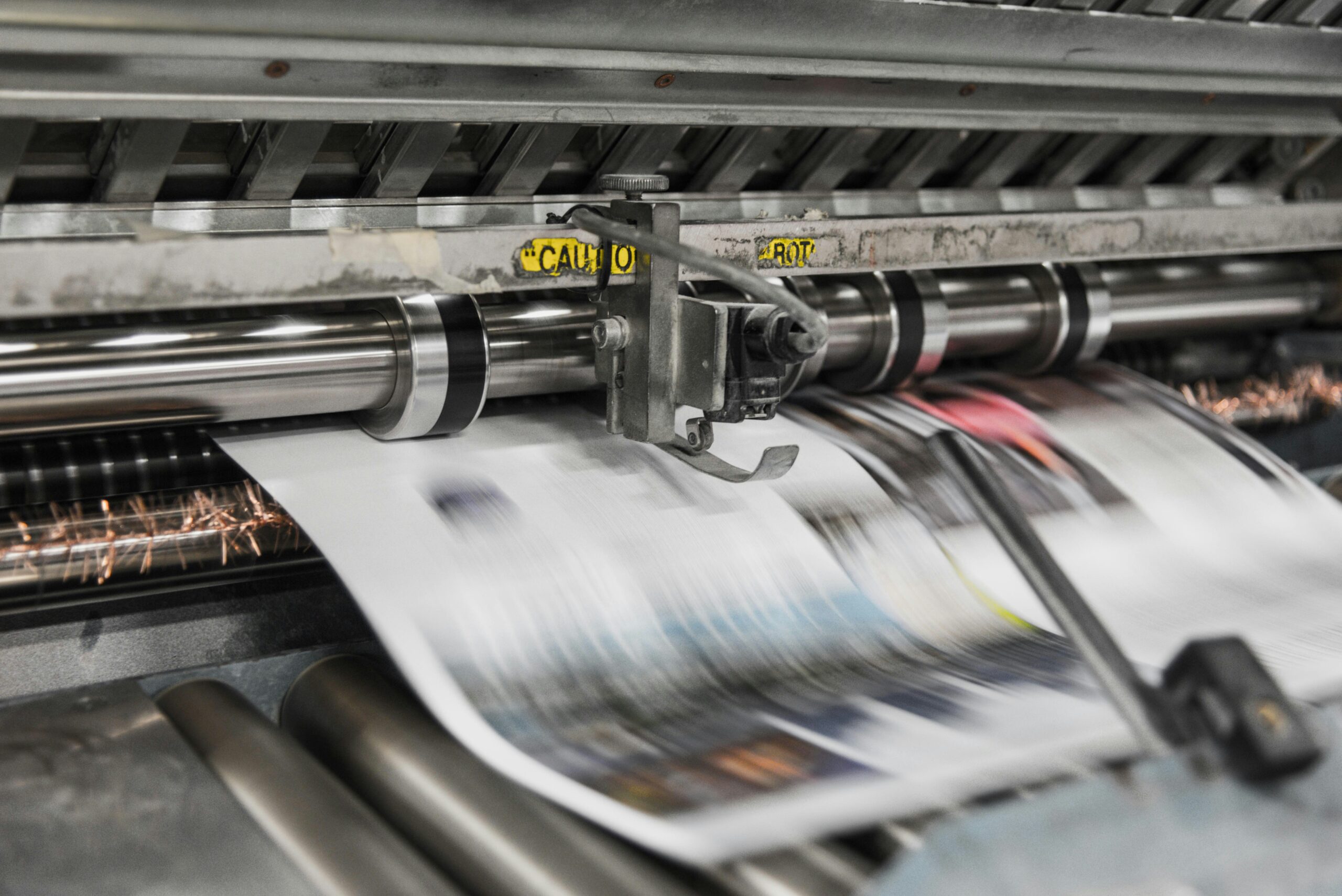

In the manufacturing world, volume is leverage. I have negotiated hundreds of packaging contracts, and the fundamental rule remains the same: factories hate downtime and love efficiency. When you order 500 boxes, the factory spends more time setting up the machine than actually running your job. You pay a premium for that inefficiency. But when you order 10,000, you unlock the magic of economies of scale 1.
However, simply asking ""can you make it cheaper?"" rarely works. You need a strategy. You need to structure your order in a way that aligns with the factory’s production logic. This guide will show you how to do exactly that. From requesting tiered price grids to mastering the art of ""gang run"" printing, I will share 10 proven strategies to lower your unit costs significantly without compromising on quality.
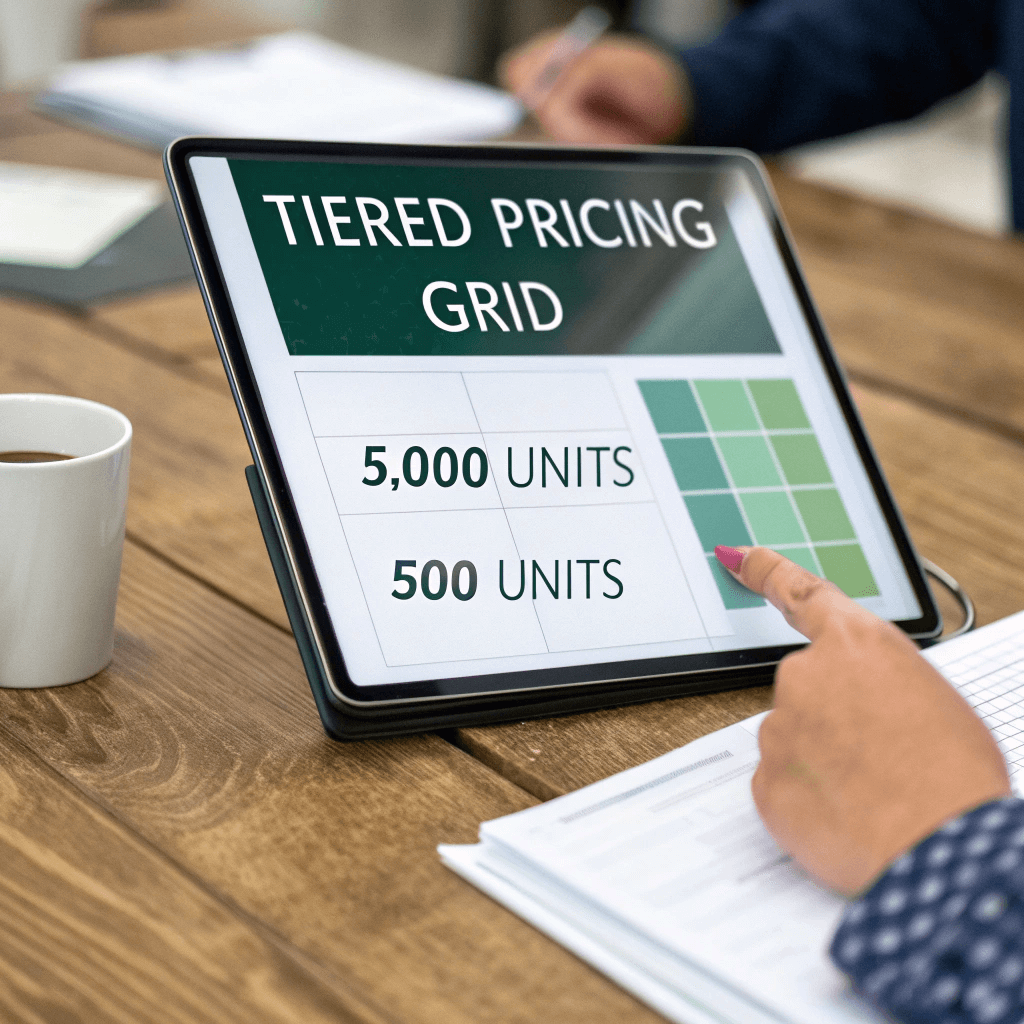
Never ask for a quote for a single quantity. Always ask for a matrix. I typically request quotes for 1,000, 3,000, 5,000, and 10,000 units. This reveals the factory’s cost curve. You will often see a massive drop between 1,000 and 3,000, and then a leveling off. Seeing this grid allows you to make an informed decision about whether the extra inventory is worth the savings.
Every manufacturing process has a ""break point""—the quantity where the setup costs become negligible per unit. For offset printing, this is often around 3,000 to 5,000 sheets. For flexographic printing 2 on corrugated boxes, it might be higher. Ask your supplier directly: ""At what quantity do I see the next significant price drop?"" Their answer might surprise you and change your ordering strategy.
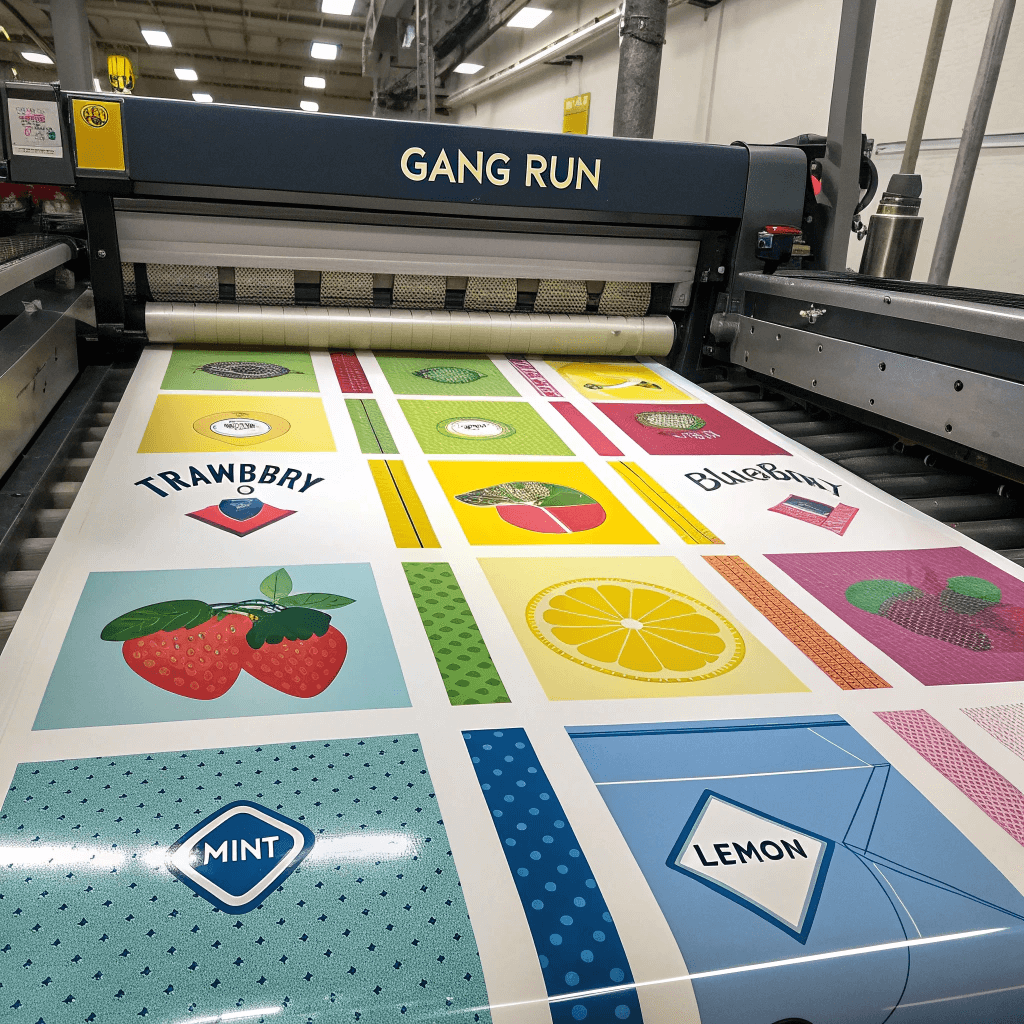
If you have three different products that use the same box size and material, do not order them separately. Use gang run printing 3. This allows the factory to print all three designs on the same sheet of paper at the same time. You get the pricing of a combined bulk order (e.g., 3,000 total units) rather than paying the high setup costs for three separate 1,000-unit runs.
Factories want long-term stability. Instead of negotiating order by order, present your annual demand forecast 4. If you plan to buy 50,000 units this year, negotiate a price based on that total volume, even if you only ship 10,000 at a time. This is often formalized in a ""Blanket Purchase Order.""
Sometimes, a small design tweak can save huge money at scale. Ask your supplier for value engineering 5 suggestions. Maybe reducing the paper weight by 50gsm won’t affect durability but will cut material costs by 10%. Or perhaps removing a complex foil stamp will double the production speed. Be open to trading features for price.
Custom tooling (dies and molds) adds fixed costs. Ask if the factory has ""stock sizes"" or existing molds that are close to your dimensions. Using an existing die means you save the tooling cost 6 and often get a better unit rate because the factory is already set up for that size.
Price isn’t just manufacturing; it’s logistics. A box that is 1mm too large might reduce the number of units that fit on a pallet by 20%. Work with your supplier to optimize the dimensions for cube utilization 7 in shipping containers. Fitting more units per container lowers your landed cost per item.
If you are not in a rush, tell the supplier. Factories have gaps in their production schedules. If you offer a flexible lead time (e.g., ""ship whenever you have a gap in the next 60 days""), they might offer a discount to use your order as a ""filler"" to keep their machines running efficiently.
Cash flow is critical for Chinese factories. While standard terms might be a 30% deposit, offering a 50% deposit or faster final payment can sometimes be leveraged for a discount. It reduces the supplier’s financial risk 8 and improves their working capital.
Once you negotiate a volume discount, lock it in. Use a formal Purchase Order (PO) 9 that clearly states the quantity tiers and the validity period of the price. This prevents ""surprise"" price increases on your second order and ensures the factory honors the agreed-upon volume discount.
| Strategy | Unit Price | Inventory Risk | Flexibility |
|---|---|---|---|
| Spot Buy (Small Order) | High | Low | High |
| Gang Run (Bundled SKUs) | Medium | Low | Medium |
| Blanket PO (Annual) | Low | Medium | Low |
| Bulk Run (One-Time) | Lowest | High | Very Low |
When negotiating for volume discounts with Chinese suppliers, respect is key. Do not just demand the ""cheapest price."" Instead, frame it as a partnership. Show them that you are a growing brand with credible volume. Use data—like your sales growth or competitor pricing—to justify your target price. And remember, price is just one lever. If they can’t lower the price, ask for free upgrades, like better corrugated fluting 10 or free inner cartons, which add value without hurting their bottom line as much as a direct discount.
Getting a better price on custom packaging is not about squeezing your supplier until they break; it’s about aligning your order with the realities of manufacturing efficiency. By increasing your volume, bundling your designs, and planning ahead, you allow the factory to run their machines faster and longer. They save money, and if you negotiate correctly, they pass those savings on to you. Start with a tiered quote, look for the break points, and build a long-term volume strategy that scales with your business.
How can I get a better price if I order a larger quantity of custom packaging?
The most direct way is to ask for quantity breaks. Manufacturing has high fixed setup costs. Spreading these costs over 5,000 units instead of 500 drastically lowers the per-unit cost.
Can I get a price grid showing discounts for different order volumes?
Yes, and you should always request this. Ask for a quote that lists the unit price at 500, 1,000, 3,000, and 5,000 units. This transparency helps you decide the optimal quantity to order.
At what quantity do I start seeing significant price breaks?
For custom printed packaging (offset), the first major break is usually around 1,000 units, where you move past the minimum setup fees. The next ""sweet spot"" is often 3,000 to 5,000 units, where production efficiency maximizes.
Can I combine different designs to meet a higher total quantity for a better price?
Yes, this is called a ""Gang Run."" If your boxes are the exact same size and material, you can often combine different artwork designs (e.g., 4 flavors) into one large production run to reach a higher volume tier.
Should I ask for a quote based on my annual volume instead of a single order?
Absolutely. If you plan to order regularly, tell the supplier your estimated annual volume. They may offer you a ""contract price"" based on the total yearly amount, allowing you to order in smaller batches while paying the bulk rate.
1. Definition of economies of scale in manufacturing. ↩︎
2. Overview of the flexographic printing process. ↩︎
3. How gang run printing reduces costs for multiple designs. ↩︎
4. The importance of accurate demand forecasting. ↩︎
5. Methodology for improving value and reducing costs. ↩︎
6. Breakdown of die-cutting and tooling costs. ↩︎
7. Optimizing cargo space to reduce shipping costs. ↩︎
8. Understanding financial risks in supply chain management. ↩︎
9. Best practices for issuing purchase orders. ↩︎
10. Technical specifications for corrugated board grades. ↩︎
You can leave any questions. We will see and answer you.