Zibo City, Shandong Province

Have Any Questions?

10 AM – 6 PM
Zibo City, Shandong Province
Have Any Questions?
10 AM – 6 PM

Have Any Questions?

In the world of procurement, few things destroy a profit margin faster than a surprise email from your supplier: "Dear partner, due to rising material costs, your next order will be 15% more expensive." I have seen this scenario play out hundreds of times. One month your unit economics are healthy; the next, you are scrambling to absorb a cost hike you didn’t forecast.
While you cannot control the global economy, you can control your contract. Price volatility is a risk to be managed, not a fate to be accepted. This guide is my playbook for stabilizing your supply chain. We will explore how to lock in pricing for the long term, how to structure "adjustment clauses" that protect both parties and the strategic levers you can pull to ensure your packaging costs remain predictable, even when the market goes crazy.

The default validity on a Chinese quote is often just 15 days. This is insufficient for a stable business. I always negotiate a contract price 1 validity of at least 3 to 6 months. This must be explicitly written on the Proforma Invoice or Sales Contract. It creates a window of stability where the supplier agrees to absorb minor market fluctuations in exchange for your order.
For longer contracts (12+ months), a fixed price is risky for the supplier. If paper prices double, they will break the contract. The solution is a "Price Adjustment Clause." This states that prices remain fixed unless raw material costs move by more than a specific threshold (e.g., +/- 5%). This protects you from minor hikes while giving the supplier a safety valve for extreme events.
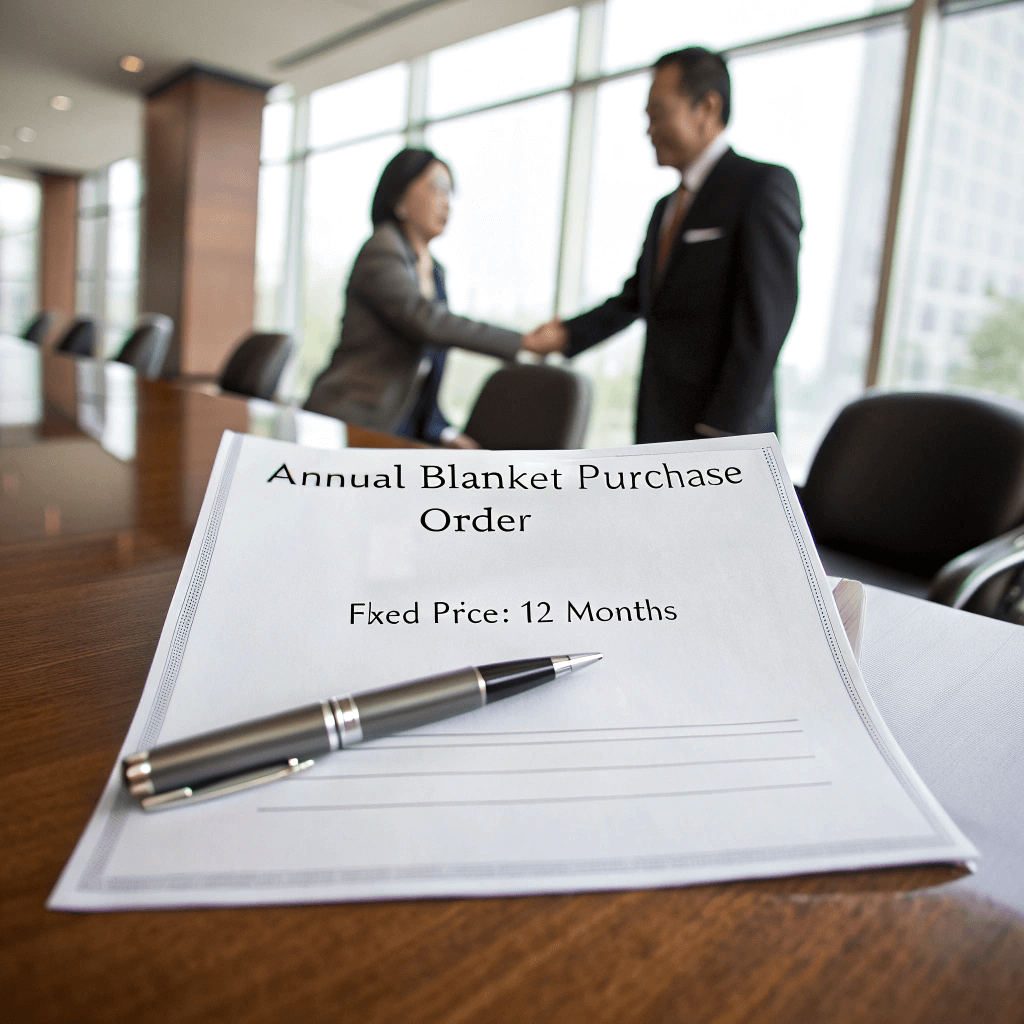
Suppliers need certainty. By issuing a Blanket Purchase Order 2 for your entire annual volume, you commit to buying a set amount over a year. In return, the supplier can pre-purchase the raw paper stock at today’s price, effectively locking in your cost for the duration of the agreement.
Surprise orders lead to surprise prices. If you demand 50,000 boxes tomorrow, the factory has to buy materials at the current "spot price." If you share a 12-month demand forecast 3, they can plan their procurement strategy. I have found that suppliers are much more willing to hold prices steady for clients who give them visibility into the future.
When a supplier claims "paper prices went up," verify it. I monitor commodity price indexes 4 for pulp and paperboard. If the global index is flat but your supplier wants a 10% increase, you have data to push back. Demand that they provide evidence (mill invoices) justifying any increase.
In negotiation theory, your power comes from your BATNA 5 (Best Alternative to a Negotiated Agreement). Always keep a second supplier qualified and ready. If your primary factory insists on an unreasonable price hike, having a competitive quote from a backup supplier gives you the leverage to say "no" or the ability to switch if necessary.
Don’t paint yourself into a corner. If your design relies on a niche, single-source specialty paper, you are vulnerable. I advise clients to validate alternative materials 6 during the design phase. If the price of "Brand X" luxury paper skyrockets, you should be able to switch to "Brand Y" or a standard SBS board without redesigning the structural die-lines.
When prices are low and stable, buy more than you need. Building a safety stock 7 acts as a hedge against future volatility. If tariffs threaten to rise or a paper shortage looms, having 3 months of packaging in your warehouse insulates you from the immediate chaos of the market.
Sometimes the price increase isn’t about paper; it’s about the dollar. If the RMB strengthens against the USD, the factory effectively earns less. Include a currency fluctuation clause 8 in your contract. For example: "Prices remain fixed unless the exchange rate shifts by more than 3%." This prevents the supplier from using minor currency blips as an excuse to raise prices.
Complacency costs money. Even if you are happy with your supplier, you should conduct a cost benchmarking 9 exercise every 6 to 12 months. Send your specs to the market to ensure your "fixed" price is still competitive. If the market price has dropped, use that data to negotiate a price decrease at your next contract renewal.
| Feature | Spot Buying (Order by Order) | Contract Pricing (Fixed Term) |
|---|---|---|
| Price Stability | Low (Fluctuates with market) | High (Locked for duration) |
| Supplier Commitment | Low | High |
| Risk of Increase | High | Low (Protected by clauses) |
| Flexibility | High (Can switch suppliers easily) | Low (Committed to volume) |
| Best For | Trial orders, volatile demand | Established products, steady volume |
Here is the exact logic you should use in your contract:
"The Unit Price shall remain fixed for a period of 6 months. Price adjustments will only be considered if the cost of raw materials (specifically [Paper Grade]) increases by more than 5% according to the [Industry Index]. Any proposed increase must be communicated in writing 60 days in advance and supported by supplier invoices proving the cost rise."
This clause eliminates surprise hikes and forces the supplier to prove their case with data.
Protecting your business from packaging price increases requires a shift from reactive ordering to proactive supply chain management 10. You cannot rely on a handshake. By locking in validity periods, using data to verify costs, and maintaining a credible backup plan, you strip the volatility out of your procurement. You turn a variable cost into a fixed one, allowing you to forecast your margins with confidence and focus on growing your brand.
Why might the price of my packaging change between my first and second order?
Prices change due to three main factors: 1. Raw Material Costs: Paper pulp prices fluctuate globally. 2. Exchange Rates: The USD/RMB rate changes daily. 3. Labor/Energy: Operational costs in China are rising. If you didn’t lock in a price, the supplier will update the quote to reflect current market conditions.
Can I get a fixed price in my contract for a specific period, like 6 or 12 months?
Yes, but you usually need to offer something in return, such as a volume commitment (Blanket PO) or a deposit that allows the factory to pre-buy materials. 6 months is a standard fix; 12 months is harder to get without a price adjustment clause.
How are price changes related to raw paper material costs communicated to me?
Ideally, they should be communicated formally in writing with a notice period (e.g., 30 days). You should require the supplier to show a "before and after" breakdown of the material cost increase to prove the hike is justified and not just profit-padding.
What strategies can I use to mitigate the risk of price volatility?
The best strategies are: 1. Long-term contracts with fixed pricing. 2. Blanket Purchase Orders to lock in volume. 3. Material flexibility (approving two different paper brands). 4. Holding safety stock to ride out price spikes.
1. Best practices for managing procurement contracts. ↩︎
2. How Blanket Purchase Orders stabilize pricing. ↩︎
3. The importance of accurate demand forecasting. ↩︎
4. Global market analysis for paper and paperboard trends. ↩︎
5. Understanding BATNA in negotiation strategy. ↩︎
6. Exploring alternative materials for packaging resilience. ↩︎
7. The role of safety stock in inventory management. ↩︎
8. Managing foreign exchange risk in international trade. ↩︎
9. Using cost benchmarking to validate supplier pricing. ↩︎
10. Insights into modern supply chain management strategies. ↩︎
You can leave any questions. We will see and answer you.