Zibo City, Shandong Province

Have Any Questions?

10 AM – 6 PM
Zibo City, Shandong Province
Have Any Questions?
10 AM – 6 PM

Have Any Questions?

In my years of sourcing, I have found that the moment of payment is often the most nerve-wracking part of the process for new importers. You have designed the perfect box, negotiated a great price, and now you are staring at a screen, preparing to wire thousands of dollars to a bank account halfway across the world. Is it safe? Will they disappear with the money?
Choosing the right payment method is about balancing risk, cost, and speed. While a bank wire is the industry standard, it offers zero buyer protection once the money leaves your account. On the other hand, platforms like PayPal offer protection but charge fees that can eat your margins alive. This guide is my financial playbook. I will break down the most common payment methods used by Chinese packaging factories, explain the standard "30/70" split, and show you how to structure your payments to protect your business.
The Telegraphic Transfer 1, commonly known as a wire transfer, is the standard payment method for international trade. It is essentially a direct bank-to-bank transfer using the SWIFT network.
For very large orders (typically over $50,000), a Letter of Credit 2 is the safest option. It is a guarantee from your bank that the supplier will be paid only after they submit proof that the goods have shipped (like a Bill of Lading).
While popular for e-commerce, PayPal 3 is rarely used for bulk manufacturing orders due to high transaction fees (often 4-5% + FX fees). Suppliers will usually refuse it for large amounts or ask you to cover the fee.
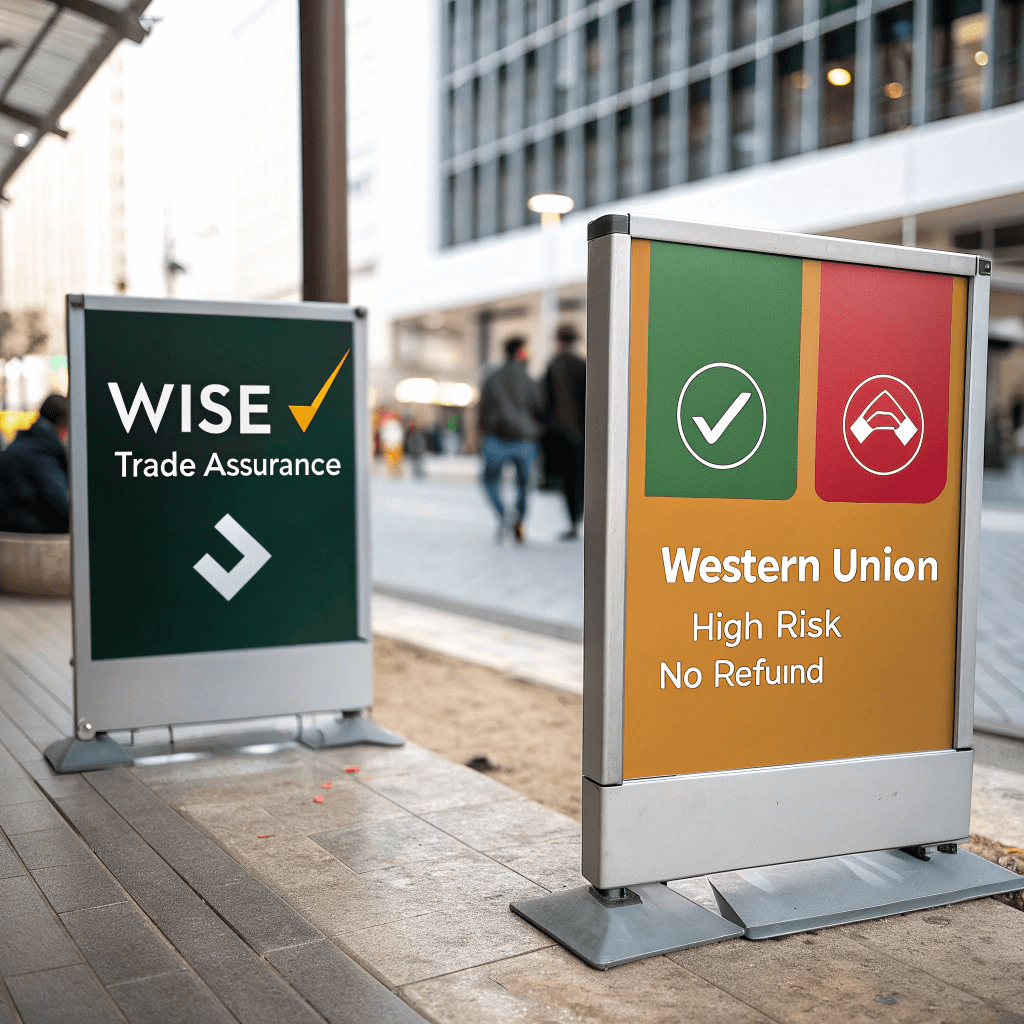
Platforms like Alibaba offer Trade Assurance 4, which acts as an escrow service. You pay the platform, and they hold the funds until you confirm the goods have been shipped and meet quality standards.
For mid-sized payments, Wise 5 is a game-changer. It uses real mid-market exchange rates and local bank transfers to move money cheaper and faster than traditional banks.
I strongly advise against using Western Union 6 for business transactions. It is intended for personal transfers. There is virtually no paper trail or recourse if the supplier takes the cash and disappears.
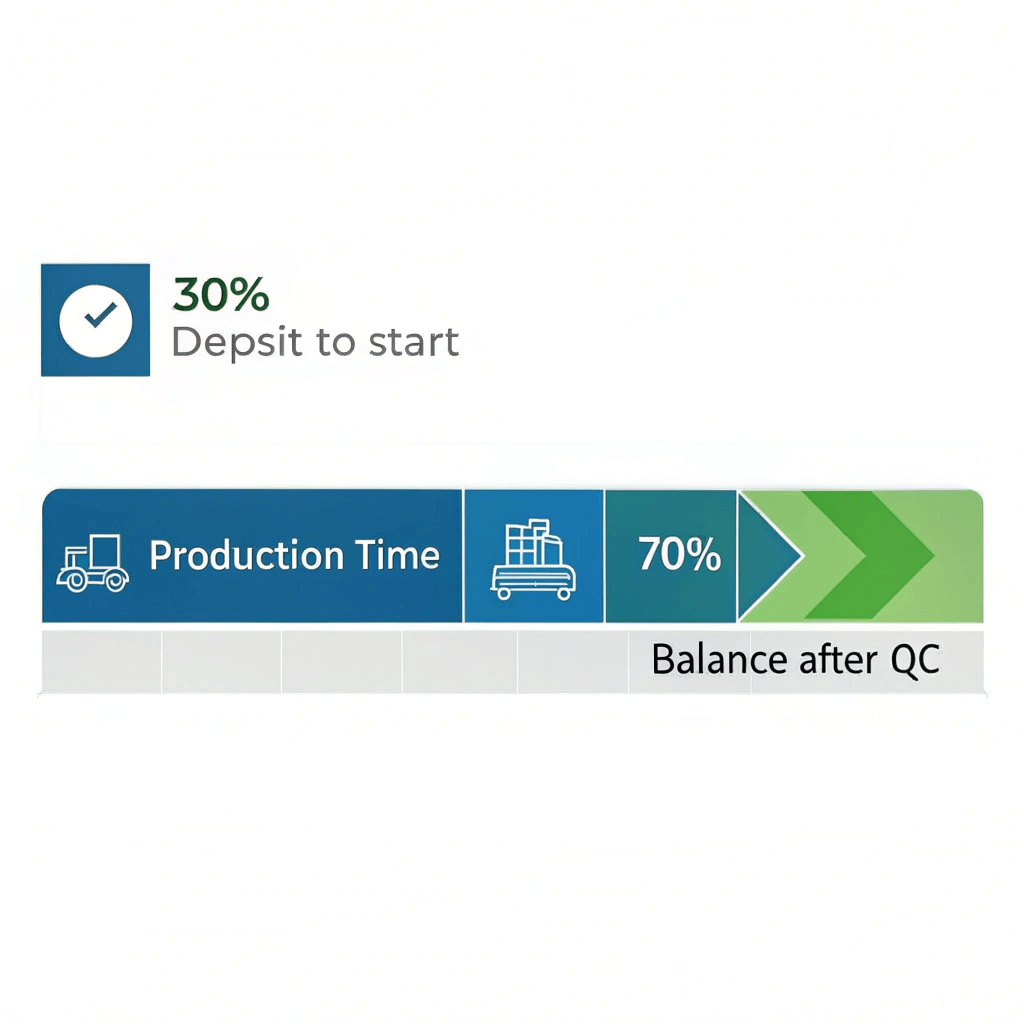
You should rarely pay 100% upfront. The industry standard is a 30% Deposit to start production (funds raw materials) and a 70% Balance paid after production is finished but before shipment.
Business email compromise is real. Hackers can intercept emails and change bank details on a PDF invoice. Always verify the SWIFT code 7 and account number.
Most quotes are in USD. However, the factory operates in RMB (CNY). Fluctuations in the exchange rate 8 can affect your pricing. Some suppliers allow you to pay in RMB if you have a multi-currency account, which can sometimes secure a better price.
Direct credit card payments to factories are rare. However, you can use a credit card through third-party platforms (like Trade Assurance or PayPal). This allows you to leverage chargeback protection 9, though you will pay a processing fee (usually ~3%).
| Method | Cost/Fees | Buyer Risk | Supplier Acceptance | Best Use Case |
|---|---|---|---|---|
| T/T (Wire) | Low ($20-$50) | Medium/High | Very High | Standard Bulk Orders |
| L/C | High ($200+) | Very Low | Medium | Orders > $50k |
| PayPal | Very High (4%+) | Low | Low (for bulk) | Samples Only |
| Trade Assurance | Medium (2-3%) | Low | High (on platform) | New Suppliers |
| Western Union | Medium | Extreme | Low | Avoid |
If you are working with a new supplier for the first time, do not use a direct T/T wire transfer immediately. I recommend using a Trade Assurance or Escrow service for the first order. This keeps your leverage high. Once you have built trust and verified their quality over 2-3 orders, you can switch to T/T with 30/70 terms to save on transaction fees. Always ensure your Proforma Invoice (PI) 10 clearly states the payment terms and bank details before you send a cent.
Paying a Chinese supplier is a routine business process, but it requires vigilance. By choosing the right method for your order size—PayPal for samples, Trade Assurance for pilots, and T/T for bulk—you can protect your capital. Remember, the "30% Deposit, 70% Balance" structure is your most powerful tool. It ensures the factory has skin in the game to finish your order, while you retain the leverage to demand quality before releasing the final funds.
Is it safe for me to pay using a wire transfer (T/T)?
It is safe if you trust the supplier. T/T offers no built-in protection. Once the money is sent, you cannot get it back. Only use T/T with established partners or after a successful small trial order paid via a protected method.
Do suppliers accept PayPal or credit cards for deposits or sample fees?
Yes, almost all suppliers accept PayPal for small amounts like sample fees ($50-$300). They generally do not accept credit cards directly, but you can use a card to pay through a platform like Alibaba Trade Assurance.
What is a Letter of Credit (L/C) and should I consider using one?
An L/C is a bank guarantee. You should only consider it if your order value is very high (typically over $50,000) because the bank fees and administrative setup are expensive and time-consuming. For smaller orders, it is overkill.
What’s the safest way for me to pay a new Chinese supplier for the first time?
The safest way is through a platform with an Escrow service (like Alibaba Trade Assurance). The supplier sees the money is there, but they don’t receive it until they ship the goods. This bridges the trust gap perfectly for a first transaction.
1. Definition and mechanics of a Telegraphic Transfer (T/T). ↩︎
2. How Letters of Credit work in international trade. ↩︎
3. PayPal’s solutions and fees for business transactions. ↩︎
4. Explanation of Alibaba’s Trade Assurance protection service. ↩︎
5. Benefits of using Wise for international business payments. ↩︎
6. Western Union’s money transfer services (and risks). ↩︎
7. Understanding SWIFT codes for international banking. ↩︎
8. Live currency exchange rates and historical data. ↩︎
9. What chargebacks are and how they protect consumers. ↩︎
10. The role of a Proforma Invoice in the import process. ↩︎
You can leave any questions. We will see and answer you.