Zibo City, Shandong Province

Have Any Questions?

10 AM – 6 PM
Zibo City, Shandong Province
Have Any Questions?
10 AM – 6 PM

Have Any Questions?

In my years of working with Chinese packaging manufacturers 1, one of the most common questions I hear from international buyers is:
“How can I be sure a factory can handle my fully customized packaging design before I pay?”
I’ve learned that verifying a supplier’s custom packaging capability requires far more than just reviewing prices or photos. You’re not just buying a box — you’re buying a production system capable of translating your design files into consistent, high-quality packaging that performs exactly as expected.
In this guide, I’ll share a proven, step-by-step process that sourcing professionals use to verify Chinese packaging factories before placing orders. Whether you’re developing premium rigid boxes, printed corrugated cartons, or specialty paper tubes, these steps will help you minimize risk, validate technical capability, and ensure your packaging meets the standards of your brand.
When sending your artwork or dieline, providing the correct file format is critical to ensure accurate translation from design to die-cut.
The most accepted file formats include:
✅ Tip: Always include a visual preview (JPEG or PNG) along with your editable file to prevent misinterpretation during prepress.

Before you sign a contract or make a deposit, go through these critical verification checkpoints.
You need more than just a dieline. Your factory should confirm — in writing — each of the following:
| Specification Aspect | Details to Verify |
|---|---|
| Material | Type (kraft, duplex, grayboard), grammage or thickness |
| Finishes & Coatings | Lamination, varnish, foil stamping, embossing |
| Printing | Offset, flexo, or digital methods; CMYK/Pantone profiles |
| Structural Accuracy | Fold lines, glue flaps, tolerance levels |
| Performance | Compression strength, colorfastness, and end-use suitability |
A credible manufacturer will understand and document each of these parameters clearly.
Ask for documented proof of production capability. This can include:
⚙️ Pro Tip: Factories serious about quality can usually provide a process flow diagram 6 showing how your order will move from prepress to final packing.
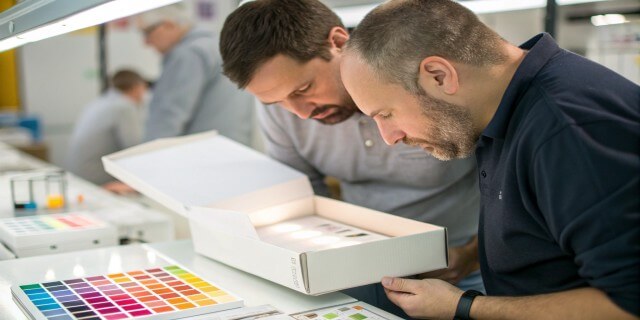
Never skip this step. Before full production:
Once approved, both parties should sign and seal the approved sample as the “golden reference.”
A reliable supplier should maintain clear QA systems, including:
If these systems don’t exist, consider it a red flag.
Ask the factory for:
A factory that regularly handles seasonal surges and export shipments 10 is more likely to meet your deadlines reliably.
Verifying a custom packaging factory in China requires structure, data, and discipline. The best partners don’t just say “yes” to every design — they demonstrate capability, provide transparent documentation, and welcome scrutiny.
By following these verification steps, you’ll reduce risk, protect your design IP, and ensure your packaging reflects your brand’s quality. Before your next order, send your factory this checklist — and see how confidently they respond.
Ready to start?
Begin by requesting a sample and an equipment capability sheet — that’s the fastest way to separate real manufacturers from trading companies.
1. Overview of China’s packaging manufacturing industry and export trends. ↩︎
2. Adobe Illustrator guide to using dieline templates effectively. ↩︎
3. Learn why PDFs are crucial for accurate proof communication. ↩︎
4. Introduction to DXF file structures in CAD workflows. ↩︎
5. Structural design case studies for complex packaging projects. ↩︎
6. How flow diagrams help visualize production quality steps. ↩︎
7. Pantone’s color proofing standards for print consistency. ↩︎
8. Basics of Statistical Process Control for quality monitoring. ↩︎
9. Explanation of AQL standards in packaging inspections. ↩︎
10. Insights into logistics and export management in China’s manufacturing. ↩︎
You can leave any questions. We will see and answer you.