Zibo City, Shandong Province

Have Any Questions?

10 AM – 6 PM
Zibo City, Shandong Province
Have Any Questions?
10 AM – 6 PM

Have Any Questions?
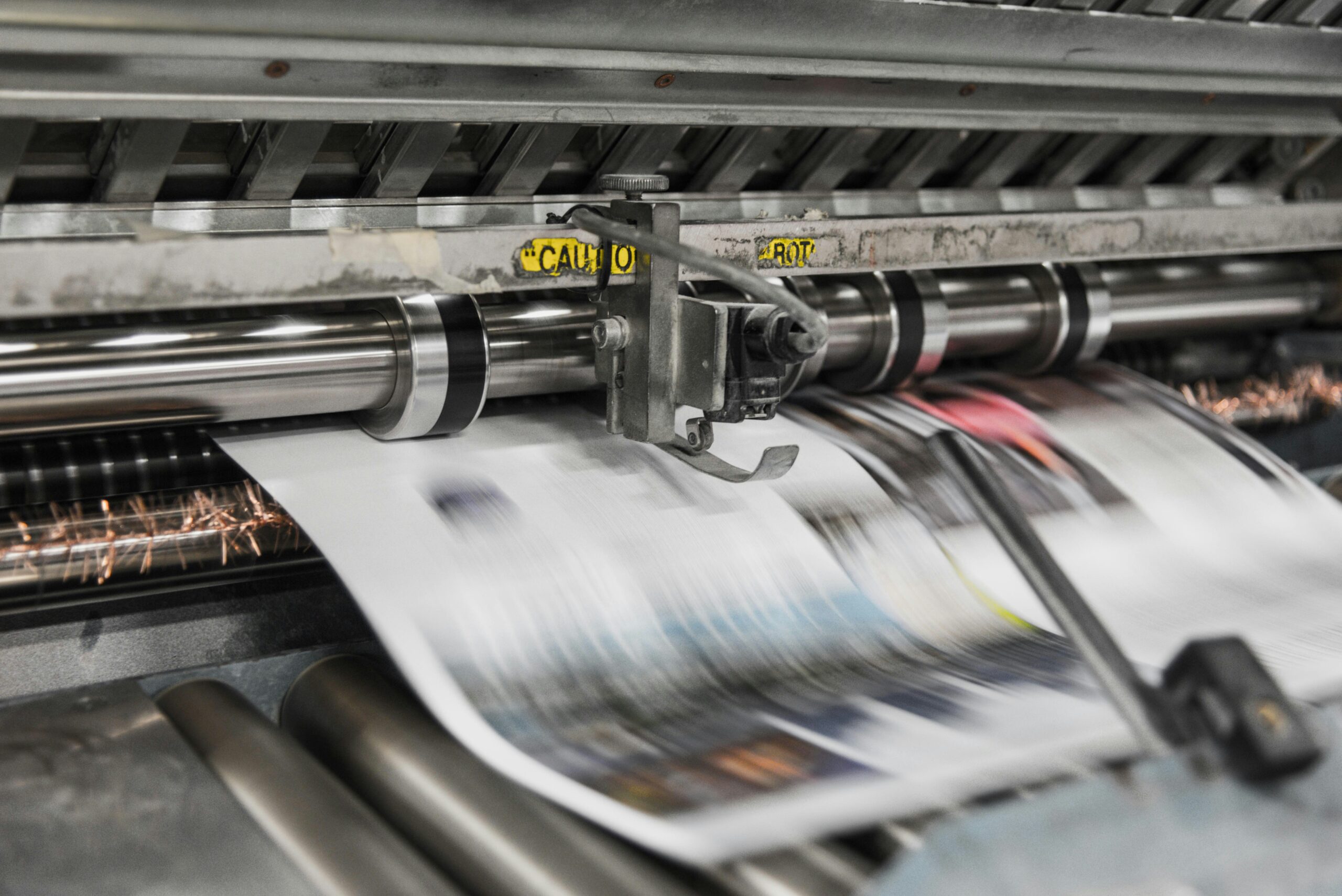

Laser printing stands as a pivotal technology in modern document production, renowned for its capacity to generate high-quality text and graphics with notable speed and precision. The fundamental process relies on the principles of electrophotography, where a precisely controlled laser beam interacts with an electrostatically charged cylindrical drum—the photoconductor—to form a latent image. This image is then developed with toner and transferred to paper. The prevalence of laser printers in diverse settings, from large-scale commercial operations to individual home offices, underscores their significance in facilitating efficient and high-fidelity document reproduction. This technology has become indispensable due to its consistent output quality and operational reliability, marking a substantial advancement over preceding duplication methods. The ability to deliver crisp text and detailed images rapidly has cemented its role in environments demanding both productivity and professional-grade results.
The development and refinement of laser printing represent a sophisticated amalgamation of various scientific and engineering disciplines. It is not merely the application of a laser; rather, the laser is a critical component within a complex system that also involves intricate electrostatics, precise mechanical movements, specialized chemical formulations for toner, and carefully engineered paper properties. This convergence of optics, materials science, and mechatronics highlights the interdisciplinary innovation required to bring such a technology to fruition and widespread adoption. Understanding laser printing, therefore, necessitates an appreciation of how these distinct fields are harmonized to achieve a common objective: the faithful and efficient transfer of digital information onto a physical medium.
At the heart of laser printing lies the scientific principle of electrophotography. This process fundamentally utilizes static electricity and light to create an image, which is then made visible using fine powder (toner) and permanently fixed onto paper. Conceived by Chester Carlson, electrophotography provided a novel approach to document duplication, distinct from earlier mechanical or chemical methods. While the term “laser printing” emphasizes the role of the laser in image creation, the broader electrophotographic process is the foundational technology. The laser serves as a highly precise and rapid means of generating the electrostatic latent image on the photoreceptor drum, but the underlying principles of charge manipulation, toner attraction, and transfer are common to other electrophotographic devices, such as photocopiers.
The success and evolution of electrophotography paved the way for the integration of lasers as the exposure source. Early electrophotographic machines, like the Xerox 914 photocopier, demonstrated the viability of the core process using light reflected from an original document. The subsequent incorporation of a laser beam allowed for direct digital-to-print capabilities, offering enhanced resolution, speed, and versatility. This technological progression illustrates an evolutionary pathway where a robust foundational principle—electrophotography—is augmented by advancements in related fields, in this case, laser optics and digital control systems, to create a more powerful and refined application.
This report aims to provide an expert-level examination of laser printing technology. It will delve into the historical antecedents that led to its development, meticulously detail the multi-step operational mechanics, and critically analyze the crucial role of paper characteristics in achieving optimal print quality and printer performance. The analysis is based on comprehensive information regarding the history, operational steps, and paper requirements pertinent to laser printing.

Prior to the advent of electrophotography, the methods available for document duplication were laborious and often yielded unsatisfactory results. Creating copies typically involved manually retyping entire documents, a time-consuming and error-prone process, or utilizing carbon paper, which produced limited numbers of copies and was often messy to handle. These limitations significantly hampered office productivity and the dissemination of information, creating a clear, albeit perhaps not widely articulated, need for a more efficient and cleaner duplication technology.
In this context, Chester Carlson, a physicist and patent attorney, conceived of a revolutionary approach to document copying. In 1938, Carlson invented the process he termed electrophotography, a method that ingeniously employed static electricity and light to create copies of documents. His concept involved creating an electrostatic charge on a photoconductive surface, selectively dissipating that charge with light to form a latent image, developing the image with powder, and then transferring the powder image to paper.
Despite the ingenuity of his invention, Carlson initially encountered considerable resistance and skepticism from established companies. Many industry leaders at the time believed that existing methods, such as carbon paper, were adequate for prevailing needs, failing to recognize the transformative potential of Carlson’s electrophotographic process. This initial reluctance highlights a common pattern in technological innovation, where the true value or necessity of a groundbreaking idea is not immediately apparent, requiring persistence and vision to overcome entrenched perspectives.
After more than a decade of seeking support for his invention, a crucial turning point occurred in 1949. The Haloid Company, a small firm based in Rochester, New York, specializing in photographic paper, recognized the potential of Carlson’s patents and secured the rights to develop the electrophotography process. This decision by Haloid, which would later rename itself Xerox Corporation, provided the critical investment and research focus needed to translate Carlson’s concepts into a commercially viable technology.
Following years of intensive research and development, Xerox achieved a monumental breakthrough. In 1959, the company introduced the Xerox 914, the world’s first commercially successful automatic plain paper photocopier. While the Xerox 914 was a photocopier that used a light source to image an original document rather than a laser to create an image from digital data, its mechanism was fundamentally based on Carlson’s electrophotographic principles. The machine was large, complex, and expensive for its time, yet its ability to quickly produce high-quality copies on ordinary plain paper revolutionized office work. The success of the Xerox 914 was profound; it not only validated the commercial potential of electrophotography but also firmly established the market demand for convenient and rapid document duplication. This triumph directly laid the groundwork for subsequent innovations within the field of electrophotography, most notably the development of laser printing technology, which would adapt the core process for direct digital output.
The journey from Carlson’s initial concept in 1938 to the widespread market impact of the Xerox 914 in 1959, a span of 21 years, illustrates the often-extended timeline required for transformative technologies to mature. This “long fuse” of innovation underscores that significant breakthroughs frequently necessitate sustained periods of development, refinement, and the overcoming of both technical and market-related hurdles. The initial skepticism Carlson faced further contributed to this extended gestation period, emphasizing that patience, perseverance, and long-term investment are often indispensable for realizing the full potential of groundbreaking ideas.
Furthermore, the Xerox 914 served as the “killer application” that unequivocally demonstrated the immense value of electrophotography. Its commercial success was instrumental in proving the core principles of the technology and attracting further investment and research into more advanced applications, such as laser printing. Without the tangible success of the 914 in the photocopier market, the impetus and resources to develop more sophisticated electrophotographic systems might have been significantly diminished or delayed. This highlights a common dynamic where a successful initial product, even if not the ultimate embodiment of a technology, can be pivotal in validating its underlying concepts and creating a pathway for future, more advanced developments. A key factor in the Xerox 914’s success was its ability to use “plain paper”. Unlike previous copying methods that often required specialized, costly, or inconvenient treated papers, the 914’s compatibility with readily available and economical plain paper dramatically lowered adoption barriers and operational costs. This strategic advantage significantly contributed to its widespread acceptance and transformative impact on office workflows, foreshadowing the later detailed considerations of paper properties specifically optimized for the even more demanding laser printing process.
The modern laser printing process, an evolution of Carlson’s electrophotography, translates digital data into a physical print through a sequence of precisely coordinated steps. Central to this operation is the photoconductor drum (often referred to as an imaging drum or organic photoconductor – OPC drum), a cylindrical component typically coated with a photosensitive material. This drum is often integrated within the toner cartridge assembly. The entire printing cycle relies on the perfect synchronization of electrical charging and discharging, precise optical targeting by the laser, mechanical movement of the drum and paper, and controlled thermal energy for fusing the image. This sophisticated interplay underscores that laser printers are complex mechatronic systems, where reliability and quality depend on the precise control and integration of multiple physical domains. Any imprecision or failure in one phase can cascade, leading to degraded print quality or operational malfunctions.
The process can be understood through six key operational phases:
The performance of a laser printer and the quality of its output are not solely dependent on the printer’s mechanical and electronic sophistication. The paper used is an equally critical component, playing an active role in the complex electrophotographic process. It is a misconception that any paper will suffice; “laser printer paper isn’t generic”. The intense heat generated by the fuser unit and the reliance on precise electrostatic charge manipulation mean that paper intended for laser printing must possess specific physical and chemical properties. Using paper that is not optimized for these conditions can lead to a host of problems, including poor print quality, paper jams, and even premature wear on printer components. Laser printer paper is, therefore, an engineered consumable, with its characteristics finely tuned to interact predictably with the demanding stages of the printing process.
Many of these critical paper properties are particularly vital due to the conditions imposed by the fuser assembly. The fusing stage, with its high temperatures and pressures, represents the most extreme environment the paper encounters within the printer. Consequently, properties such as moisture content (which can affect how paper behaves under heat), curl control (heat being a primary inducer of curl), and the uniformity of fiber formation (which influences heat absorption) are paramount for ensuring that the paper survives this stage without compromising image quality or causing mechanical failures. This underscores how the fuser acts as a significant design constraint for paper manufacturers.
Several key characteristics determine a paper’s suitability and performance in a laser printer. These properties are often interrelated, meaning that achieving an optimal balance is a complex task for paper manufacturers. For instance, processes that enhance smoothness might affect stiffness or formation, requiring careful control during production.
The following table summarizes the critical characteristics of paper designed for laser printing, their importance, and the consequences of using paper with suboptimal properties.
| Paper Characteristic | Why It’s Important for Laser Printing | What Happens if It’s Wrong |
|---|---|---|
| Conductivity | Needs to hold and transfer electrical charges uniformly for toner transfer. Often has additives like NaCl (salt) to help control this. | Poor conductivity leads to uneven toner transfer, resulting in…source heating/fusing stage. |
导出到 Google 表格
Beyond the intrinsic properties of the paper sheet itself, aspects of its manufacturing process can also have a significant, albeit often overlooked, impact on laser printer performance and longevity. One such critical factor is the quality of the paper cutting at the mill. If the blades used to cut the large paper rolls into individual sheets are dull, worn, or improperly set, they can create an excess of tiny paper fibers and dust along the edges of each sheet.
These microscopic fibers and paper dust particles do not remain innocuously on the paper edges. As sheets are fed through the printer, this debris can detach and accumulate within the intricate mechanisms of the device. Over time, this accumulation can lead to a range of deleterious effects :
The subtle issue of paper cutting quality illustrates how seemingly insignificant details at the microscopic level can aggregate to cause substantial, macroscopic operational problems in a precision machine like a laser printer. This demonstrates a clear causal chain: a suboptimal manufacturing step (poor cutting) introduces micro-scale contaminants (fibers and dust), which then lead to macro-scale system issues such as jams, component wear, and visible print defects. This underscores the sensitivity of high-precision equipment to contamination and highlights the importance of stringent quality control throughout the entire supply chain of consumables.
Recognizing the importance of clean-cut paper, manufacturers in the paper industry often assess the cut quality of their products. This can involve using a rating scale or other quality control metrics to ensure that the paper meets certain standards for edge cleanliness and minimal dust generation. While these ratings may not always be visible to the end consumer, they represent an effort by reputable paper manufacturers to minimize problems related to paper-derived contamination.
The printer, in its daily operation, inadvertently acts as an “environmental sampler,” accumulating not only airborne dust from its surroundings but also contaminants introduced by the consumables it processes, primarily paper. Each sheet that passes through contributes, however minutely, to the internal environment of the printer. This reinforces the necessity for regular printer maintenance and cleaning, particularly when using paper of unknown or lower quality, or when operating the printer in environments with high particulate levels. It also suggests that the long-term reliability and component lifetime of a printer are influenced not just by its intrinsic design and build quality, but also by the quality of the paper it consistently processes.
The journey of laser printing technology, from Chester Carlson’s pioneering concept of electrophotography in 1938 to the sophisticated devices common today, represents a remarkable application of physics and engineering. The core of this technology remains the electrophotographic process, a meticulously orchestrated sequence of steps involving the precise manipulation of light, static electricity, finely powdered toner, and heat to transfer an image onto paper. This process, typically involving charging, exposure, developing, transfer, fusing, and cleaning, transforms digital information into a durable physical document with high fidelity.
A critical understanding derived from this examination is that optimal laser printing performance is not solely a function of the printer’s design and engineering; it is equally dependent on the specialized characteristics of the paper used. Paper is not a mere passive substrate but an active participant whose properties must be carefully tailored to withstand and interact correctly with the electrical, mechanical, and thermal stresses imposed by the printing process. The demands of each stage, from holding an electrostatic charge for toner transfer to enduring the intense heat and pressure of fusing, dictate the necessary physical and chemical attributes of the paper, such as conductivity, moisture content, smoothness, and dimensional stability. This highlights a symbiotic relationship where advancements in printer technology often necessitate corresponding advancements in paper science.
While the source material primarily focuses on the operational mechanics and material requirements, several advantages of laser printing are implied. These include its capability for high-speed output, the precision afforded by laser-based imaging, and the permanence of the fused toner image. However, the detailed discussion also brings to light important considerations. The technology’s sensitivity to paper quality is paramount; using incorrect or poorly manufactured paper can lead to suboptimal print quality, paper jams, and increased printer wear. Furthermore, the potential for issues arising from paper dust, a byproduct of paper cutting, underscores the need for quality consumables and printer maintenance.
Laser printing has profoundly altered document production across countless domains. Its development and refinement exemplify the ingenious application of fundamental scientific principles—particularly electrostatics and optics—coupled with sophisticated mechanical engineering and materials science. As a mature technology, it continues to be a cornerstone of information dissemination in both professional and personal spheres, valued for its reliability, quality, and efficiency.
The intricate nature of laser printing underscores that a system-level perspective is crucial for its full appreciation. The history, the printing mechanism, the specific properties of the paper, and even the details of paper manufacturing are all interconnected elements. A deficiency or variation in one part of this system, such as inappropriate paper moisture content or poor paper cutting quality, can directly compromise the performance of the entire system, manifesting as print defects or mechanical failures. Optimizing performance or troubleshooting issues therefore requires a holistic view that considers the printer hardware, the control systems, and the consumables as an integrated whole.
Moreover, the common laser printer, a ubiquitous fixture in many environments, operates on sophisticated scientific principles that are largely invisible to the everyday user. The detailed electrophotographic process and the engineered nature of specialized laser paper represent a significant body of scientific and technical knowledge. This “hidden science” embedded in an everyday technology serves as a reminder that convenience and ease of use often mask considerable underlying complexity, born from decades of research, development, and continuous refinement.
📧 Email us at: sales@fohopackaging.com 📞 Contact us on WhatsApp: +86 136 1533 5353
You can leave any questions. We will see and answer you.