Zibo City, Shandong Province

Have Any Questions?

10 AM – 6 PM
Zibo City, Shandong Province
Have Any Questions?
10 AM – 6 PM

Have Any Questions?

In my years of managing supply chains, I have seen more money wasted on inefficient shipping strategies than on the product manufacturing itself. You can negotiate the perfect unit price for your custom boxes, but if you choose the wrong shipping term, your profit margin can vanish at sea. The choice between FOB (Free on Board) and DDP (Delivered Duty Paid) is not just a logistical detail; it is a fundamental business decision that dictates who controls the freight, who bears the risk, and ultimately, how much you pay.
New importers often gravitate toward DDP for its simplicity, while seasoned pros usually fight for FOB to gain control. But which is right for your specific situation? This guide cuts through the jargon. I will break down the responsibilities, costs, and risks associated with both terms, helping you decide whether to take the wheel or let your supplier drive.
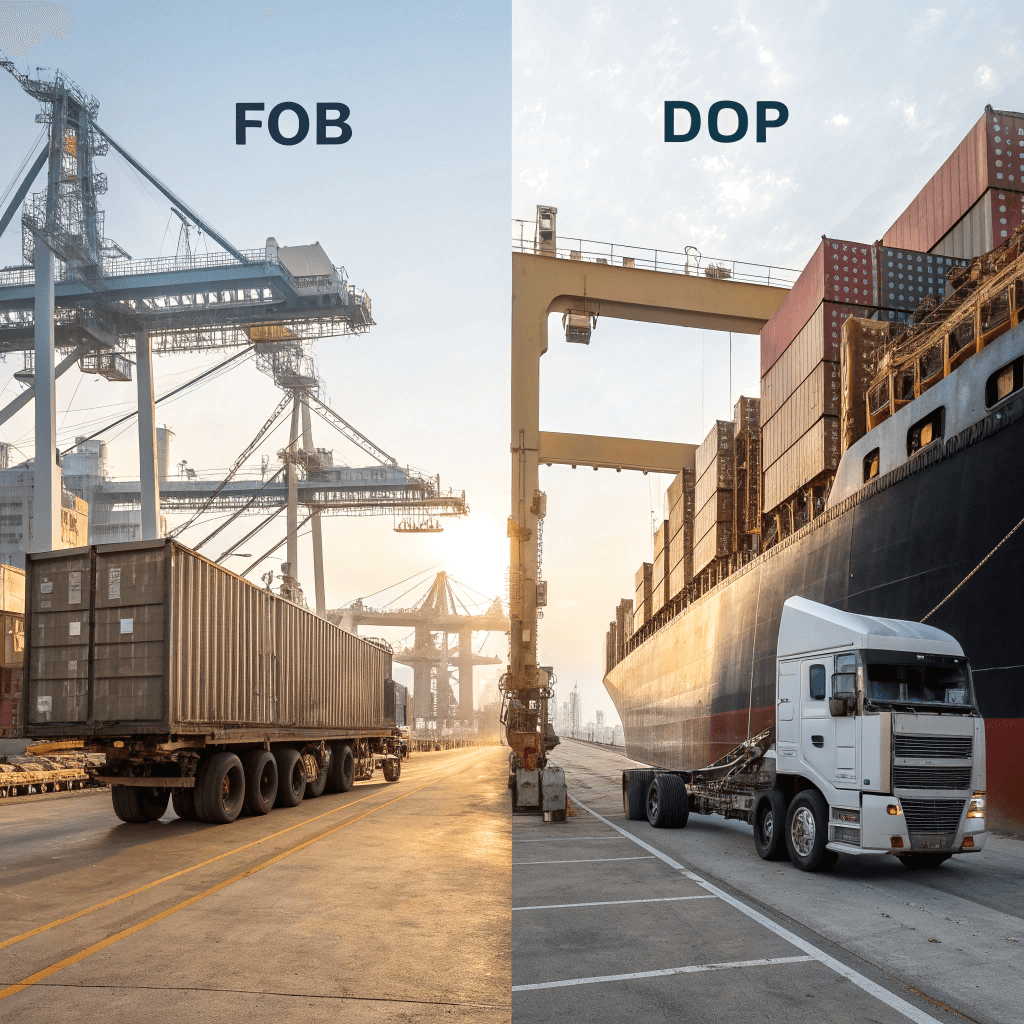
FOB (Free on Board) 1 is the industry standard for B2B importing. Under this term, your supplier is responsible for manufacturing the goods and getting them onto the ship at the Chinese port. Once the goods cross the ship’s rail, the responsibility—and the cost—transfers to you. You choose your own freight forwarder, negotiate your own ocean rates, and manage the arrival.
DDP (Delivered Duty Paid) 2 is essentially "door-to-door" service. The supplier handles everything: trucking in China, export customs, ocean freight, import customs in the US, duties, and final delivery to your warehouse. You pay a single all-inclusive price, and you don’t worry about logistics until the truck arrives at your dock.
Here is the trap: DDP looks cheaper because it’s a single number, but it is often more expensive in reality. Suppliers are manufacturers, not logistics companies. When they quote DDP, they add a "risk premium" to cover potential tariff hikes or shipping spikes. With FOB, you pay the actual market rate for freight. I consistently find that freight forwarders 3 hired directly by the buyer offer better rates than the supplier’s bundled service.
Understanding where risk transfers is vital for insurance. With FOB, you assume the risk the moment the goods are on the vessel. This means you need your own cargo insurance. With DDP, the supplier bears the risk all the way to your door. However, if a DDP shipment gets stuck in customs because the supplier undervalued it, you still suffer the delay.
Under DDP, the supplier acts as the Importer of Record 4 (usually) and pays the duties. This sounds great, but it can be legally murky if they under-declare values to save money. Under FOB, you are the Importer of Record. You are legally responsible for paying the correct duties, but you also have full compliance visibility, ensuring you don’t get hit with penalties later.
If you choose FOB, you must hire a freight forwarder. This partner books the ship, handles the Bill of Lading 5, and clears customs. While this adds an administrative step, a good forwarder is an invaluable ally who can re-route shipments and solve problems. With DDP, you are stuck with whoever the supplier hired, and you often have zero visibility into where your cargo is.
I recommend FOB for anyone shipping regularly (e.g., more than one pallet). It gives you control. If ocean rates drop, you save money. If you need to divert cargo to a different warehouse, you can. It requires more setup, but it builds a scalable, professional supply chain.
DDP is best for first-time importers, very small shipments (like samples or a single carton), or urgent air freight where speed trumps cost. If you lack in-house logistics expertise and just want the goods to arrive without paperwork, DDP is the safer, albeit more expensive, bet.
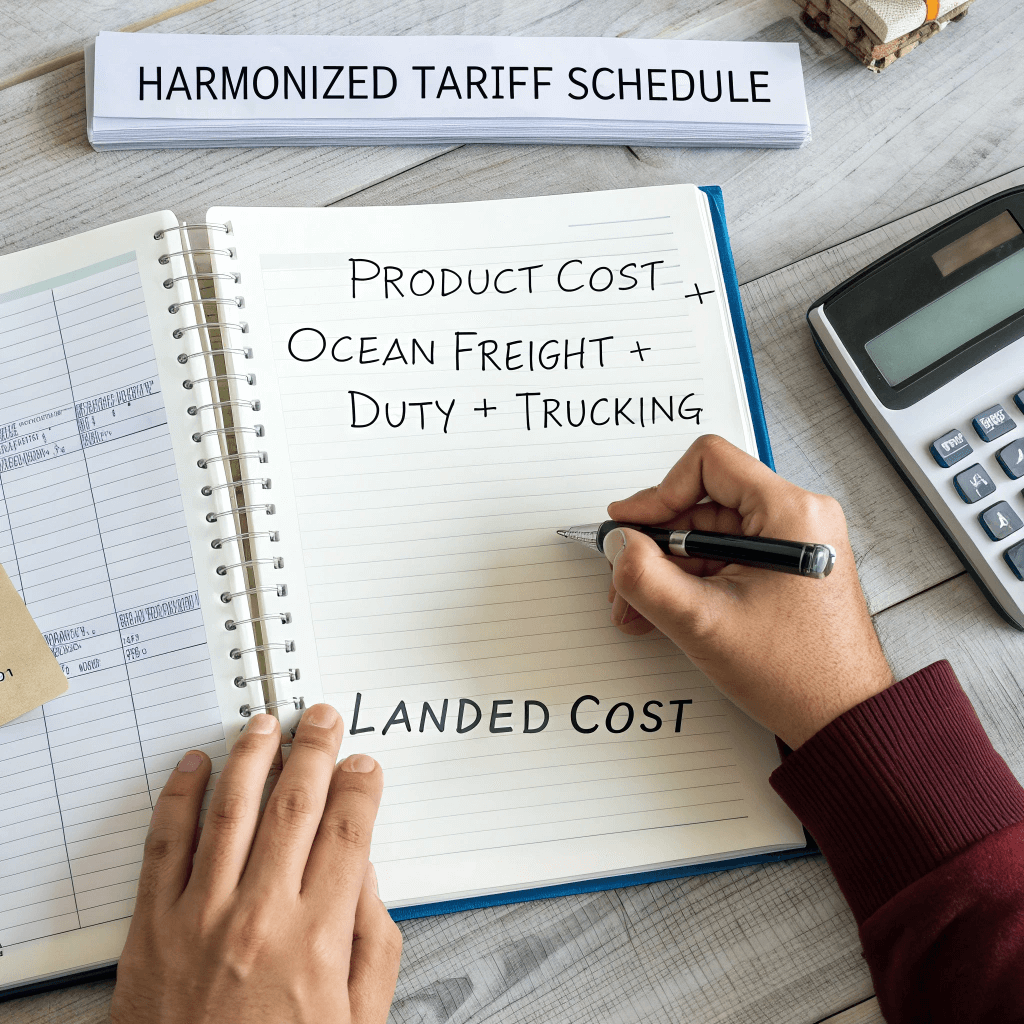
If you choose FOB, you must calculate the landed cost 6 yourself to compare it effectively against a DDP quote.
Formula: FOB Product Cost + Ocean Freight + Insurance + Customs Duties + Port Fees + Inland Trucking = Total Landed Cost.
You will need to look up your Harmonized Tariff Schedule (HTS) 7 code to determine the duty rate.
My advice? Graduate to FOB as soon as possible. The "convenience" of DDP often comes with a lack of supply chain visibility 8. If a DDP shipment is delayed, your supplier might just say "it’s coming," whereas your own forwarder would tell you "it’s stuck at the Port of LA due to congestion." Information is power.
| Responsibility | FOB (Free on Board) | DDP (Delivered Duty Paid) |
|---|---|---|
| Export Customs (China) | Supplier | Supplier |
| Ocean/Air Freight | Buyer | Supplier |
| Cargo Insurance | Buyer | Supplier |
| Import Customs (US) | Buyer | Supplier |
| Duty & Tariffs | Buyer | Supplier |
| Final Delivery | Buyer | Supplier |
| Control & Visibility | High | Low |
| Total Cost | Usually Lower | Usually Higher |
If you are currently buying DDP and want to switch, the process is simple. First, find a reputable freight forwarder in your country. Ask them for a quote from the supplier’s port (e.g., Shanghai) to your warehouse. Then, ask your supplier for an "FOB Shanghai" quote. You will likely see the unit price drop. Compare the FOB Price + Forwarder Quote against your old DDP Price. In 9 out of 10 cases, the FOB route will save you money and give you peace of mind knowing your goods are insured under a customs bond 9 held in your name.
The choice between FOB and DDP is a trade-off between convenience and control. DDP is the "easy button" for beginners, offering a predictable, hands-off experience at a premium price. FOB is the professional’s choice, offering transparency, lower costs, and operational flexibility. Whichever you choose, ensure the term is clearly written in your contract (e.g., "FOB Shenzhen" or "DDP New York") to avoid logistics disputes 10. By understanding these terms, you take command of your logistics, turning a potential headache into a competitive advantage.
Which shipping term should I use when importing my packaging: FOB or DDP?
If you are a beginner with a small order, DDP is safer and easier. If you are scaling up and want to save money, FOB is the better long-term choice.
What are my responsibilities if I choose FOB shipping?
You are responsible for everything after the goods are loaded on the ship in China. This includes hiring a freight forwarder, paying for the ocean freight, buying insurance, clearing US customs, paying duties, and arranging the truck delivery to your warehouse.
What are the benefits of asking my supplier for a DDP quote?
The main benefit is simplicity. You get a single "all-in" price that includes the product, shipping, and taxes. You don’t need to hire a forwarder or manage customs paperwork. It makes budgeting very predictable.
How do I calculate my total landed cost if my quote is only for FOB?
You need to add the following to your FOB supplier invoice: 1. Freight Cost (get a quote from a forwarder). 2. Duty (Product Value x Duty Rate). 3. Merchandise Processing Fee (MPF). 4. Harbor Maintenance Fee (HMF). 5. Trucking to your door.
1. Official ICC rules defining Free on Board (FOB) responsibilities. ↩︎
2. Explanation of Delivered Duty Paid (DDP) for importers. ↩︎
3. Definition of a freight forwarder and their role in logistics. ↩︎
4. CBP guidelines on the responsibilities of the Importer of Record. ↩︎
5. Understanding the Bill of Lading as a legal shipping document. ↩︎
6. How to calculate landed cost for accurate inventory valuation. ↩︎
7. Official US source for tariff codes and duty rates. ↩︎
8. The importance of real-time visibility in modern supply chains. ↩︎
9. Information on customs bonds required for importing into the US. ↩︎
10. Common causes of logistics disputes and how to avoid them. ↩︎
You can leave any questions. We will see and answer you.