Zibo City, Shandong Province

Have Any Questions?

10 AM – 6 PM
Zibo City, Shandong Province
Have Any Questions?
10 AM – 6 PM

Have Any Questions?

In my years of guiding businesses through their first international shipments, I have seen one acronym cause more anxiety than any other: Incoterms. You have finalized your packaging design and negotiated the price, but then the supplier asks, ""Do you want EXW, FOB, or DDP?"" Picking the wrong one doesn’t just mean more paperwork; it can mean unexpected fees, goods stuck in customs, or assuming liability for a cargo container thousands of miles away.
For a first-time importer, the goal is simple: get the goods to your door safely with no surprises. While seasoned logistics managers love to optimize every cent, your priority should be simplicity and risk reduction. This guide will break down the three most common terms you will encounter—DDP, FOB, and EXW—and explain exactly which one you should choose for your first packaging order and why.
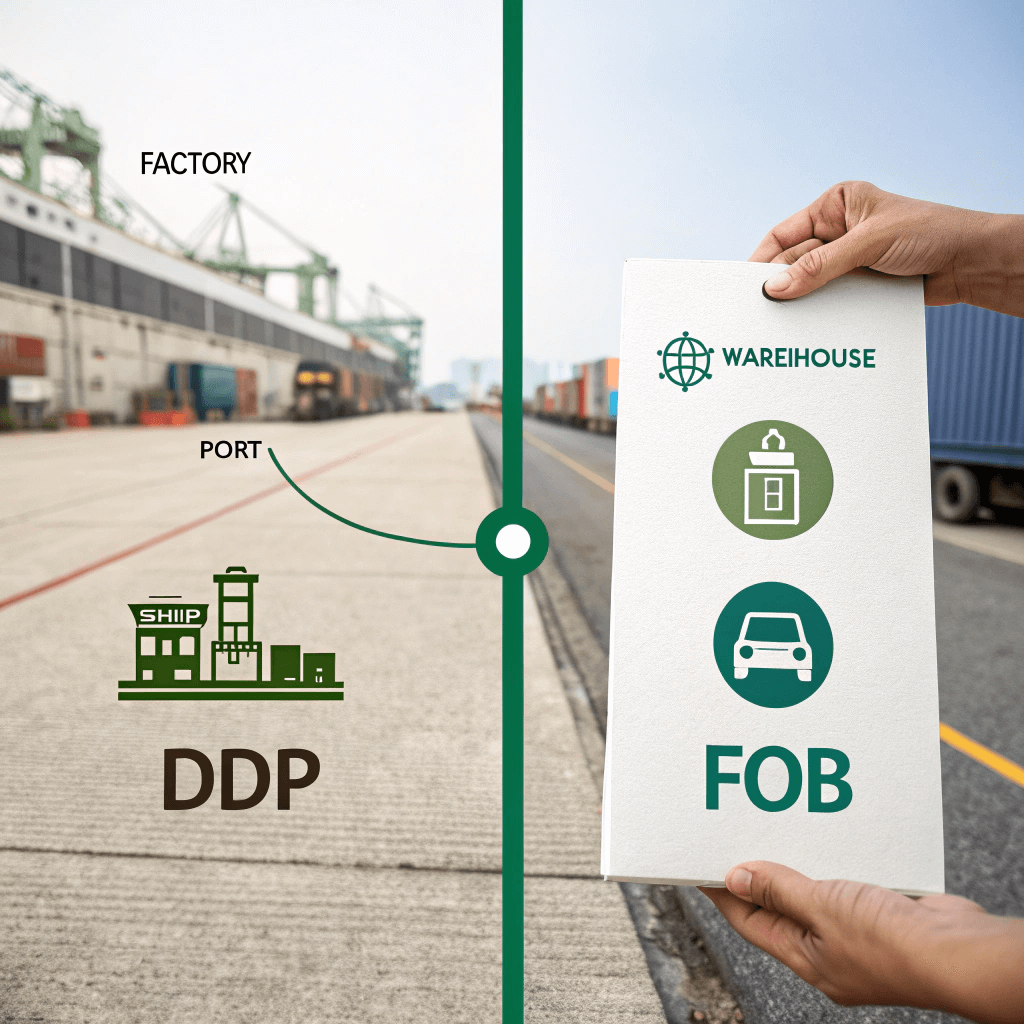
For your very first order, I almost always recommend DDP (Delivered Duty Paid) 1. Under this term, the supplier handles everything: trucking in China, export clearance, ocean freight, US import customs, duties, and final delivery to your door. You pay one ""all-in"" price. It minimizes your administrative burden and eliminates the fear of unknown tariffs.
Once you have a few shipments under your belt, you should look at FOB (Free on Board) 2. Here, the supplier is responsible only until the goods are on the ship in China. After that, you take control. This allows you to choose your own freight forwarder and negotiate better shipping rates, but it requires you to be more hands-on.
Suppliers often quote EXW (Ex Works) 3 because it makes their price look the lowest. Do not be fooled. EXW means you are responsible for picking up the goods from their factory floor. You bear all the risk of getting it through Chinese customs. For a beginner without a presence in China, this is a logistical nightmare I strongly advise against.
You might see a term called CIF (Cost, Insurance, and Freight). It looks cheap, but beware. The supplier pays the freight to your port, but they choose the cheapest, slowest carrier. Worse, when the goods arrive, you are often hit with inflated ""destination fees"" that can double your shipping cost. I generally advise new importers to avoid CIF.
The core of Incoterms is defining where risk transfers from seller to buyer. With DDP, the risk is the supplier’s until the goods reach your warehouse. With FOB, the risk becomes yours the moment the container crosses the ship’s rail. Understanding this helps you decide if you need to purchase your own cargo insurance 4.
If you move away from DDP, you will need a freight forwarder 5. This is a service provider who acts as your travel agent for cargo. They book the ship, handle the documents, and arrange the truck. Finding a trustworthy forwarder is the key to successfully graduating from DDP to FOB.
Importing requires clearing US Customs. Under DDP, the supplier does this (usually). Under FOB, you act as the Importer of Record 6. While this sounds daunting, your freight forwarder typically has a customs broker who handles the paperwork for a small fee. Being the Importer of Record gives you legal proof that duties were paid correctly.
DDP offers convenience, but you pay a premium for it. Suppliers often add a 10-20% buffer to the shipping cost to cover their own risk. FOB offers cost transparency 7. You see exactly what the ocean freight costs and exactly what the duties are, allowing you to audit your expenses accurately.
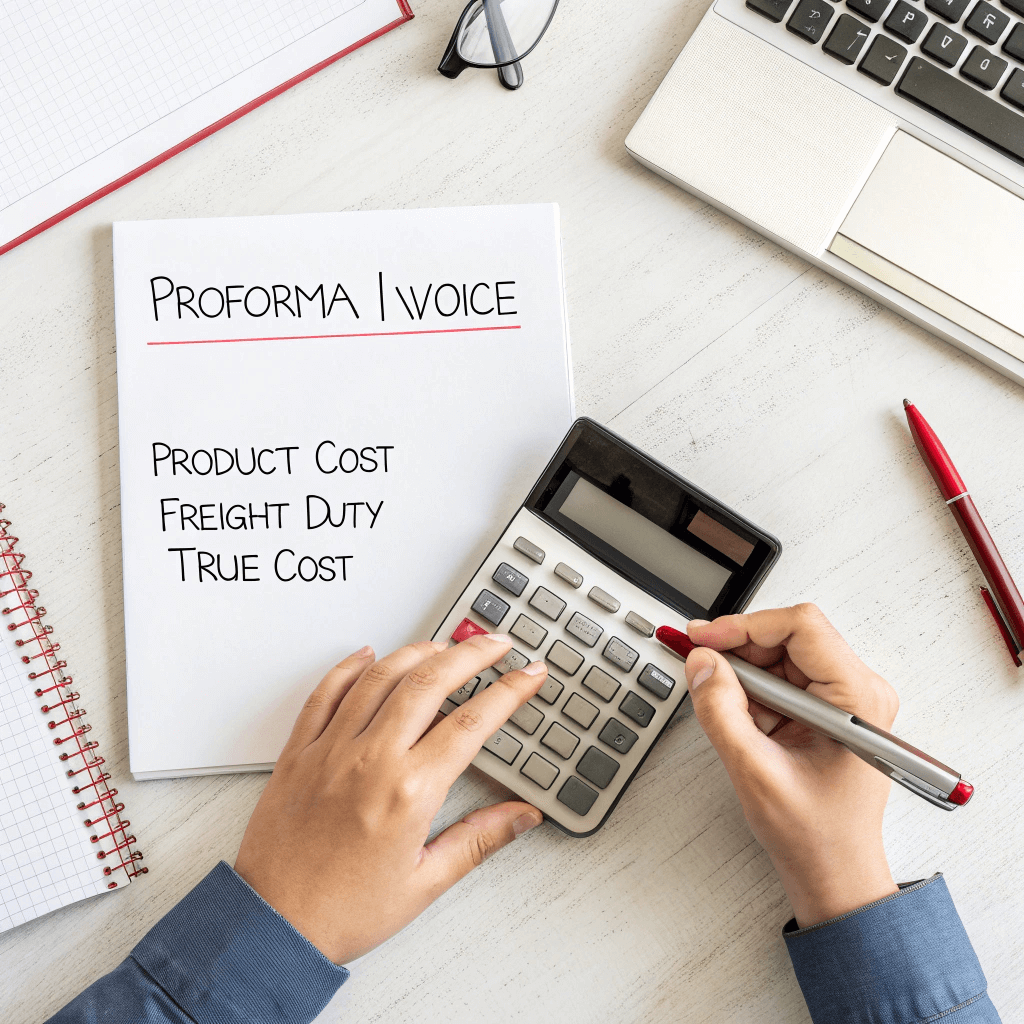
When comparing quotes, you must calculate the landed cost 8.
My rule of thumb is volume. If you are shipping less than 2 cubic meters (CBM), stick with DDP. It’s not worth the hassle to manage it yourself. Once your orders grow to 5+ CBM or full containers, switch to FOB. The savings on freight and the control over the Bill of Lading 9 make the extra effort worth it.
| Feature | DDP (Delivered Duty Paid) | FOB (Free on Board) | EXW (Ex Works) |
|---|---|---|---|
| Best For | Beginners / Small Orders | Intermediate / Large Orders | Experts Only |
| Buyer Effort | Low (Hands-off) | Medium (Manage Forwarder) | High (Manage Everything) |
| Cost Control | Low (Supplier sets price) | High (You negotiate rates) | Medium |
| Risk Level | Low | Medium | High |
| Customs | Supplier handles | You handle (via broker) | You handle |
| Transparency | Low | High | High |
For your very first packaging order, I recommend prioritizing safety over savings. Ask your supplier for a DDP Quote. This ensures that the price you see on the invoice is the final price you pay. It prevents the nightmare scenario of goods getting stuck at the port because you didn’t have a customs bond.
However, don’t stay on DDP forever. As you build a relationship with the supplier and your volume increases, start interviewing freight forwarders. Ask them for FOB quotes to compare against your supplier’s DDP price. This supply chain visibility 10 will eventually allow you to lower your costs and take full control of your logistics.
Choosing the right Incoterm is about matching the shipping terms to your experience level. For the first-time importer, DDP is the safest bridge to cross the complex waters of international trade. It allows you to focus on your product and your customers rather than customs codes and trucking schedules. But remember, as your business matures, moving to FOB is the natural step toward becoming a professional, cost-efficient importer.
As a first-time importer, what is the best Incoterm for me to use for my packaging order?
DDP (Delivered Duty Paid) is the best choice for your first order. It places the responsibility on the supplier to deliver the goods to your door and handle all customs and duties. It minimizes your risk and administrative work.
Why do many suppliers quote in EXW or FOB terms?
Suppliers prefer EXW because it carries zero risk for them; they just make the product and you pick it up. They like FOB because it is the standard for international trade—they handle the local Chinese logistics (which they know well), and you handle the international shipping.
What are the risks for me if I agree to an EXW term?
The biggest risk is export clearance. If the supplier does not have an export license (common with smaller factories), the goods can get stuck in China, and you are responsible for fixing it. You also bear the risk of damage from the moment the goods leave the factory floor.
Can I ask for a DDP (Delivered Duty Paid) quote to get a complete price?
Yes, absolutely. You should explicitly ask: ""Please provide a DDP quote to my warehouse address: [Insert Address]."" This allows you to see the total landed cost upfront.
Which Incoterm gives me the most control over my shipment?
FOB gives you the best balance of control and convenience. You control the choice of the shipping carrier, the route, and the costs, but you don’t have to deal with the headache of local trucking and customs inside China.
1. Official government explanation of DDP responsibilities. ↩︎
2. ICC rules defining Free on Board (FOB) terms. ↩︎
3. Definition of Ex Works (EXW) and buyer obligations. ↩︎
4. Basics of marine cargo insurance for importers. ↩︎
5. What a freight forwarder does in global logistics. ↩︎
6. CBP guidelines on the Importer of Record’s legal role. ↩︎
7. Why cost transparency is vital for supply chain efficiency. ↩︎
8. How to calculate the total landed cost of a product. ↩︎
9. Understanding the Bill of Lading as a title document. ↩︎
10. The importance of real-time visibility in logistics. ↩︎
You can leave any questions. We will see and answer you.