Zibo City, Shandong Province

Have Any Questions?

10 AM – 6 PM
Zibo City, Shandong Province
Have Any Questions?
10 AM – 6 PM

Have Any Questions?
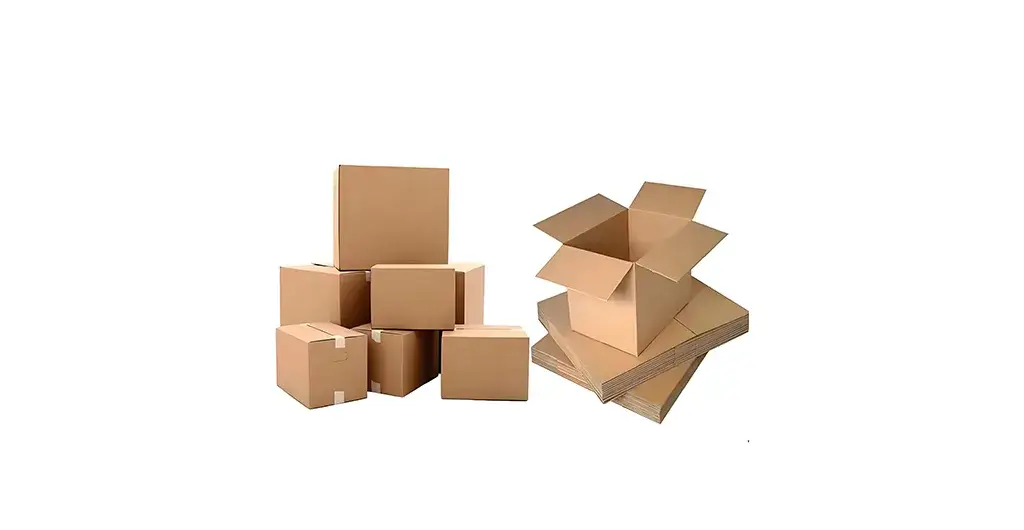

A box that looks strong can still fail. The failure rarely happens on the packing table — it happens in the warehouse stack, in a damp truck, or at the bottom of a pallet. Choosing the right box strength is not about picking the thickest board you can find. It is about matching the box to the weight it will carry, the stack it will sit in, and the conditions it will travel through.
The first question is not “what is the product?” but “how heavy is the packed box?” A box of books, a case of bottled sauce, a set of canned goods — the product names are different, but the box only feels the weight.
That is why the packed weight is the first thing to work out: the product, its inner packaging, and anything else that goes in the box, weighed together as it will actually ship. When you ask for a quote, send the real packed weight and let the box be built around it.
A box almost never travels alone. It sits under other boxes in a warehouse, on a pallet, or in a container — and the box at the bottom carries all of it. A box that holds its own weight perfectly well can still crush when more boxes sit on top of it for a week.
So think in stacks, not singles: how high will the boxes be stacked, how long will they sit that way, and will the stack be moved or restacked along the way? Tell the supplier how the boxes will be stacked and handled, not just how heavy one box is.
Corrugated board and moisture do not get along. A box that is strong in a dry warehouse loses strength when it gets damp — in cold storage, in a humid container, or on a rainy loading dock. This is easy to miss, because the box looks the same when it is damp as when it is dry.
If your product goes into cold storage, travels chilled, or is packed wet, say so when you ask for a quote. The board and construction that suit a dry e-commerce shipment are not automatically the right choice for a cold, damp journey.
For heavier loads, the question usually comes down to construction: a single-wall box or a double-wall box. A double-wall box has an extra layer of fluting, which gives it more stacking strength for the same footprint — but it also uses more board and takes up more space in storage.
There is no rule that heavy always means double-wall. A well-sized single-wall box can carry a heavy load if the stack is low and the journey is short and dry; a double-wall box may be the right call when the stack is high, the journey is long, or the product is both heavy and fragile. The choice depends on the packed weight, the stack and the conditions together — which is why it is decided with the quote, not from a product name alone.
A printed box with a glossy finish can look stronger than a plain brown one, and a thick-looking board can be weaker than a thinner one made differently. The look of the box says nothing reliable about how it will hold up under a stack.
The practical test is the sample: order a sample, pack it exactly as you will pack the real shipment, and stack it the way it will be stacked. A sample that survives your real packing and stacking tells you far more than any description. Samples generally take 2 weeks, so build that into your timeline rather than skipping it.
To get a quote, send these four items to sales@fohopackaging.com:
Samples generally take 2 weeks and production generally takes 10–30 days, both depending on product style and quantity. Payment terms are confirmed for each order, and all trade terms can be done.
Q: How do I know if my box is strong enough?
A: Start from the packed weight and the stack: how heavy is one packed box, how high will the boxes be stacked, and how long will they sit that way? Send those facts with the quote and the box can be sized and built for the real load, instead of guessed from the product name.
Q: Does moisture really affect a corrugated box?
A: Yes. Damp board loses strength, which matters most for cold storage, chilled transport and wet-packed products. If your shipment will be cold or damp, say so when you ask for a quote so the construction can be planned for it.
Q: Do I need a double-wall box for a heavy product?
A: Not always. It depends on the packed weight, the stack height and the journey together. A single-wall box can be right for a low stack and a short, dry trip; a double-wall box is often the better choice for high stacks and long journeys. The decision is made with the quote.
You can leave any questions. We will see and answer you.