Zibo City, Shandong Province

Have Any Questions?

10 AM – 6 PM
Zibo City, Shandong Province
Have Any Questions?
10 AM – 6 PM

Have Any Questions?
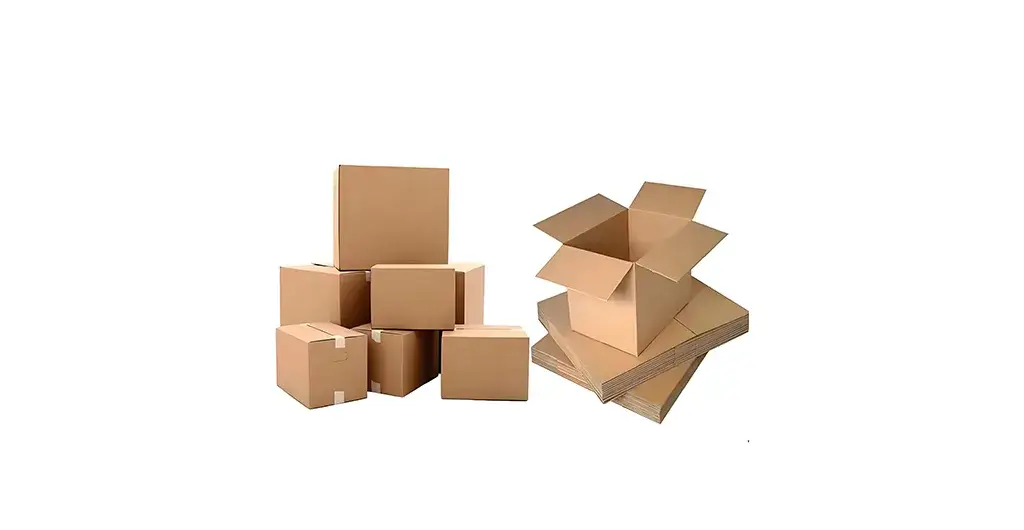

If you are buying custom corrugated boxes for the first time, the first question is usually the simplest one: how much do they cost?
The honest answer is that there is no fixed price list. A custom corrugated box is made to order — your size, your board, your print, your quantity — so the price is decided by the box itself. That is also why two suppliers can quote very different prices for what looks like the “same” box: the boxes are rarely the same once you look at the details.
Here is what decides custom corrugated boxes cost, and what to send a supplier so you get a real quote instead of a guess.
The board is the biggest part of the cost. A heavier, stronger board costs more than a lighter one — and the right choice depends on what goes inside the box and how it travels.
A light mailer for a soft product does not need the same board as a case of glass bottles. Ordering stronger board than your product needs wastes money; ordering too light a board risks a damaged shipment. The flute — the wavy layer inside the board — works the same way: different flutes suit different jobs, from fine print surfaces to heavy stacking.
If you are not sure which board fits, say what the box has to carry and how it will ship — that is what a supplier needs to pick the right board.
Size is the most direct cost driver there is. A bigger box uses more board, full stop. It also costs more to ship: carriers charge by size as well as weight, so an oversized box costs you twice — once to make, once to send.
So right-size the box: one that fits your product snugly uses less board and ships cheaper than a box with empty space inside. Measure the product, not the box you used last time.
Printing is the next thing that moves the price. A single-colour logo costs less than full-colour artwork across the whole box. Colour printing and water-based ink printing are both available, and printing inside the box is possible too — an inside print turns the unboxing into part of the brand experience, and it is worth asking about if your box is opened in front of the customer.
Every custom box has setup work behind it — plates, cutting dies, print preparation — and that cost is spread across the run. A larger order spreads it thinner, so the cost of each box comes down. A small order carries the same setup over fewer boxes.
Foho’s MOQ is 500 boxes, with the exact minimum varying by product. If you are ordering for the first time, ask how the price changes at the next quantity step up — a slightly larger run is sometimes better value.
The last cost driver is how the box is built. A plain shipping box is the simplest shape there is. Add dividers to keep bottles apart, an insert to hold a product still, a die-cut window, or a special fold, and each step adds work — and cost.
None of that is wasted money if the product needs it: a divider that stops bottles breaking pays for itself the first time a shipment arrives intact.
The same five factors decide the price of the other boxes Foho makes — mailers, custom collapsible rigid gift boxes and cold-chain packaging — because every one of them is made to order in the same way.
A supplier cannot price a box from “I need some boxes.” Send these four facts and you will get a real quote back:
With those four, a quote is a real number for your box — not a range copied from someone else’s order.
Why do two suppliers quote different prices for the “same” box?
Because the boxes are almost never the same — board grade, flute, size, print, quantity and extras all move the price. To compare quotes fairly, make sure every supplier prices the same specification and quantity.
Does ordering more boxes always lower the price of each box?
A larger run usually brings the cost of each box down, because the setup cost is spread across more boxes. The exact effect depends on the order, so ask for the price at two or three quantities and compare.
How long does it take to get a sample and start production?
Samples generally take 2 weeks, and production generally takes 10–30 days depending on order quantity. If you have a deadline, say so when you request the quote — the schedule is confirmed for each order.
You can leave any questions. We will see and answer you.