Zibo City, Shandong Province

Have Any Questions?

10 AM – 6 PM
Zibo City, Shandong Province
Have Any Questions?
10 AM – 6 PM

Have Any Questions?

Receiving the first sample of your custom packaging is a moment of truth. Sometimes, it’s perfect. But in my experience, it is more often a "90% solution." Maybe the color is slightly off, the flap doesn’t tuck in smoothly, or the logo is too close to the edge. This is normal. The difference between a failed project and a successful launch lies in how you handle what happens next.
The revision phase is a critical negotiation of quality, cost, and time. If you handle it poorly, you can spiral into months of back-and-forth and spiraling fees. If you handle it well, you tighten the loop and move quickly to mass production. This guide is my protocol for managing revisions. I will explain how to structure your feedback, determine who pays for the second round, and how to lock in that final "Golden Sample" that guarantees your production quality.
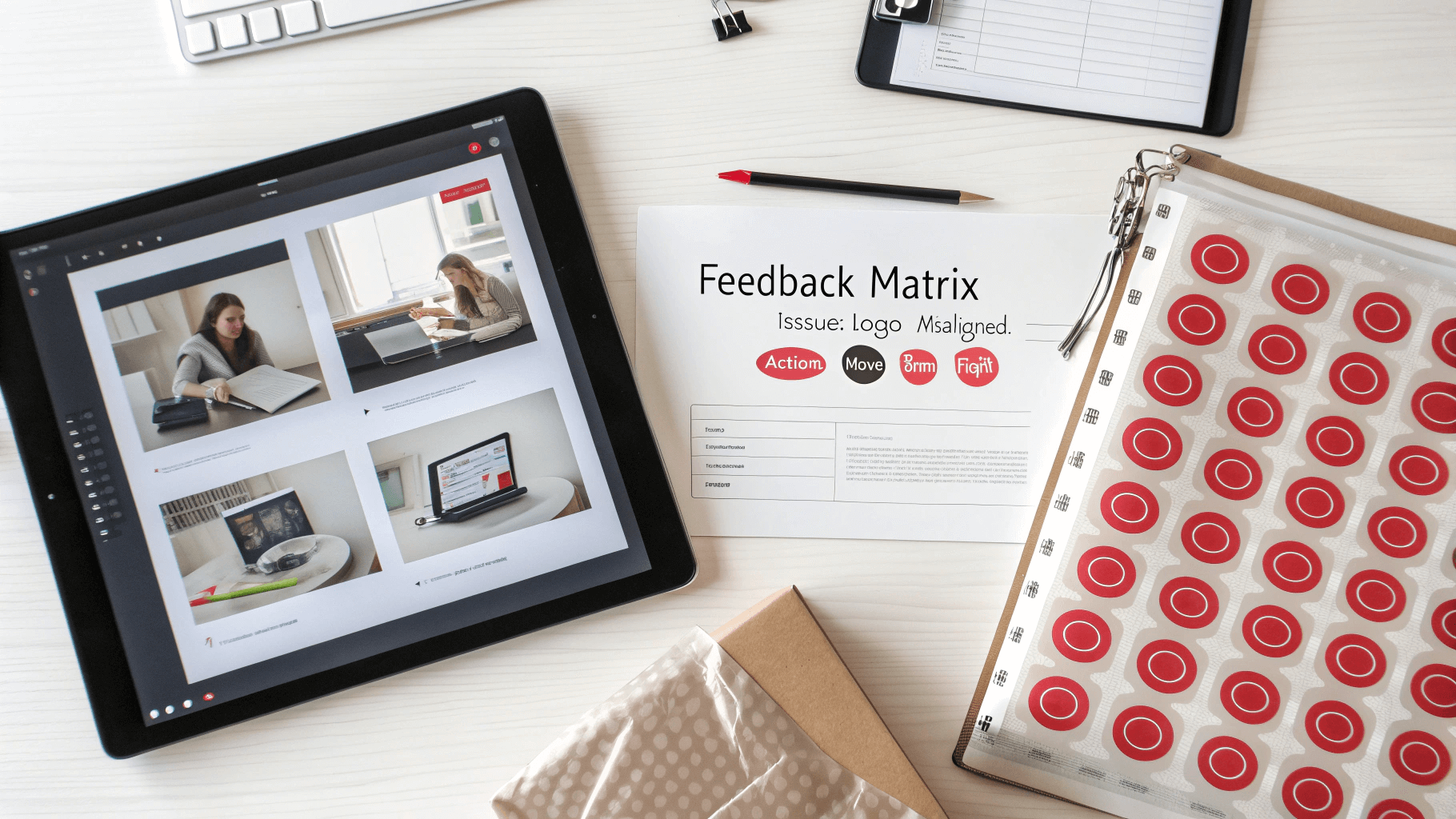
Never send feedback in a stream of consciousness via WhatsApp or five separate emails. This leads to confusion. I create a single, master "Feedback Matrix" document. It lists every issue (Structure, Print, Material, Finish) with a corresponding reference number. This ensures the factory addresses every single point in the next round.
Text is easily misinterpreted. Photos are universal. Take high-resolution photos of the sample, circle the defects in red, and overlay text explaining the issue (e.g., "Gap is 3mm, needs to be 1mm"). Visual communication reduces the risk of miscommunication in global trade 1 significantly.
This is the money question. Did the factory ignore your spec sheet? Or did you decide you wanted a different blue after seeing the sample?
Don’t just tell them to change it; update the master file. Your Tech Pack 2 is the single source of truth. If you change a dimension, update the dieline CAD file. If you change a color, update the Pantone code in the artwork file. Never rely on email text as a specification.
To save time and money, request a new digital proof 3 first. If the issue was artwork placement or text, you can verify the fix on a PDF. Only move to a physical sample once the digital file is 100% correct. This is a key step in efficient prepress 4 management.
If the changes are your preference (not their error), expect to pay a second sample fee. However, I often negotiate this. I tell the supplier: "I need to make these small adjustments. If I pay for the shipping, can you absorb the cost of the sample production as an investment in our long-term partnership?" Many will agree to keep the momentum going.
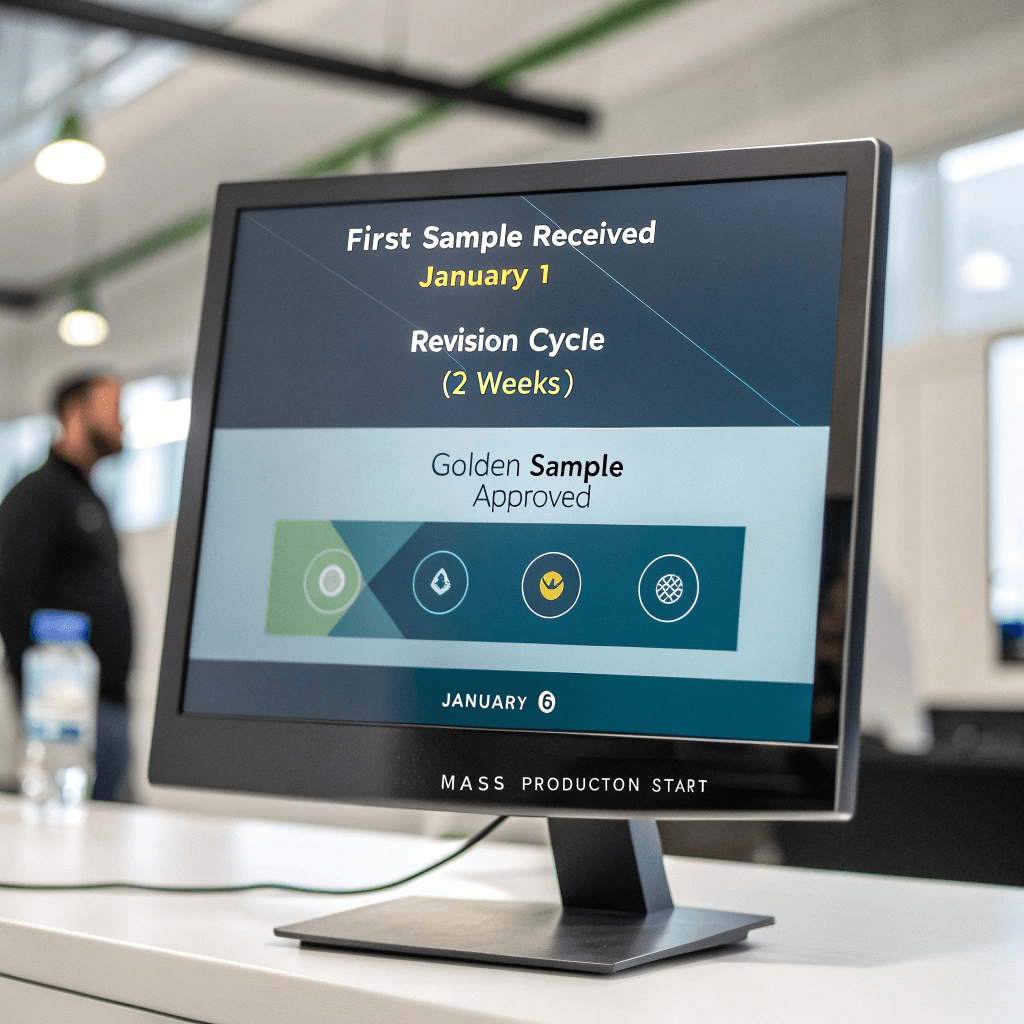
Revisions take time. A second sample isn’t just "printed tomorrow." It requires re-queueing in the factory’s schedule. Expect a revision to add 1 to 2 weeks to your product development timeline 5 (3-5 days for production + 3-5 days for shipping). Plan your launch date accordingly.
Distinguish between critical and non-critical changes. If the color is slightly off, do you need a whole new physical box, or can you approve a "drawdown" (a small swatch of paper with the ink)? Using rapid prototyping 6 shortcuts for minor checks saves money.
Once the second (or third) sample is perfect, you must formally designate it as the Golden Sample. Sign it, date it, and write "APPROVED FOR PRODUCTION" on it. Send one signed copy back to the factory. This physical object becomes the legal standard for quality control 7 inspections.
For serious defects in the first sample, ask the factory for a Corrective Action Plan (CAP) 8. Ask: "How will you ensure this glue issue doesn’t happen during mass production?" Their answer will tell you if they have fixed the process, not just the sample.
| Scenario | Cause | Who Pays Sample Fee? | Who Pays Shipping? |
|---|---|---|---|
| Wrong Material | Factory ignored spec sheet | Factory | Factory |
| Print Defect | Low quality / messy print | Factory | Factory |
| Design Update | You changed artwork/text | Buyer | Buyer |
| Structural Change | You changed box size | Buyer | Buyer |
| Subjective Tweak | "I want it slightly darker" | Negotiable (Split) | Buyer |
The best way to handle revisions is to avoid them. You can minimize the need for multiple rounds by front-loading your work.
Revisions are not a sign of failure; they are the path to perfection. Do not be afraid to reject a sample that isn’t right. It is infinitely cheaper to fix a problem now than to discard 10,000 defective boxes later. By communicating clearly, understanding the cost structures, and insisting on a signed Golden Sample, you turn the revision process from a headache into a rigorous quality assurance tool.
What is the process for submitting design revisions?
Compile all feedback into a single document with photos and clear annotations. Update your dieline/artwork files to reflect the changes. Send these to the supplier and request a new digital proof to confirm they understand the instructions before making a new physical sample.
Will I have to pay for a second round of samples if I make changes?
If the changes are due to your new preferences (e.g., changing the text, color, or size), yes, you typically pay. If the changes are because the factory failed to follow your original written specifications, no, they should cover the cost.
How much time will revisions add to my overall project timeline?
A typical revision round adds 1 to 2 weeks. This accounts for the factory re-scheduling the sample production (3-5 days) and the shipping time to you (3-5 days).
How can I minimize the need for multiple sample revisions?
Start with a "White Sample" (unprinted) to confirm the structure first. Only apply artwork once the size is approved. Provide Pantone codes for all colors. Use a detailed "Tech Pack" so there is no ambiguity for the factory to misinterpret.
1. Strategies for overcoming language barriers in global business. ↩︎
2. Definition and importance of a Tech Pack in manufacturing. ↩︎
3. The role of digital proofs in the printing workflow. ↩︎
4. Overview of prepress processes in the printing industry. ↩︎
5. Stages of the new product development lifecycle. ↩︎
6. Technologies used for fast and iterative prototyping. ↩︎
7. Principles of quality control and assurance. ↩︎
8. How to write an effective corrective action plan. ↩︎
9. Guide to writing clear technical specifications for suppliers. ↩︎
10. The global standard for color communication and matching. ↩︎
You can leave any questions. We will see and answer you.