Zibo City, Shandong Province

Have Any Questions?

10 AM – 6 PM
Zibo City, Shandong Province
Have Any Questions?
10 AM – 6 PM

Have Any Questions?
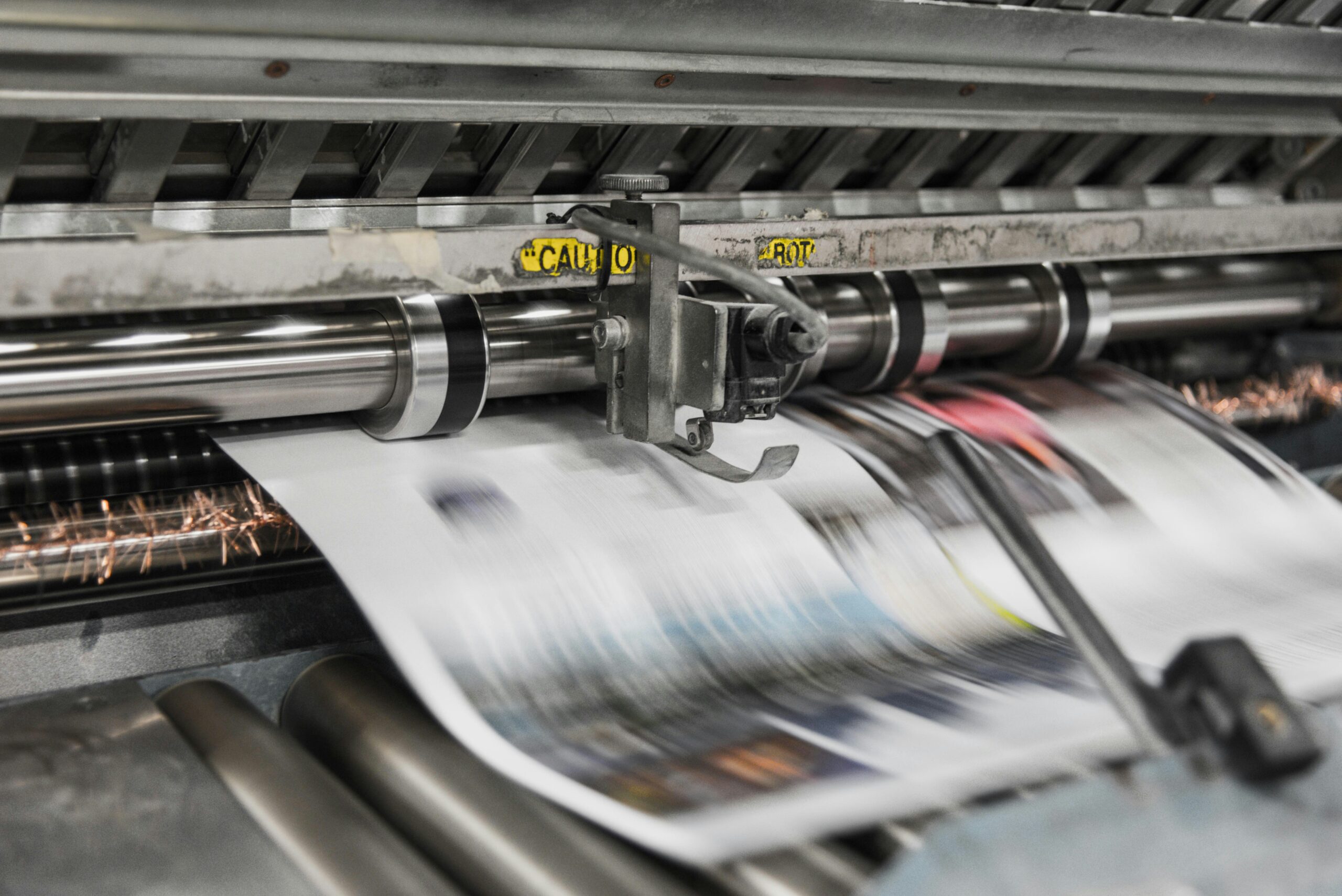

In the world of manufacturing, assumptions are expensive. I have seen brands lose tens of thousands of dollars because they assumed the "production run" would look exactly like the PDF on their computer screen. It rarely does. The transition from a digital file to a physical box involves complex variables: ink absorption, paper grain, glue tolerance, and machine calibration.
To bridge this gap, you must implement a rigorous sampling protocol. You are not just buying a box; you are buying a series of validations. From the initial structural check to the final "Golden Sample," each stage is a checkpoint that protects your investment. This guide will break down the specific types of samples you need to request, what each one verifies, and how to use them to lock in quality before the factory presses the "start" button.
Before anything is cut, you start with a digital proof 1. This is usually a PDF file showing the dieline (the flat shape of the box) with your artwork applied.
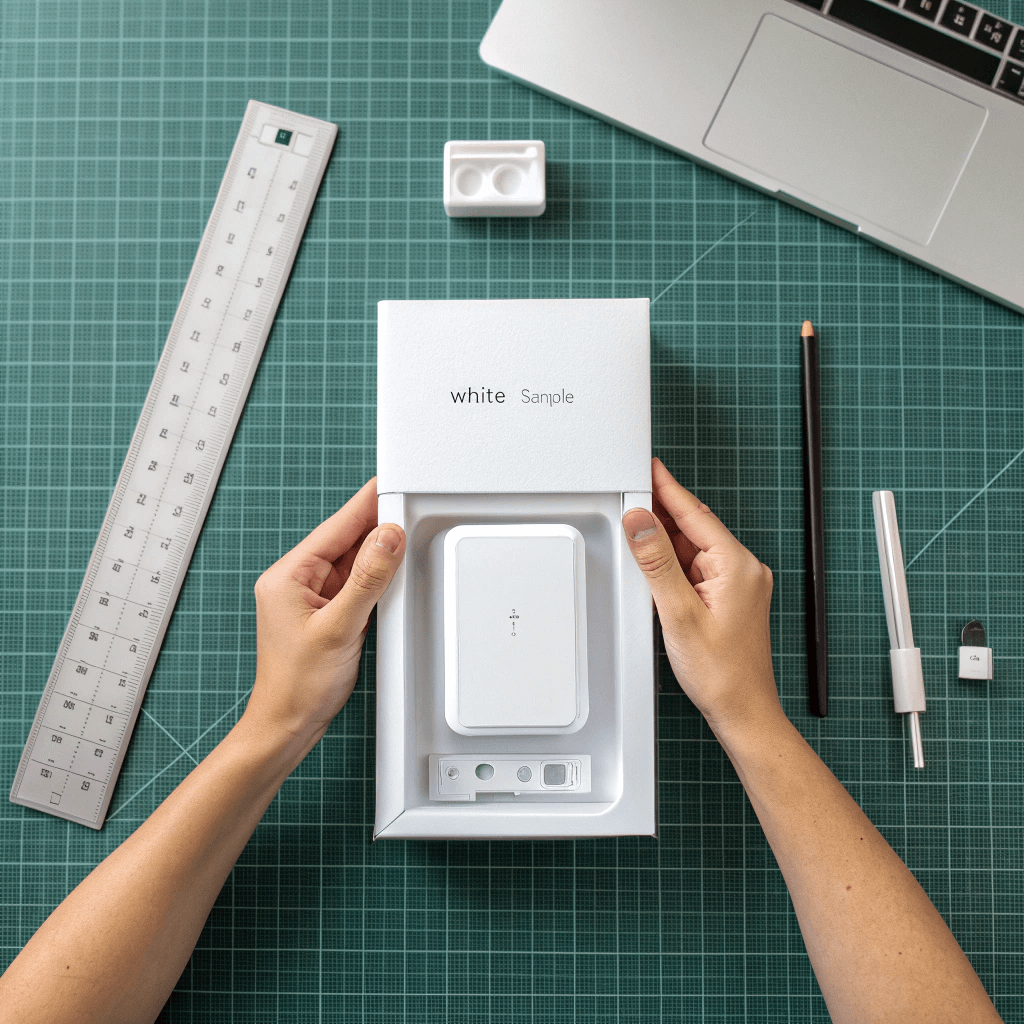
This is the most critical step for engineering. A "white sample" is an unprinted prototype cut on a CAD table 2 using the exact paper stock you intend to use. It is blank, hence the name.
If you need to check the layout of the graphics on the physical box but don’t want to pay for expensive printing plates yet, ask for a digital print sample. This is usually printed on a large-format inkjet printer and then cut.
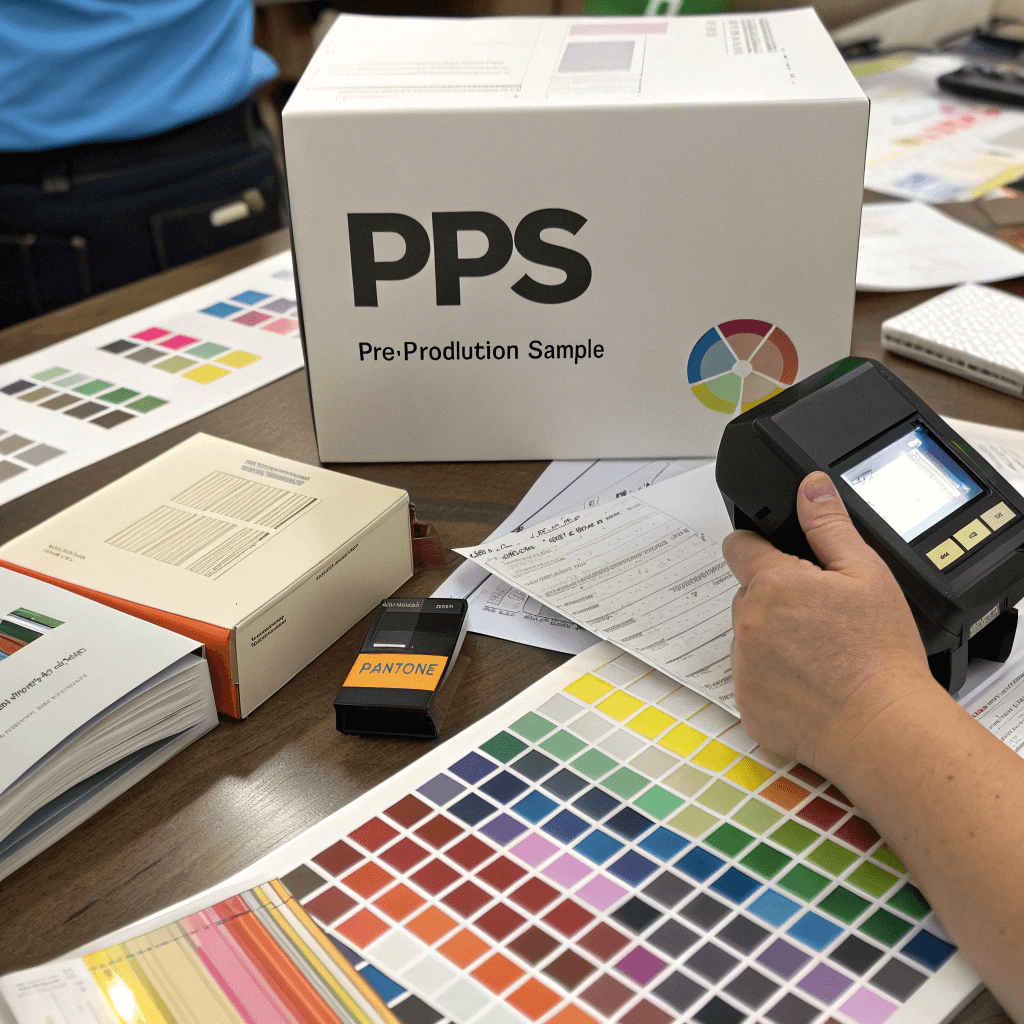
This is the "real" sample. A true PPS is made using the actual mass production machinery—the offset press 4, the actual die-cutter, and the actual finish (foil, UV, lamination). It is expensive because the factory has to set up the entire production line for just one unit.
Once you approve the PPS, it becomes the "Golden Sample." You should sign and date two copies: one for you to keep, and one to send back to the factory.
This is a sample pulled randomly from the final mass production run, packed, and shipped to you before the rest of the cargo leaves the factory.
| Sample Type | Cost | Lead Time | Best For |
|---|---|---|---|
| White Sample | Low ($30-$80) | 3-5 Days | Checking size, structure, and material strength. |
| Digital Print | Medium ($50-$150) | 5-7 Days | Checking graphic layout and typos. |
| Pre-Production (PPS) | High ($150-$500) | 10-14 Days | Final verification of color, finish, and quality. |
| Golden Sample | N/A (Derived from PPS) | N/A | Legal benchmark for QC inspections. |
Never rush the approval. I follow a strict sequence:
Be aware of color management 7 limitations. If you approve a digital sample, do not expect the offset production to match it perfectly. If color is critical, you must pay for a wet proof (PPS) or attend a "press check" in person (or hire an agent to do it). Also, ensure you test the sample under standardized lighting 8 to avoid surprises caused by different light sources.
Requesting the right packaging samples is not about being difficult; it is about being professional. It is the only way to align your expectations with the factory’s output. By validating the structure with a white sample and the color with a pre-production sample, you eliminate 99% of the risks associated with custom manufacturing. The cost of these samples is a fraction of the cost of a failed production run.
What is the difference between a white sample, a digital proof, and a pre-production sample?
A white sample is unprinted and checks structure/size. A digital proof is a PDF file to check artwork. A pre-production sample (PPS) is a fully printed, finished physical box made on production equipment to verify final quality.
Which type of sample is best for checking the structure versus the print quality?
Use a white sample to check structure (fit, strength, folding). Use a PPS (Pre-Production Sample) to check print quality (color, registration, finishes). Do not use a white sample for print, and do not use a digital print sample for color accuracy.
Do I need to approve each type of sample before the factory proceeds?
Yes. You should formally approve the white sample before they make the cutting dies 9. You should formally approve the PPS before they buy the bulk paper and start the printing press. This "gate-check" process prevents errors from compounding.
Is it possible to get a fully finished sample from the actual production line?
Yes, this is the Pre-Production Sample. However, because setting up the massive production machines takes hours, factories charge a high fee (setup cost) to produce just one unit. It is worth it for large orders to ensure product consistency 10.
1. Definition and use of digital proofs in prepress. ↩︎
2. Technology used for rapid prototyping of packaging. ↩︎
3. How digital printing differs from traditional methods. ↩︎
4. The standard process for high-volume packaging printing. ↩︎
5. Principles of maintaining quality standards in manufacturing. ↩︎
6. The economics and processes of large-scale manufacturing. ↩︎
7. The global standard for color communication. ↩︎
8. How lighting conditions affect color perception. ↩︎
9. The tooling used to cut custom shapes in packaging. ↩︎
10. Statistical methods for monitoring production quality. ↩︎
You can leave any questions. We will see and answer you.