Zibo City, Shandong Province

Have Any Questions?

10 AM – 6 PM
Zibo City, Shandong Province
Have Any Questions?
10 AM – 6 PM

Have Any Questions?

In my experience sourcing packaging, the number at the bottom of a quote is rarely the number you end up paying. I have seen countless business owners get excited about a $0.50 per box quote, only to realize later that with shipping, tariffs, and "surprise" fees, the real cost is over $1.50. This discrepancy is usually not due to malice, but rather a misunderstanding of what is—and isn’t—included in a standard Chinese manufacturing quote.
To protect your margins, you must learn to read a quotation like a forensic accountant. You need to move beyond the "Unit Price" and calculate the "Landed Cost"—the total cost to get the product to your door. This guide will walk you through the 10 essential components of a packaging quote, exposing the hidden costs and helping you negotiate a transparent, all-inclusive deal.
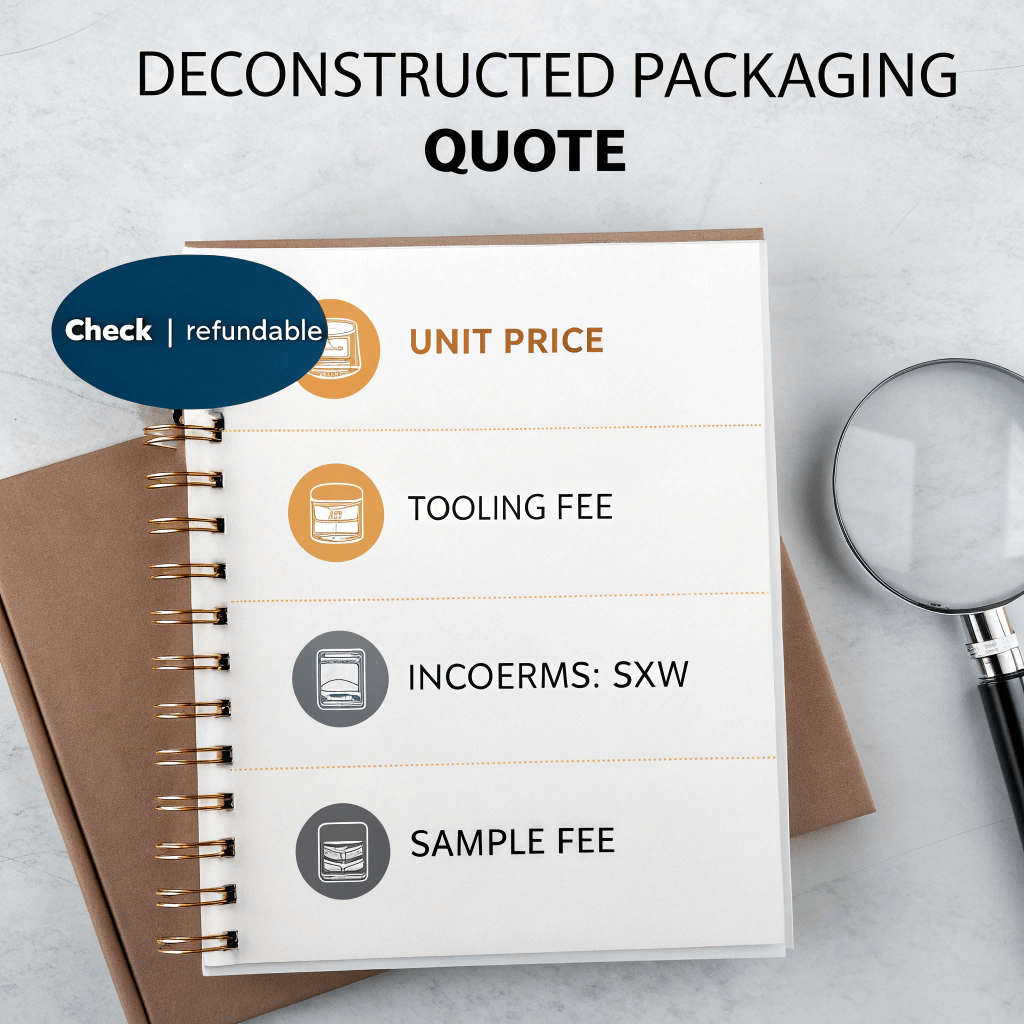
The first line item is the unit price. However, this price is fluid. It is inextricably linked to the Minimum Order Quantity (MOQ) 1. I always ask for a tiered quote (e.g., 1,000, 5,000, 10,000 units). You will often see the price drop by 30-50% as you move to higher tiers due to economies of scale. Ensure the quote clearly states which quantity tier the price is based on.
Custom packaging requires custom tools. These are often listed as "NRE" (Non-Recurring Engineering) costs. This includes cutting dies, printing plates, and foil stamping molds. These should always be listed separately from the unit price. If they are bundled in, you are overpaying on reorders.
A quote is worthless if it doesn’t specify what is being bought. The quote must explicitly list the paper grades 2 (e.g., 350gsm C1S), the flute type for corrugated, and the printing method (CMYK vs. Pantone). If the quote just says "Cardboard Box," the factory reserves the right to use the cheapest material available.
Special finishes like spot UV, embossing, or soft-touch lamination are usually charged as extra processes. Ensure the quote itemizes these print finishes 3. I often ask for a "base price" plus "add-on prices" so I can decide if the extra $0.10 per box for gold foil is worth it for my budget.
This is the most critical acronym on the page. The Incoterms 2020 4 rule (e.g., EXW, FOB, DDP) defines who pays for shipping.
Never assume your boxes will be packed safely. The quote should specify the "packing method." Are they using double-wall corrugated boxes 5 as master cartons? Are they palletized? Poor packing leads to crushed goods, which is a massive hidden cost. Palletization often costs extra but saves money on unloading labor in the US.
Before mass production, you need a sample. Product sampling 6 fees can range from $50 to $300. The quote should clarify the sample cost and, crucially, whether this fee is refundable (credited back) if you place a bulk order.
Unless you have a DDP quote, import duties are never included in the factory price. You must look up the HTS code for your packaging in the Harmonized Tariff Schedule 7 to calculate your tax liability. For Chinese products, this can include standard duty plus Section 301 punitive tariffs (often 25%).
Simple file checks are usually free, but complex prepress processes 8—like fixing your dielines, color correction, or creating 3D mockups—may incur an hourly fee. Clarify if "artwork handling" is included in the setup cost.
Finally, check the expiration date. Quotes are typically valid for 15-30 days. Look for clauses regarding currency fluctuation 9. If the RMB strengthens significantly against the dollar, the supplier may reserve the right to adjust the price before the deposit is paid.
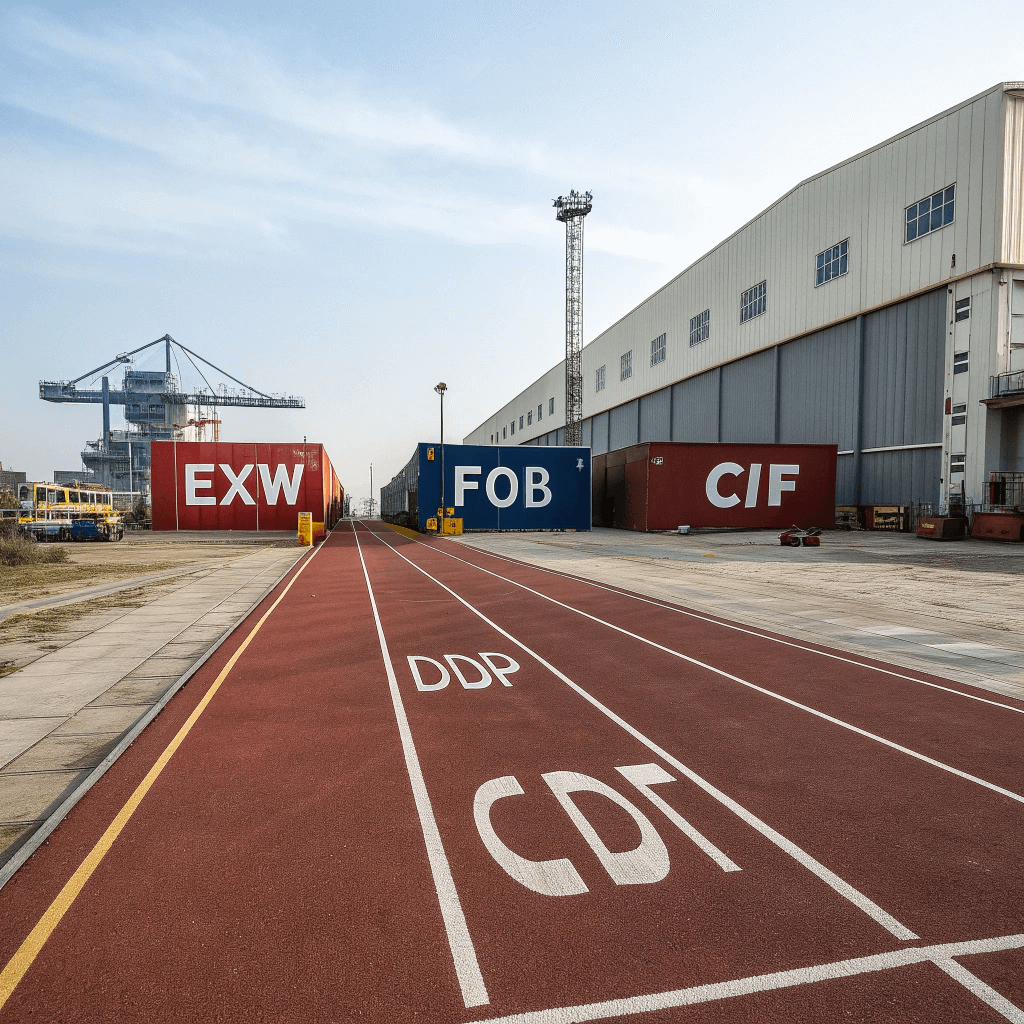
| Cost Component | EXW (Ex Works) | FOB (Free on Board) | CIF (Cost, Ins, Freight) | DDP (Delivered Duty Paid) |
|---|---|---|---|---|
| Packaging Unit Cost | Buyer | Buyer | Buyer | Buyer |
| Transport to China Port | Buyer | Supplier | Supplier | Supplier |
| Export Customs | Buyer | Supplier | Supplier | Supplier |
| Ocean/Air Freight | Buyer | Buyer | Supplier | Supplier |
| Insurance | Buyer | Buyer | Supplier | Supplier |
| US Import Duties | Buyer | Buyer | Buyer | Supplier |
| Delivery to Your Door | Buyer | Buyer | Buyer | Supplier |
To compare quotes fairly, you must calculate the landed cost 10.
Formula: (Unit Price + Shipping Cost + Insurance + Duties + Customs Fees) / Quantity = Landed Cost per Unit.
If Supplier A quotes $0.50 (EXW) and Supplier B quotes $0.80 (DDP), Supplier B might actually be cheaper once you add the $0.40 in shipping and tariffs to Supplier A’s price. Always ask for a structured, line-item quotation. Provide a fixed spec sheet to every supplier so you are comparing apples to apples.
Understanding what is included in your custom packaging price quote is the difference between a profitable product and a financial loss. By breaking down the quote into these 10 components and clarifying the Incoterms, you eliminate surprises. You turn a confusing piece of paper into a clear financial roadmap, ensuring that the price you sign for is the price you actually pay.
Does my quote include shipping costs to my port in the US?
Usually, no. Most factory quotes are EXW (Ex Works) or FOB (Free on Board). EXW means you pay for all shipping. FOB means they pay to get it to the Chinese port, but you pay for the ocean freight to the US. You must ask for a DDP or CIF quote if you want shipping included.
Are US import tariffs and duties included in the final price?
No, unless the term is DDP (Delivered Duty Paid). In 95% of cases, the buyer is the "Importer of Record" and is responsible for paying all US Customs duties and tariffs upon arrival.
What are "hidden costs" I should ask about before placing an order?
Common hidden costs include: 1. Bank Fees: Wire transfer fees. 2. Pallet Fees: Extra charges for palletizing goods. 3. Last-Mile Delivery: The cost to truck goods from the US port to your warehouse. 4. Customs Bond: The cost to buy a bond to clear customs.
Can I get a detailed cost breakdown for tooling, materials, and printing?
Yes, and you should insist on it. Ask for an "Itemized Quotation." It should list the unit price, the mold/die costs, the sample fee, and the packing costs as separate lines. If a supplier refuses to break it down, it is a red flag.
1. Definition of Minimum Order Quantity and its impact on price. ↩︎
2. Guide to different grades of paper used in packaging. ↩︎
3. Overview of various printing and finishing processes. ↩︎
4. Official rules defining international shipping responsibilities. ↩︎
5. Industry standards for corrugated boxes and shipping cartons. ↩︎
6. The role of sampling in product development and sales. ↩︎
7. Official US government source for tariff codes and duty rates. ↩︎
8. Explanation of the prepress workflow in printing. ↩︎
9. Understanding the risks of currency exchange rate changes. ↩︎
10. How to calculate the total cost of a landed product. ↩︎
You can leave any questions. We will see and answer you.