Zibo City, Shandong Province

Have Any Questions?

10 AM – 6 PM
Zibo City, Shandong Province
Have Any Questions?
10 AM – 6 PM

Have Any Questions?

In my experience sourcing custom packaging, nothing is more frustrating than waiting six weeks for a shipment only to find that your product doesn’t fit inside the box. A variance of just two millimeters can be the difference between a premium unboxing experience and a product that rattles around or, worse, bulges the cardboard. I have seen entire production runs scrapped because the buyer and the factory had different definitions of "length."
Achieving precise packaging dimensions isn’t just about sending a file; it’s about managing the reality of manufacturing variances. Paper absorbs moisture, dies wear down, and manual folding introduces human error. This guide is my framework for minimizing those risks. I will show you how to define realistic tolerances, communicate your specs using the right terminology, and implement a rigorous inspection process to ensure the box you get is exactly the box you designed.
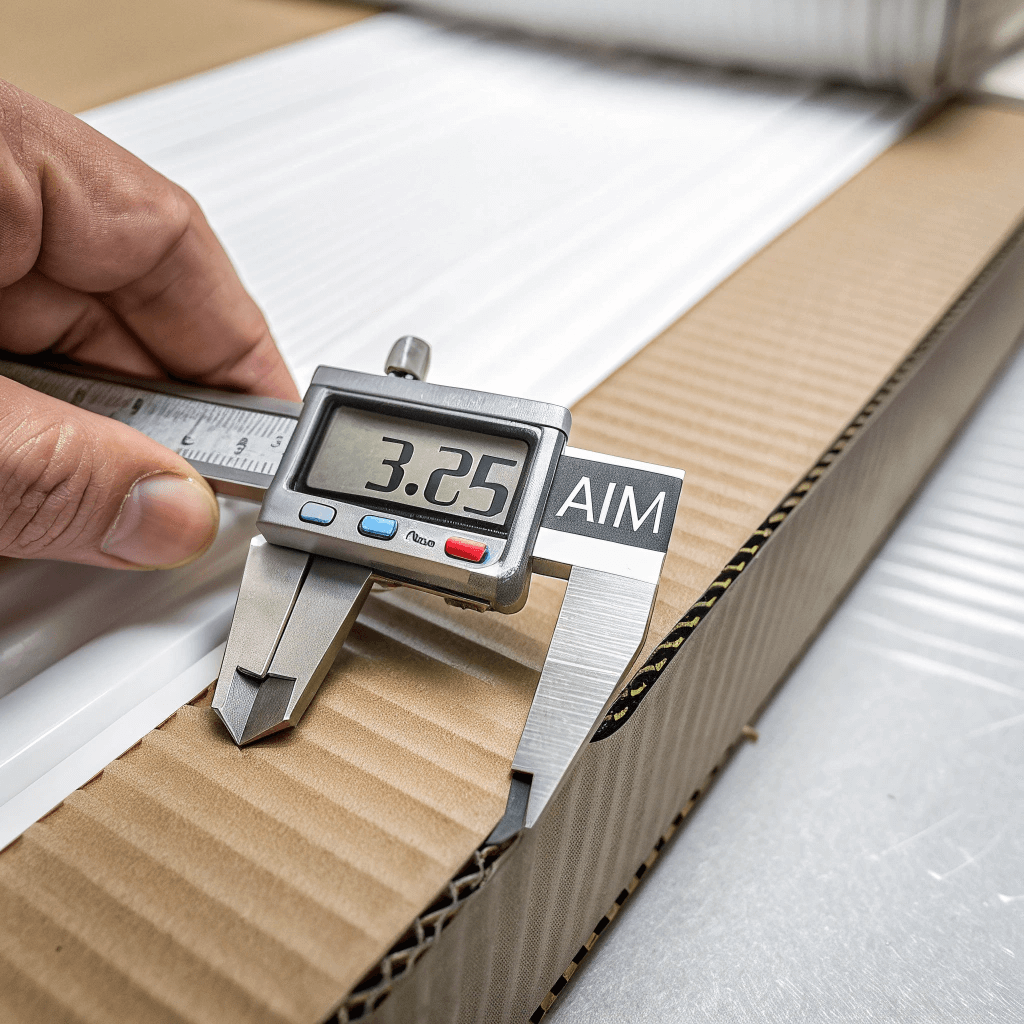
The most common error I see is ambiguity regarding dimension types. You must explicitly state whether your measurements are Internal Dimensions (ID) or External Dimensions (OD). For product fit, always use Internal Dimensions. For shipping and palletization calculations, use External Dimensions.
Never rely on a simple text description like "10x10x5 box." Provide professional technical drawings or 3D CAD files (STEP or DXF formats). These files should be labeled with all critical dimensions. This allows the factory’s engineers to understand the design intent 1 and how the package is meant to fold and assemble.
Paper is a flexible material, not machined steel. You must establish an acceptable tolerance range 2. Typically, a tolerance of +/- 2mm is standard for corrugated boxes, while +/- 0.5mm is expected for high-end rigid boxes.
Precision starts with the machine. Digital die-cutting tables offer incredible accuracy for samples, but mass production usually relies on physical steel rule dies. During your audit, check if they maintain their die-cutting equipment 3 regularly. Worn blades lead to sloppy cuts and dimensional drift.
If you are using corrugated board, the "flute" adds significant thickness. A "B-flute" wall is about 3mm thick. If you don’t account for this, your internal space will be 6mm smaller than your external measurements. You must understand corrugated flute profiles 4 to predict the final size accurately.
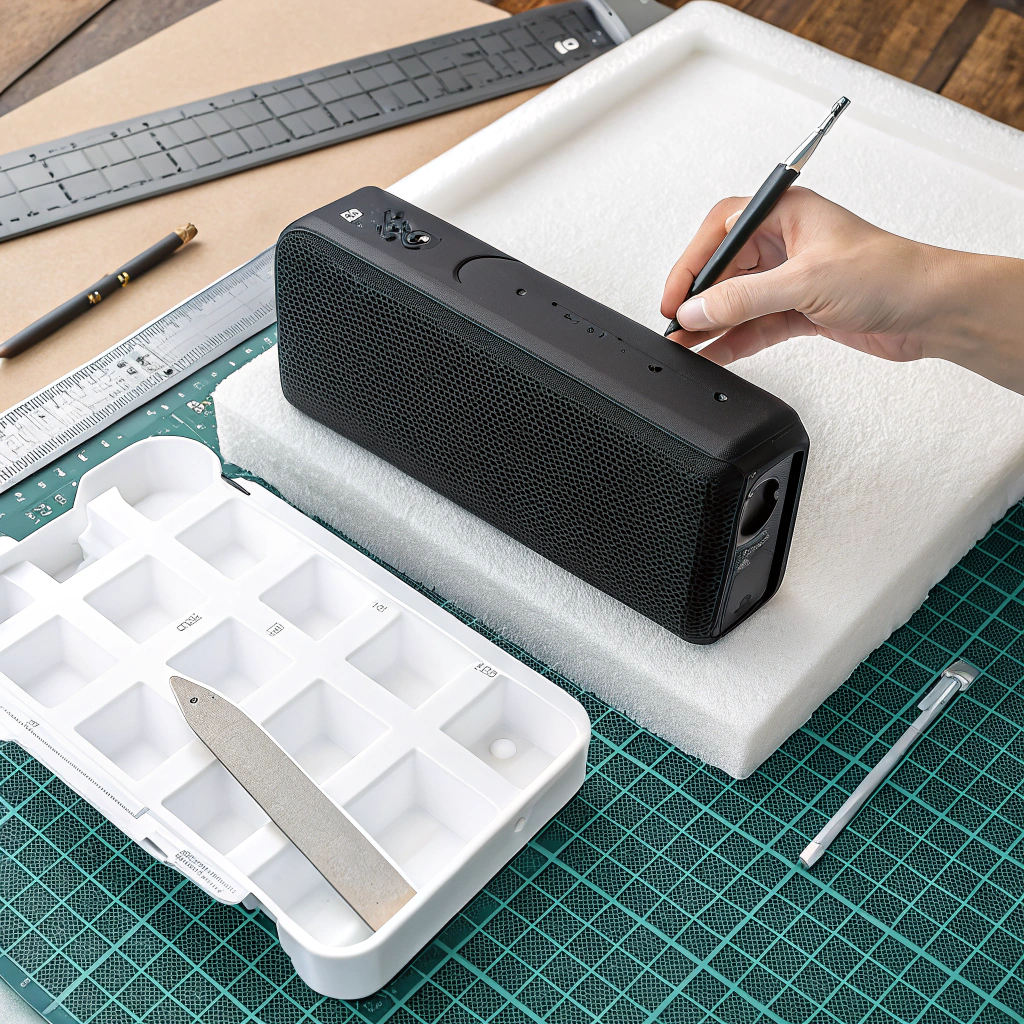
Never go straight to mass production. Request a structural prototype (unprinted) specifically for a "fit test." Place your actual product inside this sample to verify the hold. If it’s too tight or too loose, adjust the dieline now, not later.
Your purchase agreement must be specific. Include a clause stating that any product falling outside the agreed-upon tolerance range is considered a "critical defect." This aligns your quality acceptance criteria 5 with your financial protection, motivating the factory to pay attention.
How you measure matters. Ensure your factory uses calibrated digital calipers 6 for precision, rather than a worn-out tape measure. Define the measurement standard: for example, "measurements taken from the center of the score line."
Don’t trust; verify. Hire a third-party inspection agency to conduct a Pre-Shipment Inspection (PSI) 7. Instruct them to measure a random sample size (e.g., Level II, AQL 2.5) specifically for dimensional accuracy. If the batch fails, it doesn’t ship.
Demand accountability. Require the factory to supply their internal Quality Control (QC) reports 8 with every shipment. These reports should show the actual measurements taken from random samples during the production run, proving they were monitoring dimensions throughout the process.
| Packaging Type | Material Characteristic | Typical Tolerance | Why? |
|---|---|---|---|
| Folding Carton (SBS) | Thin, stiff paperboard | +/- 0.5mm | Precision die-cutting is easier on thin stock. |
| Rigid Box (Gift Box) | Wrapped greyboard | +/- 1.0mm | Hand-wrapping introduces slight variances. |
| Corrugated (E-Flute) | Thin flute shipping box | +/- 1.5mm | Flutes crush slightly during cutting. |
| Corrugated (C-Flute) | Thick shipping carton | +/- 3.0mm | Thick material absorbs impacts and changes size. |
| Molded Pulp | Wet slurry formed | +/- 1-2% | Shrinkage occurs during the drying process. |
Communication is the bridge between your design and their machine. I always advise clients to use Geometric Dimensioning and Tolerancing (GD&T) 9 principles, even loosely, in their diagrams. Label "Critical to Quality" (CTQ) dimensions clearly in red on your technical drawings.
Furthermore, understand the impact of humidity. Paper is hygroscopic; it absorbs water. A box made in a humid Chinese summer might shrink slightly when shipped to a dry warehouse in Arizona. Discuss environmental testing 10 with your supplier to ensure your material choice remains stable across different climates.
Ensuring precise packaging dimensions is a discipline that combines engineering, communication, and rigorous enforcement. It requires you to move beyond vague requests and into the realm of specific technical demands. By defining clear tolerances, validating with physical prototypes, and enforcing compliance through third-party inspections, you eliminate the guesswork. You protect your product, streamline your fulfillment, and ensure that every customer interaction starts with a perfect fit.
What is a realistic dimensional tolerance I can expect for my custom boxes?
For standard corrugated shipping boxes, a realistic tolerance is +/- 2mm to 3mm. For high-end folding cartons or rigid boxes, you should expect tighter precision, typically +/- 0.5mm to 1mm.
How do I clearly communicate my required tolerances in my spec sheet?
Include a specific "Tolerances" section in your tech pack. State: "All dimensions are Internal (ID). Acceptable Tolerance: +/- 1mm." Label critical dimensions on your technical drawing with this tolerance clearly visible.
How will my supplier measure and verify the dimensions during quality control?
Professional suppliers use digital calipers for thickness and small dimensions, and calibrated steel rulers for larger lengths. They should measure flat (knocked down) samples to check the die-cut accuracy and assembled samples to check the final 3D fit.
What happens if the final products are outside of the agreed-upon tolerance?
If you have defined this in your contract and confirmed it via a pre-shipment inspection, you have the right to reject the shipment. The factory should rework the goods (if possible) or re-manufacture the non-compliant units at their cost. This is why a clear contract is vital.
1. Understanding how CAD conveys design intent to manufacturers. ↩︎
2. A guide to understanding standard manufacturing tolerances. ↩︎
3. The fundamentals of the die-cutting process for packaging. ↩︎
4. Technical specifications for corrugated flute profiles. ↩︎
5. How to use AQL standards for product acceptance. ↩︎
6. Overview of precision measurement tools like calipers. ↩︎
7. The importance of pre-shipment inspections for quality control. ↩︎
8. Structuring an effective quality control plan and report. ↩︎
9. Basics of Geometric Dimensioning and Tolerancing symbols. ↩︎
10. How climatic conditioning tests affect packaging materials. ↩︎
You can leave any questions. We will see and answer you.