Zibo City, Shandong Province

Have Any Questions?

10 AM – 6 PM
Zibo City, Shandong Province
Have Any Questions?
10 AM – 6 PM

Have Any Questions?

In my career sourcing packaging, I treat food-contact projects with a completely different level of scrutiny than any other category. If a rigid box for a pair of headphones has a slight defect, it’s a nuisance. If a pouch for dried fruit contains lead-based ink or non-cured adhesive, it’s a public health crisis and a potential lawsuit. The stakes are incredibly high.
When sourcing from China, the term "food grade" is thrown around loosely. I’ve seen factories claim capability simply because they use "clean" paper, while their production floor is dusty and lacks basic hygiene controls. To protect your customers and your business, you must move beyond trust and verify compliance with forensic detail. This guide outlines the 10 non-negotiable steps I use to vet a factory’s ability to produce safe, compliant food packaging.
The first question I ask is not "Are you food grade?" but "Can you prove compliance with my market’s regulations?" For the US, this means meeting FDA Food Contact 1 standards. Note that the FDA does not "certify" factories in China; rather, independent labs (like SGS or Intertek) test the materials to ensure they meet FDA safety limits.
If a factory is legally manufacturing food packaging in China, they must hold a "QS" (Quality Safety) license issued by the Chinese government. This is the local baseline. If a supplier cannot produce this, they are likely an unlicensed workshop or a trading company posing as a manufacturer.
For a higher level of assurance, I look for certifications recognized by the Global Food Safety Initiative (GFSI). The gold standard is BRCGS for Packaging Materials 2. This certification goes beyond just the product; it certifies the factory’s entire management system regarding hygiene and safety. ISO 22000 3 is another excellent indicator that the supplier manages food safety hazards systematically.
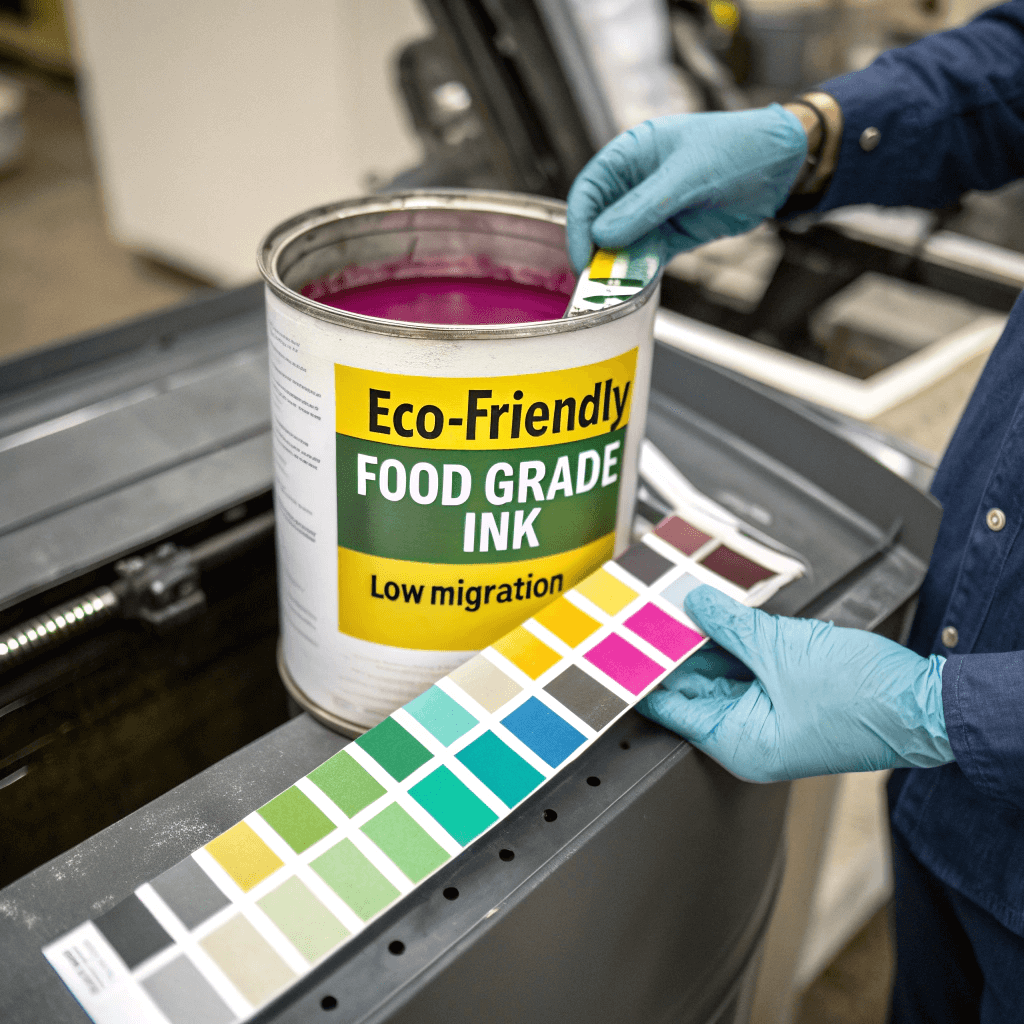
This is the most common failure point. A factory might use food-grade paper but print on it with toxic industrial ink. You must ensure they use low-migration inks and adhesives that are safe for direct or indirect food contact.
"Migration" occurs when chemicals from the packaging leach into the food. To prevent this, you must demand specific migration testing 5. This involves simulating contact with food (using simulants like ethanol or olive oil) to measure chemical transfer.
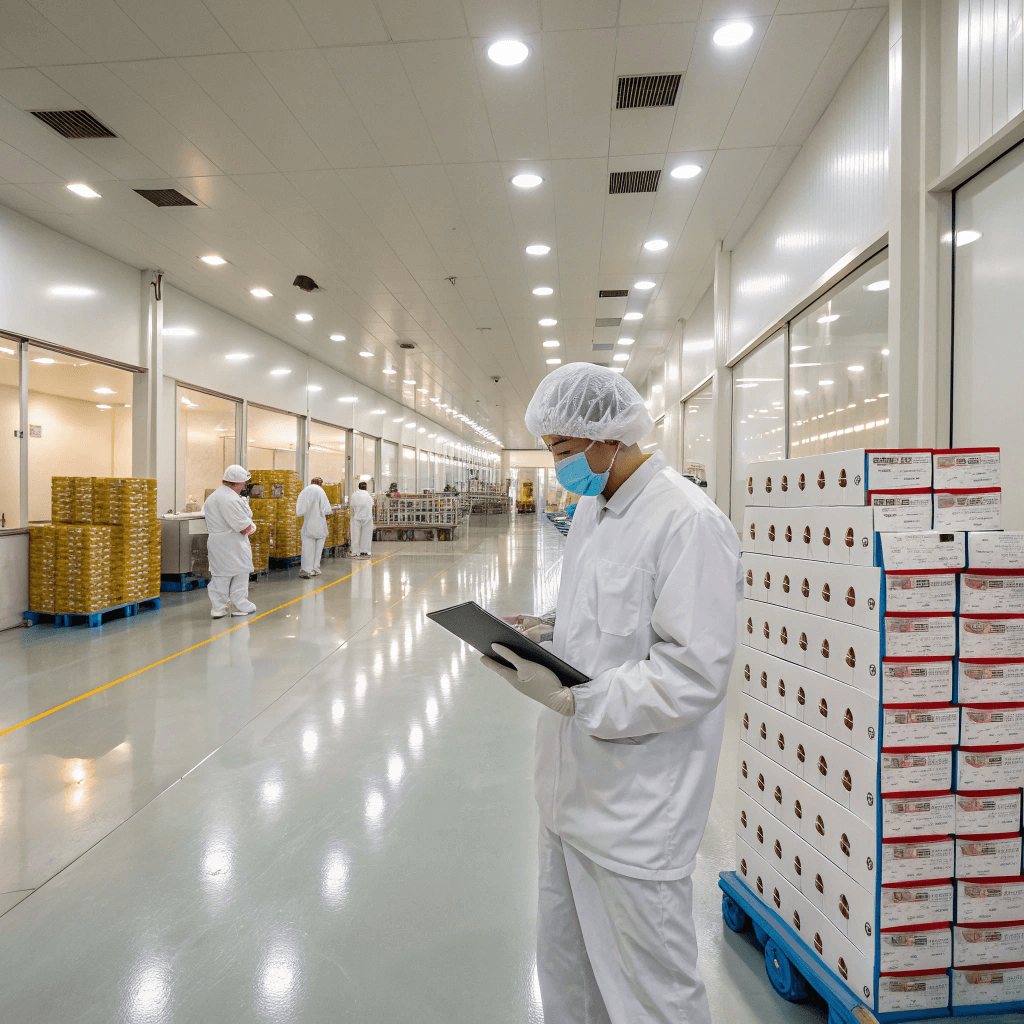
You cannot verify hygiene over email. I always conduct (or hire a third party to conduct) an audit based on Good Manufacturing Practices (GMP) 6. We check for pest control, worker hygiene (hairnets, gloves), clean room protocols, and the separation of raw materials from potential contaminants.
If a safety issue arises, you need to know exactly which batch is affected. Effective food traceability 7 means the factory can trace a finished box back to the specific roll of paper and bucket of glue used.
China has its own rigorous set of food safety laws, known as GB Standards 8 (Guobiao). A legitimate factory producing for the domestic market or export must comply with these. Checking for GB compliance adds another layer of verification that they are operating legally and safely.
Past performance predicts future behavior. Ask the supplier which other food brands they manufacture for. If they supply major multinationals (like Nestlé, Walmart, or McDonald’s), they have likely already passed grueling safety audits.
Food safety is not a one-time check. Regulations change, and factory standards can slip. Implement a system for annual re-testing and re-certification.
| Feature | Standard Packaging | Food-Grade Packaging | Why It Matters |
|---|---|---|---|
| Factory Hygiene | Basic cleanliness | GMP / Clean Room | Prevents biological contamination (bacteria/pests). |
| Materials | Industrial Paper/Ink | Virgin Pulp / Safe Ink | Prevents chemical leaching into food. |
| Testing | Physical Strength | Chemical Migration | Ensures no toxins transfer to the product. |
| Traceability | Basic Batch | Full Raw Material Trace | Essential for recalls and safety audits. |
The risks of using non-food-grade packaging are catastrophic. First, there is the legal risk: your product can be seized by customs or recalled by the FDA. Second, and more importantly, is the health risk. Industrial inks often contain heavy metals and volatile solvents. If these migrate into your food, they can cause consumer illness. Finally, there is the reputational risk. A single safety scandal can destroy a food brand overnight. Always prioritize safety over cost. If a supplier is reluctant to provide HACCP documentation 9 or verify their supply chain transparency 10, walk away immediately.
Verifying a Chinese factory for food-grade packaging requires a mindset of "guilty until proven innocent." You must assume the facility is not compliant until they provide the documents, pass the tests, and survive the audit that proves otherwise. By following these 10 steps—from verifying FDA compliance and BRC certification to testing inks and conducting GMP audits—you build a firewall around your product, ensuring that what you sell is not only beautiful but safe for every family that buys it.
What certifications, like FDA or BRC, should I ask for?
You should ask for BRCGS (Brand Reputation Compliance Global Standards) or ISO 22000 to verify the factory’s management system. For the product itself, you don’t ask for an "FDA Certificate" (factories aren’t certified); instead, you ask for Test Reports from an accredited lab (like SGS) proving the materials meet FDA 21 CFR standards.
How can I ensure the inks and glues used are safe for direct food contact?
You must explicitly specify "Low Migration" or "Food Safe" inks and adhesives in your contract. Request the MSDS (Material Safety Data Sheet) for these specific materials and verify they are compliant with standards like the Swiss Ordinance or relevant FDA sections.
Can I see a factory audit report specific to food safety standards?
Yes. You should request to see a recent GMP (Good Manufacturing Practice) or HACCP audit report. If they supply big retailers, they likely have a SMETA 4-Pillar audit on file. If they cannot provide one, you should hire a third-party inspector to conduct a food safety audit before placing an order.
What is the risk if I use non-food-grade packaging for my food products?
The risks include chemical contamination of your food (leading to consumer illness), massive product recalls, lawsuits, and the permanent destruction of your brand reputation. Regulatory bodies like the FDA can also detain your shipments and blacklist your company.
1. Official FDA regulations regarding food contact substances. ↩︎
2. Global standard for packaging safety and quality management. ↩︎
3. International standard for food safety management systems. ↩︎
4. European association guidelines for safe printing inks. ↩︎
5. Explanation of chemical migration testing protocols. ↩︎
6. Checklist for Good Manufacturing Practice (GMP) audits. ↩︎
7. Resources on the importance of food system traceability. ↩︎
8. Overview of China’s national food safety standards (GB). ↩︎
9. FDA guidelines on Hazard Analysis Critical Control Point. ↩︎
10. The importance of transparency in global supply chains. ↩︎
You can leave any questions. We will see and answer you.