Zibo City, Shandong Province

Have Any Questions?

10 AM – 6 PM
Zibo City, Shandong Province
Have Any Questions?
10 AM – 6 PM

Have Any Questions?


The selection of appropriate shipping boxes, particularly for small items, extends far beyond mere containment. For businesses, especially in the burgeoning e-commerce sector, the choice of packaging is a critical operational and strategic decision. It directly impacts product integrity during transit, shipping costs, customer unboxing experience, brand perception, and environmental responsibility. An undersized or flimsy box risks damage to contents, leading to returns and dissatisfied customers. Conversely, an oversized box can incur unnecessary shipping expenses due to dimensional weight pricing and contribute to material waste. This report provides an in-depth analysis of small shipping boxes, covering common types, materials, strength considerations, sourcing options, and cost implications to empower businesses to make informed packaging decisions.
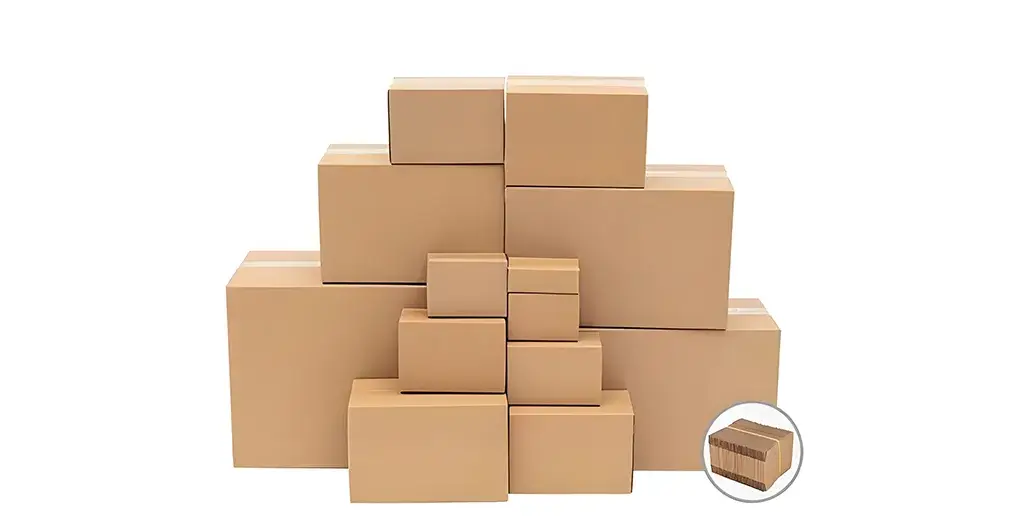
The term “small” in the context of shipping boxes is relative and encompasses a diverse range of sizes and configurations tailored to various products. Understanding these nuances is the first step toward optimizing packaging.
Small shipping boxes are available in numerous dimensions, with common sizes frequently appearing across online retailers and packaging guides. For instance, Amazon listings feature sizes such as 6×4×3 inches, 7×5×2 inches, and 4×4×4 inches.1 These dimensions are often designed to accommodate specific item categories. A 4×4×4 inch box, often called a “mug box,” is suitable for small cubic or round items and can typically carry up to 3 lbs.2 A 6×4×4 inch box might be used for jewelry or cosmetics, holding up to 4 lbs, while an 8×6×4 inch box can handle books or small electronics up to 9 lbs.2
The following table provides a consolidated view of common small shipping box dimensions and their typical uses, drawing from e-commerce platform guidelines and general industry standards:
Table 1: Common Small Shipping Box Dimensions and Uses
| Box Size (inches) | Max Weight (approx.) | Best For | Source(s) |
| 4×4×4 | Up to 3 lbs | Small cubic, round items (mugs, accessories) | 2 |
| 6×4×2 | Varies | Small, flat items, jewelry | 1 |
| 6×4×3 | Varies | Small items, cosmetics | 1 |
| 6×4×4 | Up to 4 lbs | Jewelry, cosmetics, small accessories | 2 |
| 7×5×2 | Varies | Small electronics, books | 1 |
| 8×6×4 | Up to 9 lbs | Books, electronics, picture frames, apparel | 2 |
| 4×3×2 | Varies | Very small items, gifts | 1 |
It is important to note that shipping platforms like Amazon FBA have minimum size requirements, such as 6×4×1 inch, and maximums, typically 25 inches on any side before oversized fees may apply.2 Carriers like USPS, UPS, and FedEx also offer their own branded boxes in various small sizes, often with flat-rate shipping options if their specific boxes are used.2
Several types of small boxes cater to different shipping needs:
The dominant material for small shipping boxes is corrugated cardboard, noted in nearly all product listings.1 This material can be sourced in different finishes, commonly white or brown (Kraft), and may be specified as recyclable or heavy-duty.1 Paper is also listed as a material for some boxes, often referring to the paper-based construction of corrugated board or mailers.1 Eco-friendly options increasingly emphasize high recycled content, with some suppliers like FoH’o’Packaging offering boxes made from 100% recycled content, a significant portion of which is post-consumer waste.
The choice between white and Kraft brown often comes down to aesthetics and branding, with white offering a cleaner look for printing. However, the structural integrity and suitability for shipping depend more on the construction of the corrugated material itself rather than just its color.
The performance and environmental impact of a small shipping box are largely determined by its material composition and construction. Corrugated cardboard is the industry standard, but understanding its variations and the growing availability of sustainable alternatives is crucial.
Corrugated cardboard is engineered for strength and resilience. It consists of three main components:
The combination of these layers creates a lightweight yet robust material. Different flute types (defined by the height and spacing of the waves in the medium) offer varying characteristics:
For small shipping boxes, C, B, and E flutes are commonly encountered. The choice depends on the required balance of cushioning, stacking strength, and printability.
Boxes can also be constructed with different numbers of layers:
Sustainability is an increasingly important factor in packaging decisions. Many businesses and consumers are seeking alternatives that minimize environmental impact.
The shift towards sustainable materials is not just an environmental consideration but also a brand differentiator. Companies that adopt eco-friendly packaging can enhance their brand image and appeal to environmentally conscious consumers.8 However, there can be trade-offs. Eco-friendly materials might sometimes have a higher initial cost or, in some specific applications, different performance characteristics, such as potentially lower tensile strength compared to traditional virgin plastic packaging.8 Businesses must balance sustainability goals with performance requirements and cost.
The ability of a small shipping box to protect its contents during transit is paramount. This protective capability is scientifically measured by two primary industry standards: the Edge Crush Test (ECT) and the Mullen (or Burst) Test. Understanding these tests helps businesses select boxes with appropriate strength, avoiding both under-packaging (risking damage) and over-packaging (incurring unnecessary costs).
The choice between ECT and Mullen-rated boxes depends heavily on the application. ECT is generally more indicative of stacking performance, which is critical for palletized shipments and warehouse storage. The Mullen test is more about containment and resistance to rough handling. Historically, the Mullen test was the primary standard. However, with the increased use of recycled content in corrugated board, it was found that while recycled board might not always perform as well in the Mullen test compared to virgin fiber board of the same weight, it could still offer excellent compression and damage resistance qualities, which are well-measured by the ECT.7 This has contributed to ECT becoming the more common specification today, particularly for standard e-commerce shipping.
Table 2: ECT vs. Mullen Test: Choosing the Right Box Strength
| Feature | Edge Crush Test (ECT) | Mullen Test (Burst Strength) |
| Measures | Stacking strength; top-to-bottom compression resistance | Puncture/rupture resistance of box walls |
| Primary Benefit | Predicts performance under vertical loads (stacking) | Indicates ability to withstand rough handling and impacts |
| Common Applications | Palletized shipments, warehouse stacking, general e-commerce | Heavy or irregularly shaped items, individual parcel shipment with rough handling potential |
| Material Composition (Typical) | Often higher recycled content, fibers may be oriented for vertical strength | Traditionally more virgin fiber content for longer, interwoven fibers |
| Cost Implication | Generally more cost-effective, especially with recycled content | Can be more expensive due to higher virgin fiber content |
| When to Choose | When stacking strength is primary concern; for most standard lightweight e-commerce shipments | When protection against bursting/puncture is critical; for heavier or sharp-edged items |
Data Sources: 6
For many e-commerce applications involving small, relatively lightweight items, a 32 ECT single-wall corrugated box is often sufficient and cost-effective.6 UPS guidelines, for example, suggest that 32 ECT boxes are suitable for contents weighing up to 30 lbs, while 200# Mullen-rated boxes are recommended for up to 40 lbs.6
There’s a common misconception that heavier, thicker cardboard (often associated with Mullen-rated boxes like 200#) is always superior. However, for many consumer goods, a 32 ECT box provides reliable protection at a lower material and shipping cost.10 Using a 200# Mullen box for lightweight items can significantly increase shipping expenses without offering substantial additional benefits.10 The industry trend reflects this, with a shift towards ECT-rated options as they meet most shipping needs effectively and economically.10
However, the “right” strength is not absolute. It depends on the specific characteristics of the product being shipped:
It’s important to remember that lab-tested strength ratings can be affected by real-world conditions. Humidity is a significant factor; relative humidity above 60% can reduce a box’s stacking strength by 30-40%.6 The way boxes are handled, stacked, and transported also plays a role in their ultimate performance. Reusing boxes is generally not recommended by carriers like UPS, as their structural integrity may be compromised.10
Ultimately, selecting the correct box strength involves balancing protection needs with cost considerations. For many small e-commerce businesses, 32 ECT boxes represent an optimal balance for a wide range of products, challenging the outdated notion that only heavier, Mullen-rated boxes offer adequate security.
Once the type, size, and strength of small shipping boxes are determined, the next step is sourcing them. A variety of suppliers cater to different business needs, from large online marketplaces to specialized packaging providers and eco-conscious companies.
Several prominent players serve the market for small shipping boxes:
This landscape shows a spectrum of suppliers, each with distinct strengths. Amazon offers unparalleled convenience for smaller quantities, while Uline has traditionally served businesses needing bulk and speed, though its shipping costs are a major caveat. FoH’o’Packaging carves out a niche with its strong sustainability focus and customization, and provides accessible custom options with the backing of a retail network.
When choosing a supplier, businesses should consider several factors beyond just the per-unit price of the box:
The choice of supplier is not a one-size-fits-all decision. Businesses must weigh these factors against their specific needs regarding volume, budget, branding, and sustainability commitments. The emergence of specialized eco-conscious suppliers like FoH’o’Packaging indicates a growing market demand for sustainable packaging, moving it from a niche concern to a mainstream consideration for many brands.
Table 3: Comparative Overview of Key Small Shipping Box Suppliers
| Supplier | Primary Focus/Strength | Typical Product Range (Small Boxes) | Eco-Friendly Options (Y/N, details) | General Price Point | Typical MOQs (Small/Medium/Large) | Customization (Y/N, details) | Key Pros (from analysis) | Key Cons (from analysis) |
| Amazon | Convenience, vast selection, fast shipping (Prime) | Very wide (corrugated, mailers) | Y (varies by seller; some recyclable options listed) | $ – $$$ (Varies) | Very Small to Large | N (Generally not direct from Amazon; some sellers may offer) | Free/fast shipping (Prime), wide selection, easy returns for eligible items 1 | Price/quality varies greatly by vendor, less focus on B2B specialization 11 |
| The Boxery | One-stop shop, wide inventory, fast shipping | Corrugated boxes, mailers | Y (mentions “Made from Recycled Materials” on eBay listings) 13 | $$ | Medium to Large | N (Not prominently featured) | Fast shipping, bulk discounts, good general selection 12 | Some quality inconsistencies noted in reviews 13 |
| Uline | Fast/reliable shipping (historically), large selection | Extensive (corrugated, mailers, specialty) | Y (offers some recycled content boxes) | −$ | Medium to X-Large | Y (Offers custom printing) | High-quality boxes perceived by some, vast catalog 11 | Very high shipping costs, less frequent free shipping promos, political views of owners a concern for some 15 |
| FoH’o’Packaging | Eco-friendly, customization, transparency | Recycled corrugated boxes, various recycled mailers | Y (100% recycled boxes, 95% PCW; various recycled mailers, sustainable inks, plastic-free) | −$ | Small (1 unit custom) to Large | Y (Extensive: size, print, style, inserts) | Leader in sustainability, high quality, excellent customer service, strong customization 11 | Higher price point for some items, isolated service issues reported 8 |
| Staples | Affordable custom packaging, retail accessibility | Corrugated boxes, mailers | Y (Offers eco-friendly options) 11 | $ – $$ | Very Small (1 unit custom) to Large | Y (Full custom packaging, low MOQs) 11 | Affordable custom options, user-friendly, physical stores, flexible returns 11 | Product selection may be less specialized than dedicated packaging suppliers |
| PackagingSupplies.com | Wholesale pricing, excellent product selection | Wide range of packaging supplies | Y (Details not specified in snippets) | $$ | Medium to Large | Y (Details not specified) | Wholesale pricing, extensive selection 11 | Less detailed information available in provided research |
General Price Point: $ (Budget), (Mid−Range),$ (Premium). Data Sources: 1
The cost of shipping small items is a multifaceted equation, where the purchase price of the box is only one component. Shipping carrier charges, heavily influenced by dimensional weight, can significantly impact the total expense. Understanding these elements is crucial for cost optimization.
The direct cost of small shipping boxes is influenced by several variables:
Dimensional weight (often abbreviated as DIM weight or volumetric weight) is a pricing technique used by shipping carriers like USPS, UPS, and FedEx. It considers the amount of space a package occupies on a truck or airplane, rather than just its actual physical weight.20 Carriers calculate a DIM weight for each package and compare it to the actual weight; they then charge based on whichever is greater.20
The rationale behind DIM weight is to ensure fair compensation for shipping light, bulky items. A truck might fill up with large, lightweight packages (like pillows or empty containers) before reaching its weight capacity, leading to inefficient use of space and lost revenue potential for the carrier if pricing were based solely on actual weight.20
The formula for calculating DIM weight is generally:
$$ \text{DIM Weight} = \frac{(\text{Length} \times \text{Width} \times \text{Height})_{\text{inches}}}{ \text{DIM Factor}} $$
The DIM Factor (or divisor) is a number set by the carrier. For example, FedEx and UPS commonly use a DIM factor around 139 for domestic shipments, while USPS might use 166 for certain services, but these factors can vary by service type, destination zone, and specific carrier agreements.20 A lower DIM factor results in a higher DIM weight for the same size package.
Dimensional weight pricing typically applies to packages larger than a certain threshold, often 1 cubic foot (12 in×12 in×12 in=1728 cubic inches).21 However, carrier rules can change, and it’s crucial to check current policies.
Even “small” boxes can incur DIM weight charges if they are disproportionately large for the lightweight item they contain. For example, a 10-pound item shipped in a 20 in×20 in×20 in box could have a DIM weight of (20×20×20)/139≈57.55 lbs, rounded up to 58 lbs. The business would then pay shipping rates for a 58 lb package, not a 10 lb one.20 This illustrates how the physical dimensions of a box, not just its purchase price, can become a significant cost driver. Businesses focusing solely on obtaining the cheapest per-unit box price might inadvertently select slightly larger boxes that then trigger higher shipping costs, negating any initial savings.
Given the impact of DIM weight, optimizing packaging is essential:
By carefully considering box dimensions in relation to product size and carrier DIM weight policies, businesses can avoid unnecessary shipping expenses and improve their overall cost efficiency. This proactive approach to packaging selection is vital in managing the total cost of fulfillment.
Selecting the optimal small shipping box is a balancing act involving product characteristics, cost considerations, brand presentation, and operational efficiency. A strategic approach to this seemingly simple decision can yield significant benefits for small businesses and e-commerce sellers.
A holistic evaluation should encompass:
By systematically addressing these points, businesses can make more strategic and cost-effective decisions regarding their small shipping box selections. This proactive management of packaging can translate into improved profitability, enhanced customer satisfaction, and a stronger brand identity. The definition of “value” in packaging has evolved beyond the lowest unit price to encompass a broader set of considerations including sustainability, brand alignment, and the total cost of ownership.
The selection of small shipping boxes is a critical, yet often underestimated, component of business operations, particularly in the e-commerce landscape. This analysis has demonstrated that an informed approach to choosing packaging can yield substantial benefits in terms of cost savings, product protection, brand enhancement, and environmental responsibility.
Key takeaways indicate that businesses must look beyond the mere physical attributes of a box. Understanding the nuances of common dimensions and types—from standard corrugated containers to specialized mailers and rigid boxes—allows for a tailored fit to product needs. Material composition, particularly the flute type in corrugated board and the increasing availability and importance of high-recycled content, directly impacts both performance and sustainability credentials.
Furthermore, a grasp of box strength metrics, notably the shift towards the Edge Crush Test (ECT) as a relevant indicator for e-commerce stacking needs, can prevent over-spending on unnecessarily heavy-duty boxes while ensuring adequate protection. The myth that “heavier is always better” is often debunked when a 32 ECT box proves sufficient and more cost-effective for many lightweight goods.
Sourcing these supplies requires careful evaluation of suppliers based on a spectrum of factors including minimum order quantities, pricing structures, customization capabilities, shipping costs, and their commitment to sustainability. The impact of dimensional weight on overall shipping costs cannot be overstated; optimizing box size to minimize volume is paramount and often more critical than shaving pennies off the unit price of the box itself.
Ultimately, the “right” small shipping box is one that holistically meets the product’s protective needs, aligns with the company’s budget and brand identity, satisfies customer expectations for a positive unboxing experience, and considers the environmental impact. For small businesses and e-commerce sellers, adopting a strategic and regularly reviewed approach to packaging—treating it not as an afterthought but as an integral part of the product delivery and customer experience—can contribute significantly to operational efficiency and market competitiveness. The evolving landscape of materials and carrier policies necessitates ongoing vigilance and adaptability in making these crucial packaging choices.
You can leave any questions. We will see and answer you.